Maison loulabelle always has something up their sleeves to keep us wanting more!
The amazing Afrocentric kids fashion brand just launched it’s newest collection at the London Kids Fashion Week, hosted by Mini Mode. The new collection tagged METAMORPHOSIS! Was literally curated to change EVERYTHING you thought you knew about Afrocentric kid’s fashion. –
This collection is designed with no detail spared, produced with only the best material. Every detail expertly curated and assembled, Unapologetically lavish. Each design is a unique piece of history .
I have been waiting eagerly to see the pictures from the runway the moment a sneak peak of the backstage line up was uploaded on the Maison Loulabelle Instagram page. And once I could get a few pictures, I decided to put them up for you to see.
But before I show them to you I have a question to ask you. How many children’s dresses do you see that takes 70+ hours to create? With Maison Loulabelle, the beauty is in the details. Steady making your little girls look like princesses and not leaving the boys out. In the Metamorphosis collection, there is something for every kid. Scroll through to view images.
To connect with Maison Loulabelle, and possibly secure a piece from the ss19 collection before its official release in May, follow @maison_loulabelle on Instagram, or email [email protected]
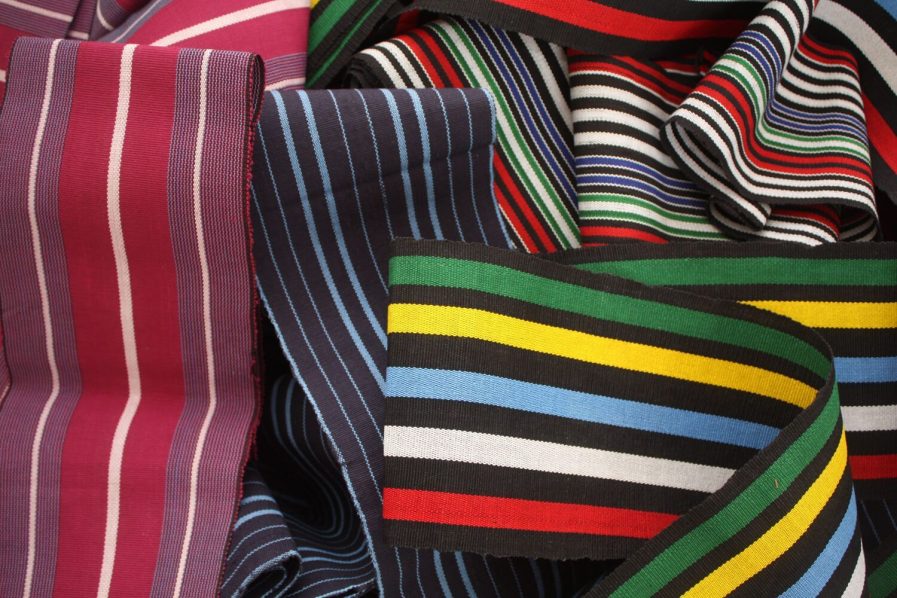
Aso-Oke is a short form of Aso Ilu Oke also known as Aso-Ofi meaning clothes from the up-country. It is the traditional wear of the Yoruba’s (the tribe of the southwest people in Nigeria, Africa). Continue reading
Mr Bayo Ademiluyi is a lawyer by profession and Head of Design at Ty-Tys. A company that produces hand-made distinctive neckwear (i.e. ties, bowties), pocket squares, laptop bags, ladies’ tote bags, wall hangings and scarves using traditional African fabrics, predominantly aso-oke.Continue reading
[dropcap custom_class=”normal”] My eaves dropped at dinner last night and I heard someone ask “Why buy Nigerian?” with the main bone of contention being the quality of made in Nigeria products.
If you ask me, (even if you don’t I’d still tell you anyway) the concern of quality particularly is a little bit played out. Nigerians are not only becoming more innovative; most are also paying supreme attention to detail and quality. [/dropcap]Continue reading
[dropcap custom_class=”normal”] Indigo dye was the foundation of numerous textile traditions throughout West Africa. For centuries before the introduction of synthetic dyes the ability to transform everyday white cotton into prized deep blue cloth was a mysterious and highly valuable skill passed on by specialist dyers from generation to generation. From the Tuareg nomads of the Sahara to the grassland kingdoms of Cameroon, indigo cloth signified wealth, abundance and fertility.[/dropcap]Continue reading
[dropcap custom_class=”normal”] Akwete cloth is a unique hand woven fabric of Igbo women of Akwete in Abia State, Nigeria. The fabric was originally referred to as “Akwa Miri” (Cloth of the water) which means towel and mostly weaved by the women on a vertical loom. Akwete cloth weaving is said to be as old as the Igbo nation. [/dropcap]Continue reading
The first time I was opportuned to meet Mr Bayo Ademiluyi (founder of Ty-tys) was at the Chevron (Afro-centric) bazaar. It was so random as one of the Bellafricana team had just posted an article about Ty-tys which caught my attention. Mr Ademiluyi is very jovial, down to earth and talented of course. I couldn’t help but interview him to hear the story of how Ty-tys came about.
Q & A
Please introduce yourself and your background.
My name is Bayo Ademiluyi. I am from Ile-Ife, Osun state, Nigeria and I am a lawyer by profession and Head of Design at Ty-Tys.
Please tell us about your work. How did Ty-tys start?
We produce hand-made distinctive neckwear – ties, bowties and scarves – using traditional African fabrics, predominantly aso-oke. Aso oke (pronounced ah-SHAW-okay) is a hand loomed cloth woven by the Yoruba people of south west Nigeria. Aso oke means top cloth in the English language. We have recently expanded our range to include pocket squares, laptop bags and ladies’ tote bags, and wall hangings.
Where did the idea for Ty-tys come from? Where do you find the inspiration for your designs?
The idea of Ty-Tys was conceived about 4 years ago. I was getting ready to attend a wedding and had been toying with the idea of incorporating the aso-ebi strip (usually sewn as a fila [cap]) into an outfit that wasn’t traditional – I thought “What if I want to wear a suit?” It was actually sort of a “Eureka” moment. I find inspiration from things I see around me every day – outfits, colours, magazines, etc and also from my very weird imagination!
Can you remember one of the first things you crafted? What makes it memorable?
It was a tie made from purple silk aso-oke; I still have it somewhere. It represents the genesis of where we are today.
How long does it take to design and make a particular work? Can you give a short summary of the processes that go into each one?
It varies, and depends on the item in question. On average, most neckwear will take between 3-5 hours and our wall hangings often require more than 4 days to complete.
What are the challenges you face in business?
The same as virtually all business owners in this country namely:
– Erratic power supply and the associated costs
– Shortage of skilled labour
– Access to affordable SME financing
What is your most popular item (include image)? Possibly because this item incorporates the 3 fundamental types of aso-oke: Etu (the blue/black), Sanyan (beige) and Alaari (wine red), it is often purchased as a gift item (picture below).
To what extent do you draw upon your Nigerian heritage for your work?
Quite extensively, being that our main raw material is sourced from my part of the country and the ethos of the business is based our local culture and heritage.
What are your goals for the future, both work wise and life?
Success (not necessarily just financial) and the vision of building a world-class business that will outlive me.
What would people be surprised to learn about you?
That I am still (quite actively and happily) engaged in the practice of law.
For someone who wishes to take up this kind of career, what kind of advice would you give them? Also, if you could give one piece of advice to youths who want to start their own company, what would it be?
Do what you enjoy – what you get out of your business in the form of personal satisfaction, enjoyment and financial stability will be a result of what you put into it. So if you don’t enjoy what you’re doing, chances are you won’t make a real success out of it. Don’t just jump into a business because “people are doing it, and making lots of money there” – everybody’s path (and destiny) is different.
And finally, I would like to give you this opportunity to share two to four images of your work and tell us a little about each.
This is the first aso-oke which I designed myself and is still one of my favourites to date. The 7 colours of the rainbow woven onto the black background makes it very versatile. A real conversation piece.Assorted pre-tied bowties. We also make self-tie bowties but usually on request.One of the patchwork laptop bags. Each one is different and unique.
These aso-oke items are luxurious so if you love to look good and love luxury, trust me you need one of these in your collection.
[dropcap custom_class=”normal”] I am so excited to introduce this amazing woman to you. She uses Nigerian Adire Indigo fabrics for interior decorations. I met her at a competition for entrepreneurs in 2014. Do you know how cool it is to meet people who are of like minds as you? I bet you don’t! This woman makes me proud to be an entrepreneur. Miss Celestina Utoro (founder of Catyna designs ) is so passionate about her work and she understands the word ‘synergy’. [/dropcap]
[dropcap custom_class=”normal”]African textiles are known for their hand-made quality, bright hues and distinct patterns that carries meaning with them. There are so many types of African textile that we tend to call ankara today, not knowing they are not ankara because they are made of different patterns. So here are some of African textiles.[/dropcap]Continue reading
We use cookies on our website to give you the most relevant experience by remembering your preferences and repeat visits. By clicking “Accept”, you consent to the use of ALL the cookies.
This website uses cookies to improve your experience while you navigate through the website. Out of these, the cookies that are categorized as necessary are stored on your browser as they are essential for the working of basic functionalities of the website. We also use third-party cookies that help us analyze and understand how you use this website. These cookies will be stored in your browser only with your consent. You also have the option to opt-out of these cookies. But opting out of some of these cookies may affect your browsing experience.
Necessary cookies are absolutely essential for the website to function properly. These cookies ensure basic functionalities and security features of the website, anonymously.
Cookie
Duration
Description
cookielawinfo-checbox-analytics
11 months
This cookie is set by GDPR Cookie Consent plugin. The cookie is used to store the user consent for the cookies in the category "Analytics".
cookielawinfo-checbox-functional
11 months
The cookie is set by GDPR cookie consent to record the user consent for the cookies in the category "Functional".
cookielawinfo-checbox-others
11 months
This cookie is set by GDPR Cookie Consent plugin. The cookie is used to store the user consent for the cookies in the category "Other.
cookielawinfo-checkbox-necessary
11 months
This cookie is set by GDPR Cookie Consent plugin. The cookies is used to store the user consent for the cookies in the category "Necessary".
cookielawinfo-checkbox-performance
11 months
This cookie is set by GDPR Cookie Consent plugin. The cookie is used to store the user consent for the cookies in the category "Performance".
viewed_cookie_policy
11 months
The cookie is set by the GDPR Cookie Consent plugin and is used to store whether or not user has consented to the use of cookies. It does not store any personal data.
Functional cookies help to perform certain functionalities like sharing the content of the website on social media platforms, collect feedbacks, and other third-party features.
Performance cookies are used to understand and analyze the key performance indexes of the website which helps in delivering a better user experience for the visitors.
Analytical cookies are used to understand how visitors interact with the website. These cookies help provide information on metrics the number of visitors, bounce rate, traffic source, etc.
Advertisement cookies are used to provide visitors with relevant ads and marketing campaigns. These cookies track visitors across websites and collect information to provide customized ads.