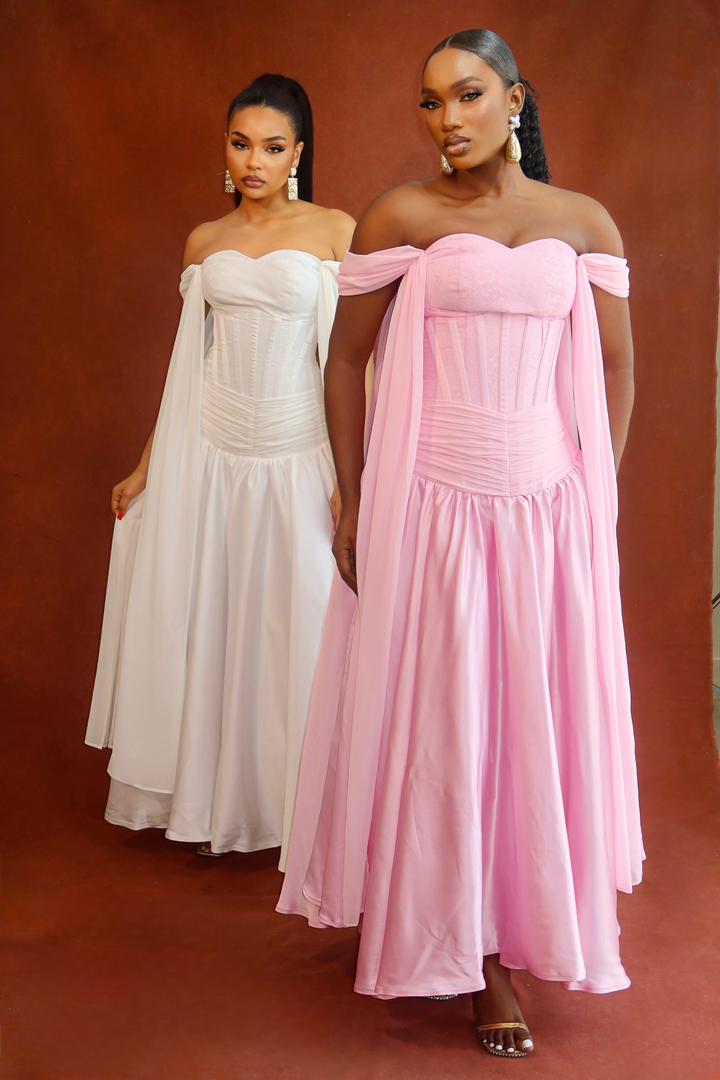
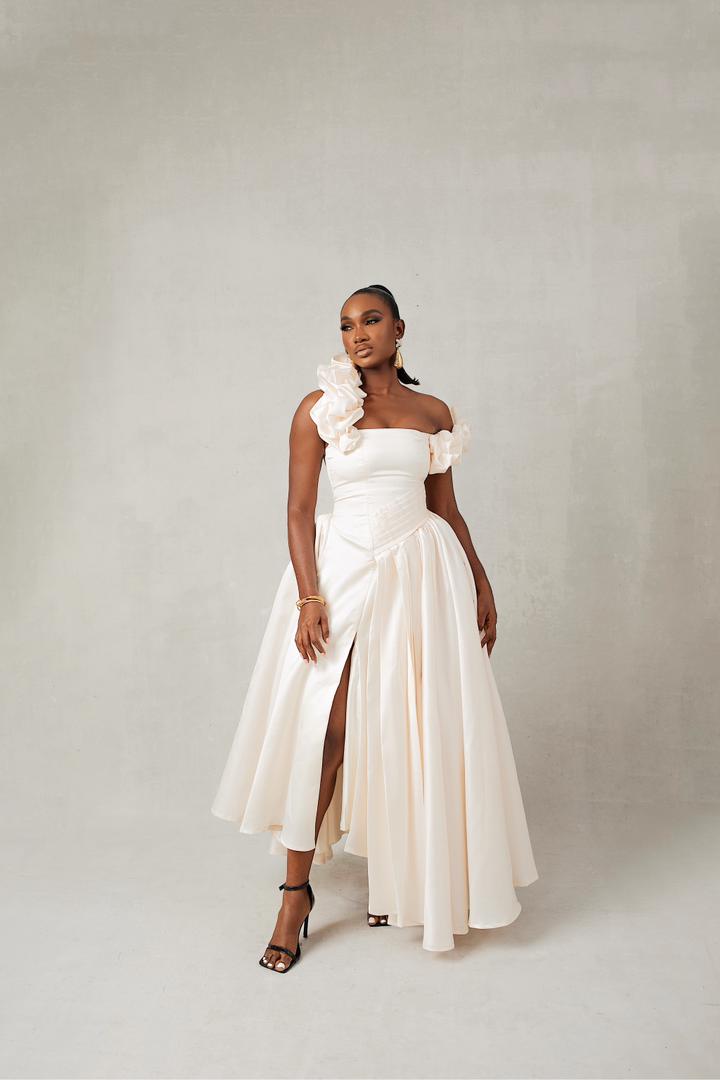
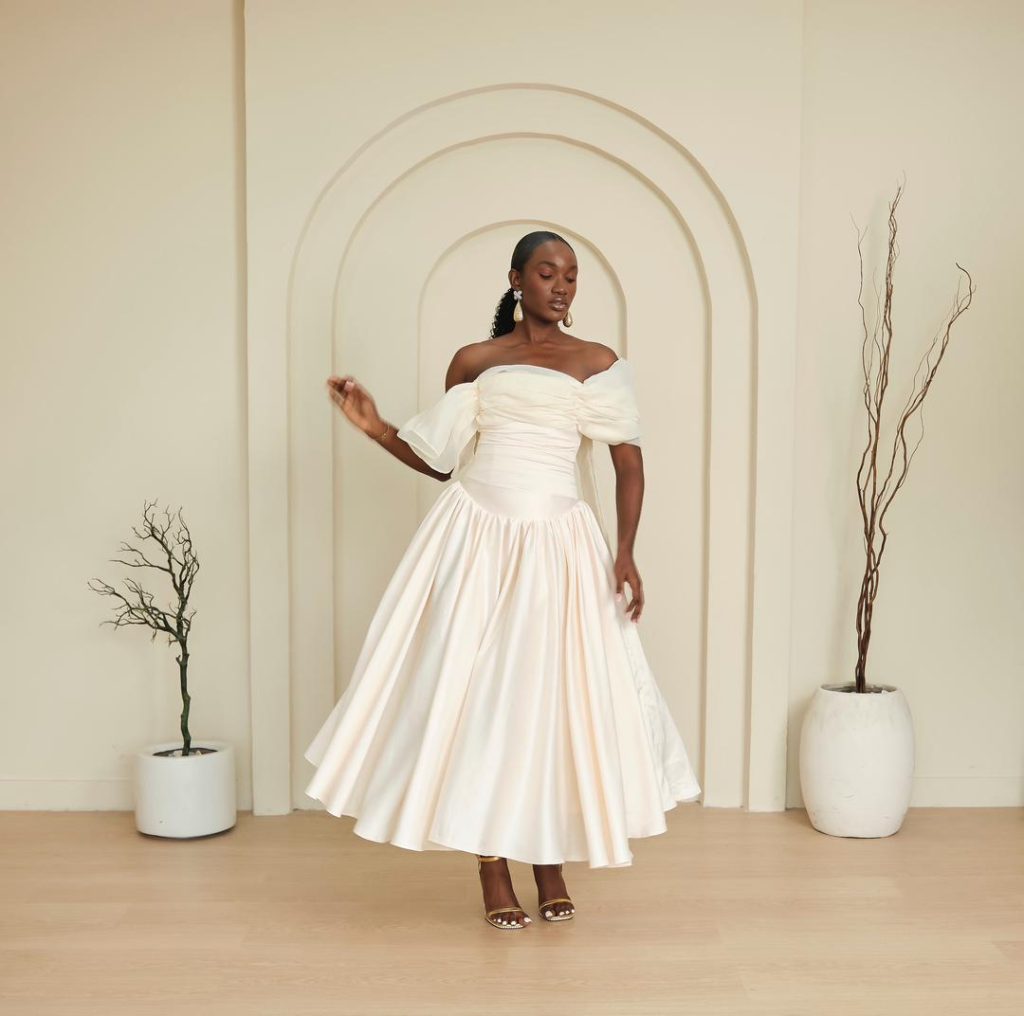
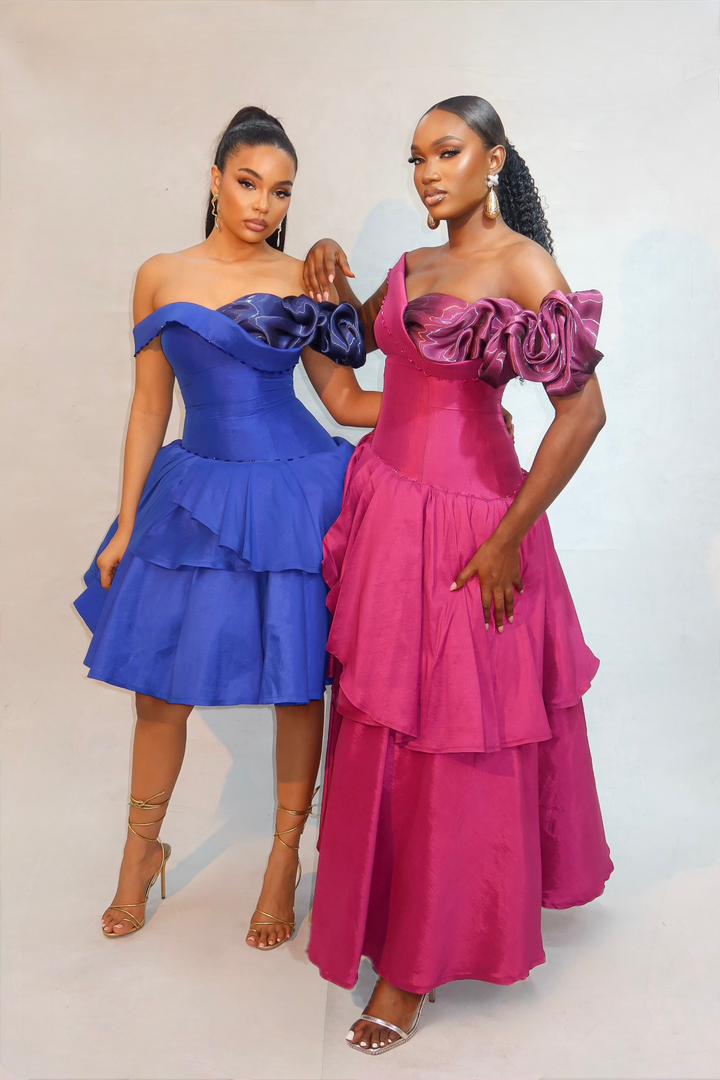
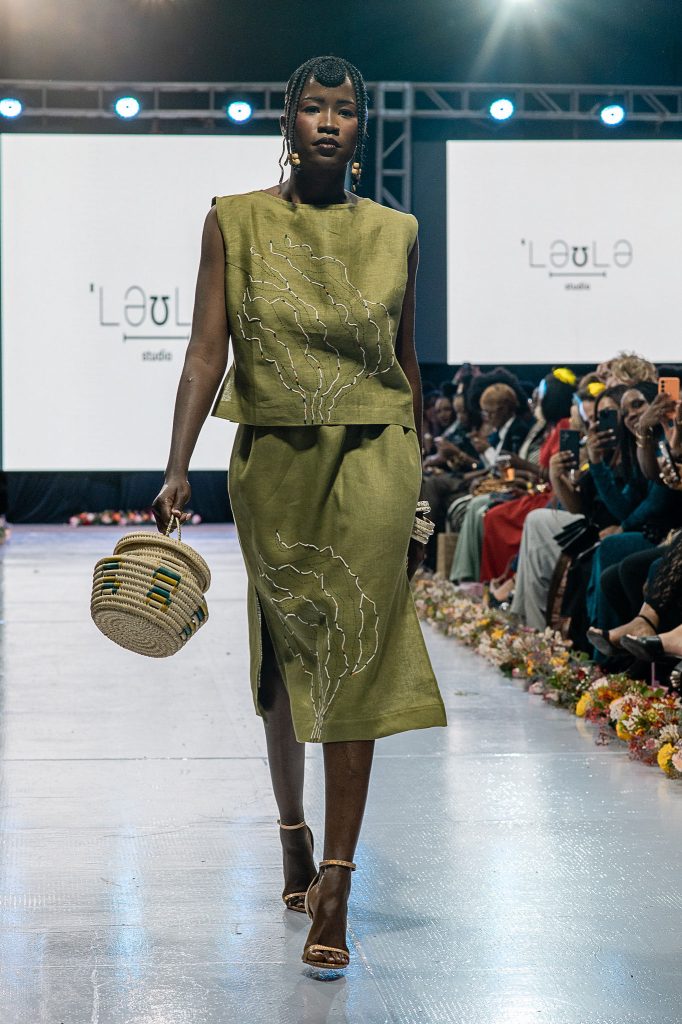
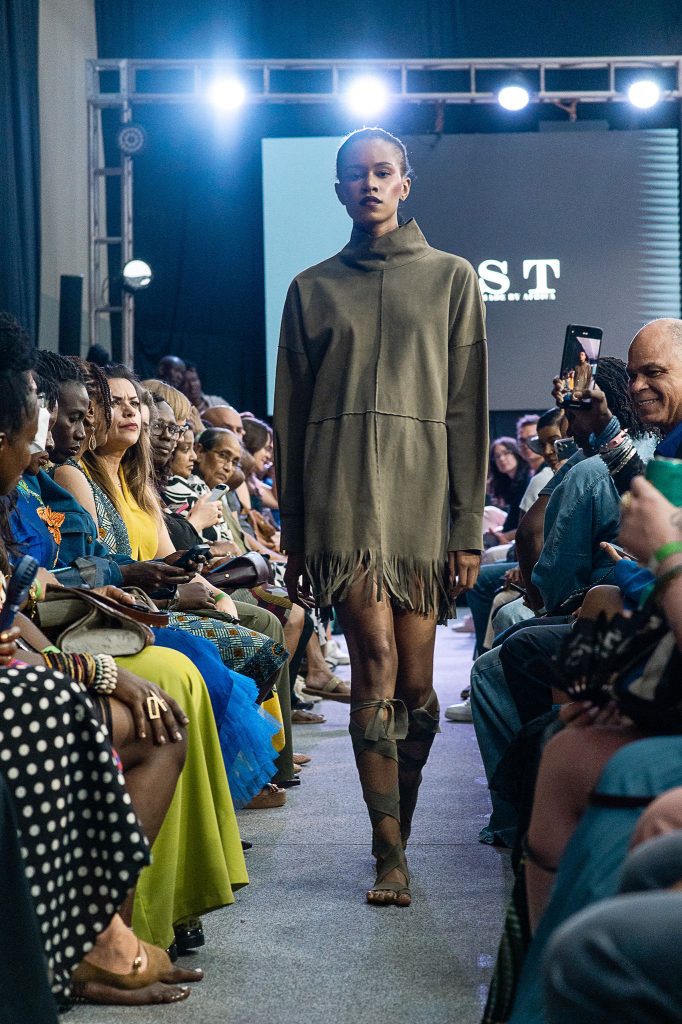
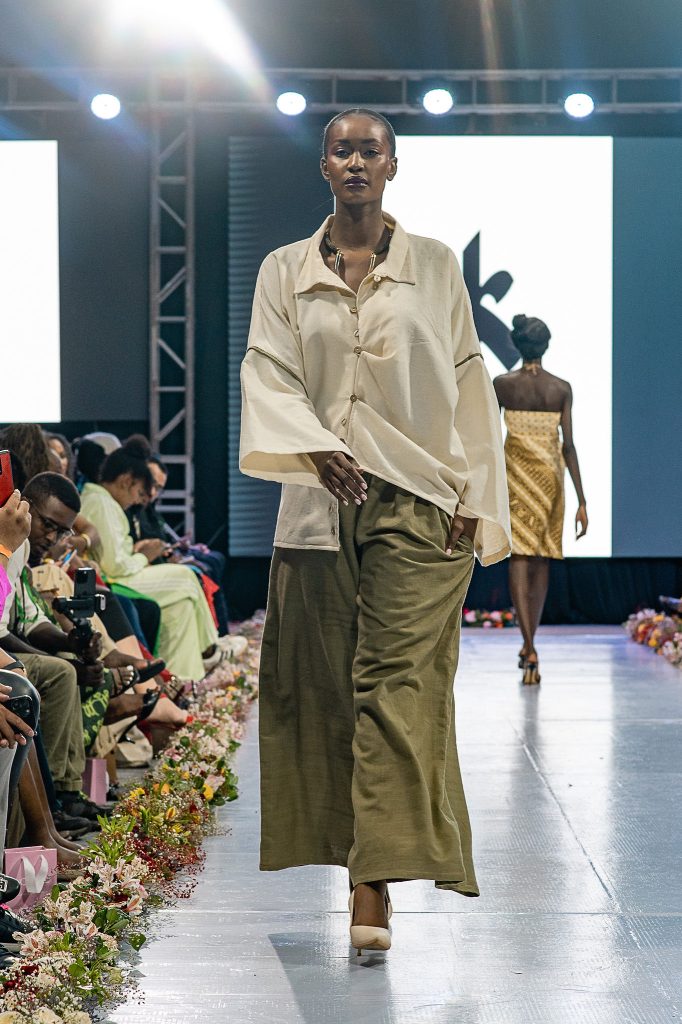
From Rebrand to Radiance: The Timeless Elegance of Moelle Essentials
How Doyinsola Ogbeifun is redefining occasion wear with a focus on fit, femininity, and confidence
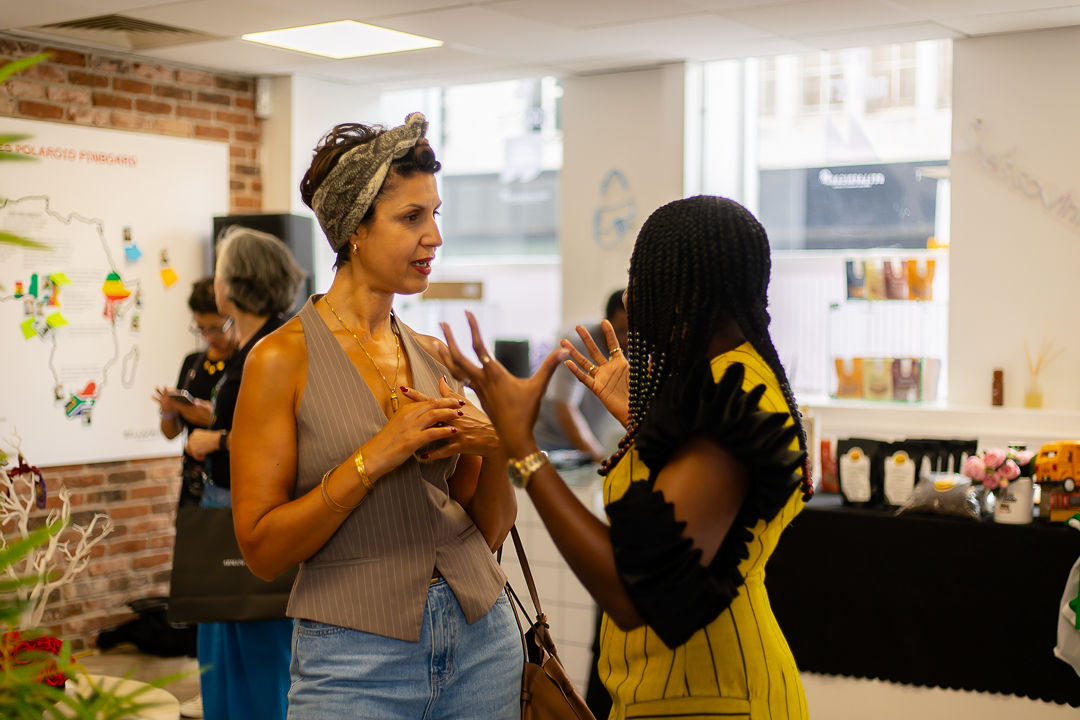
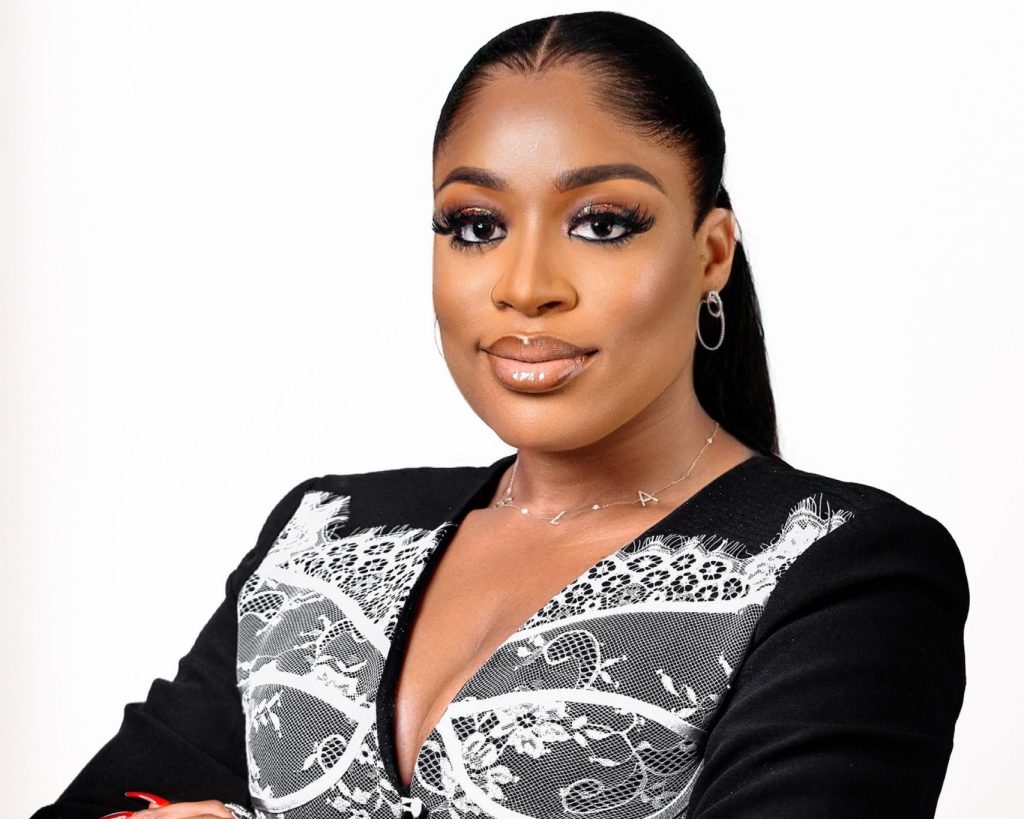
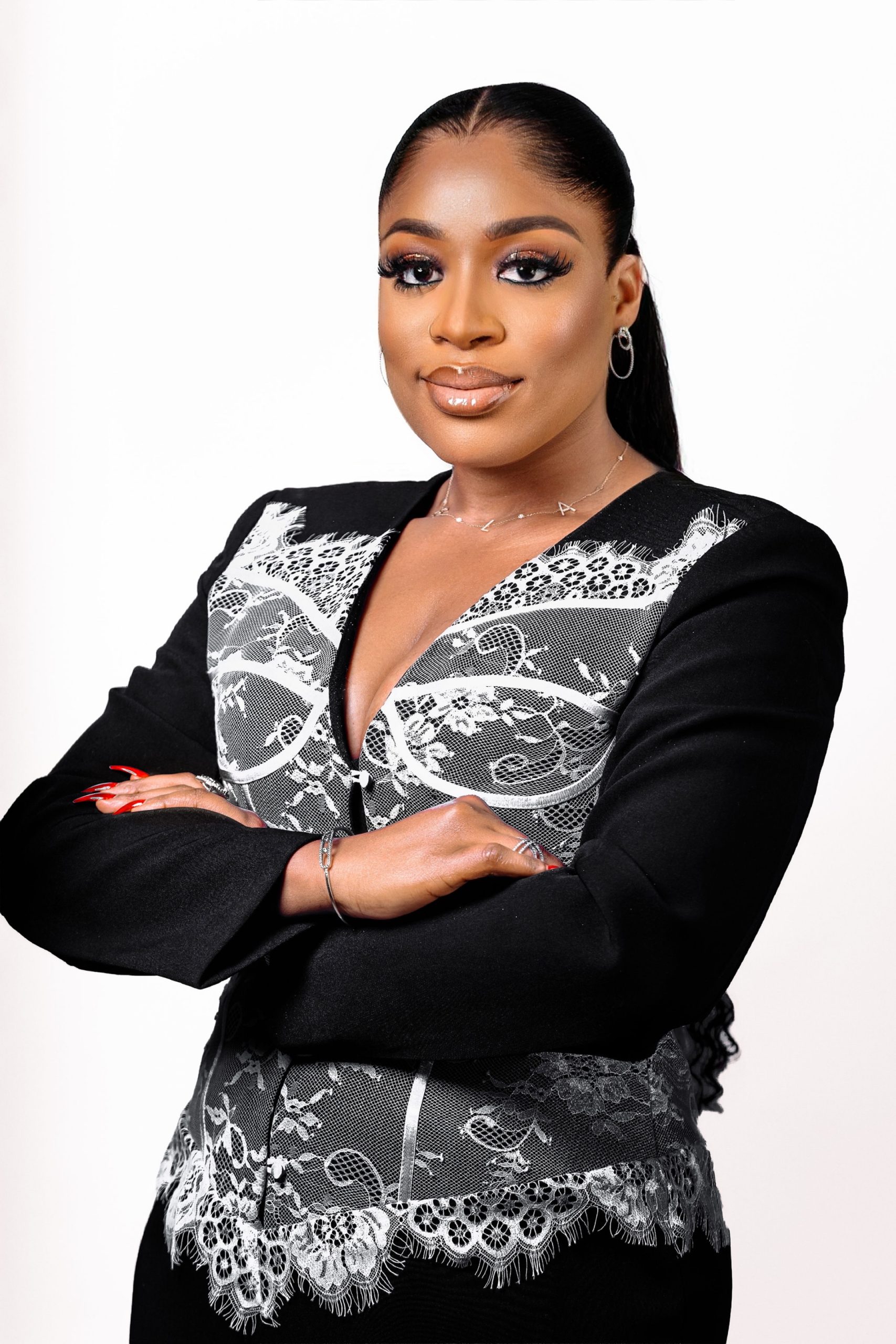
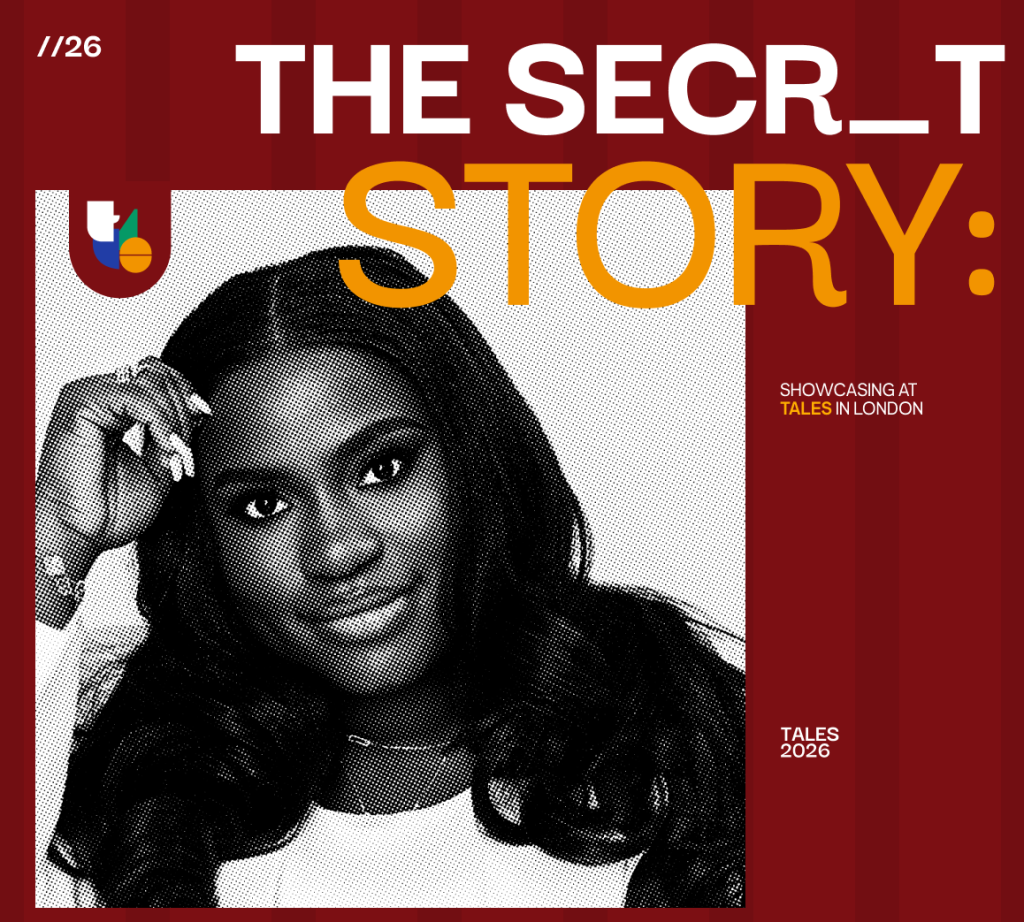
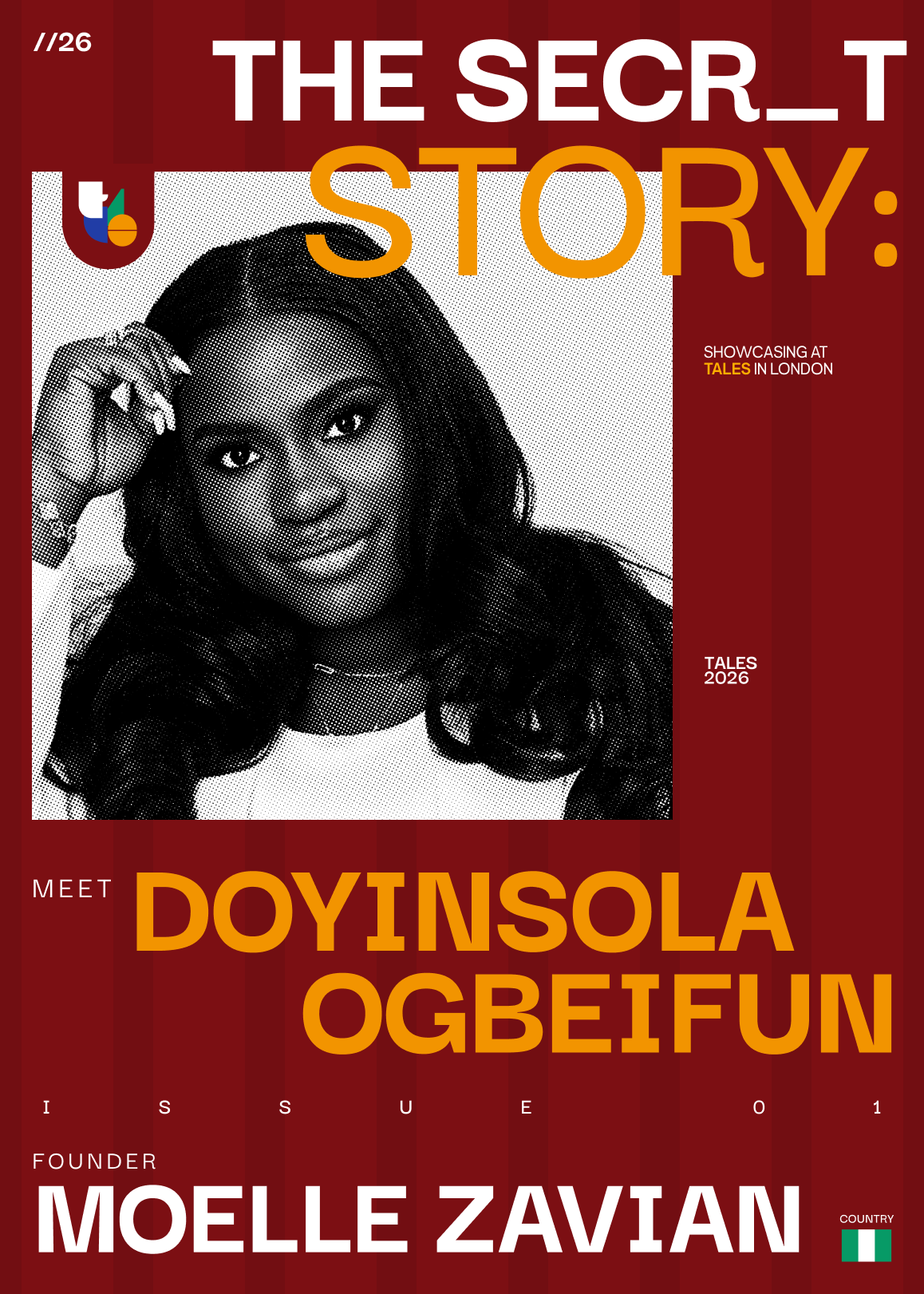
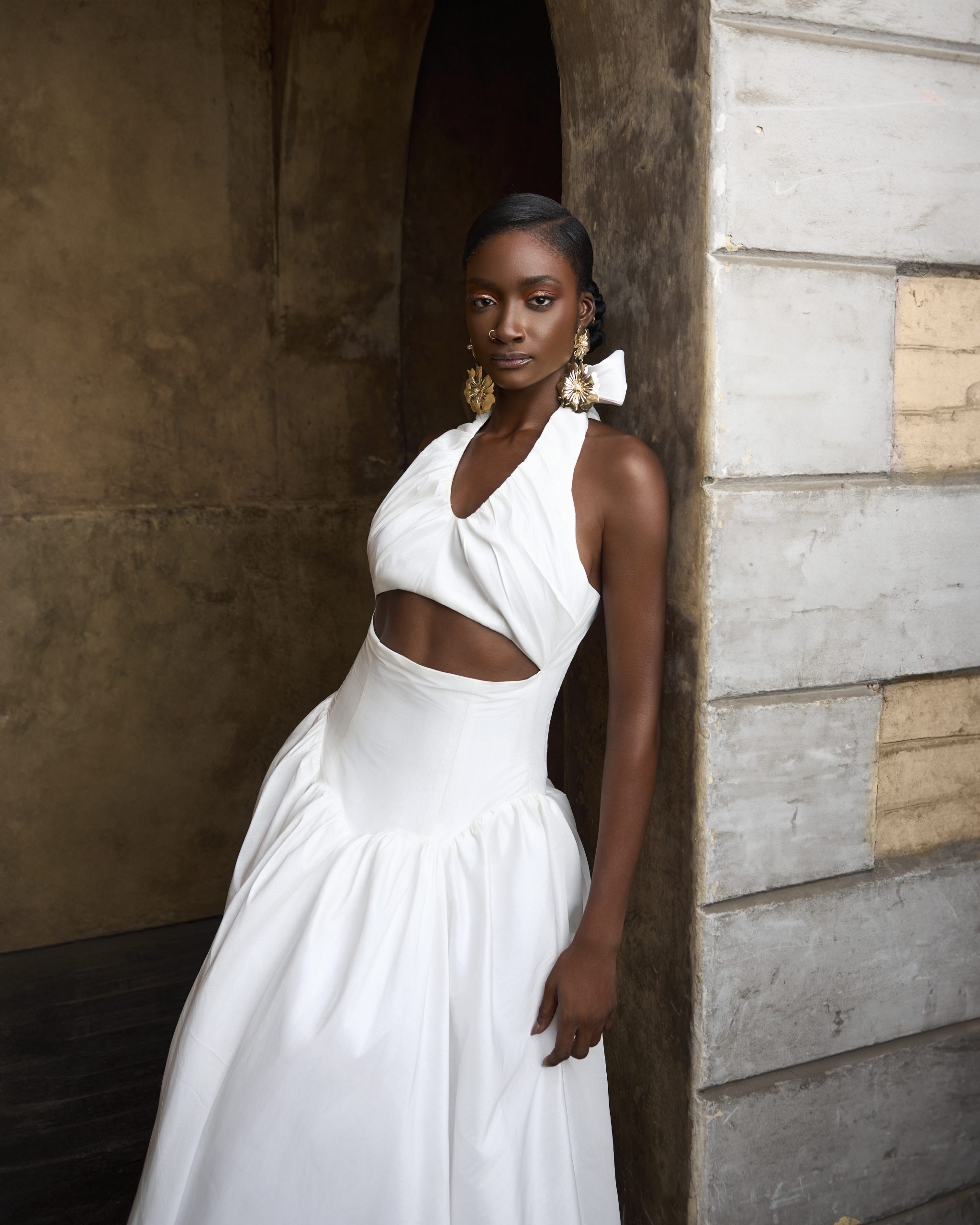
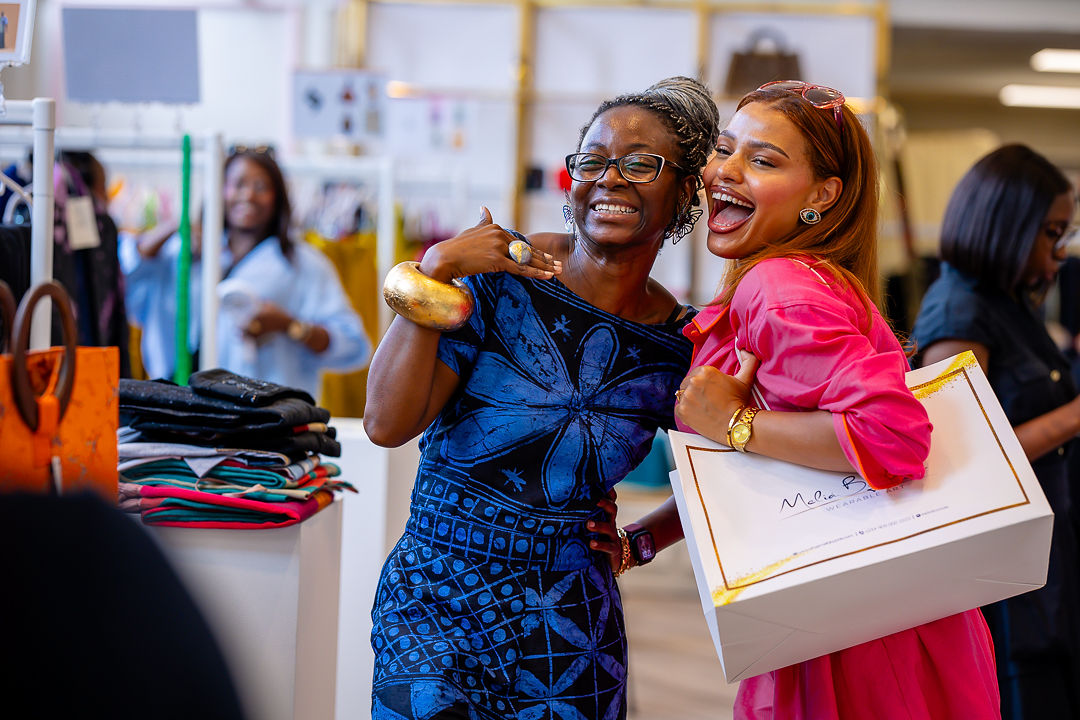
When you meet Doyinsola Ogbeifun, founder of Moelle Essentials, there’s an instant calm that draws you in, the kind that comes from someone who understands grace, structure, and the quiet power of confidence.
Her journey into fashion wasn’t a loud or impulsive one. It was built over time, shaped by observation, curiosity, and an ever-present desire to create clothes that make women feel as good as they look.
A Pause, A Rebirth
Moelle Essentials first came to life in 2018, born from Doyinsola’s vision to design elegant, well-fitted pieces for women of all shapes and sizes. But as with most creative journeys, there was a moment of pause — a three-year break that became a period of reflection and rediscovery.
In 2022, Moelle Essentials returned rebranded, refocused, and ready to redefine occasion wear.
The brand found its rhythm again, this time with a clearer purpose: to celebrate diverse body types through elegant, accessible designs that don’t compromise on quality or comfort.
Fashion That Fits Every Woman
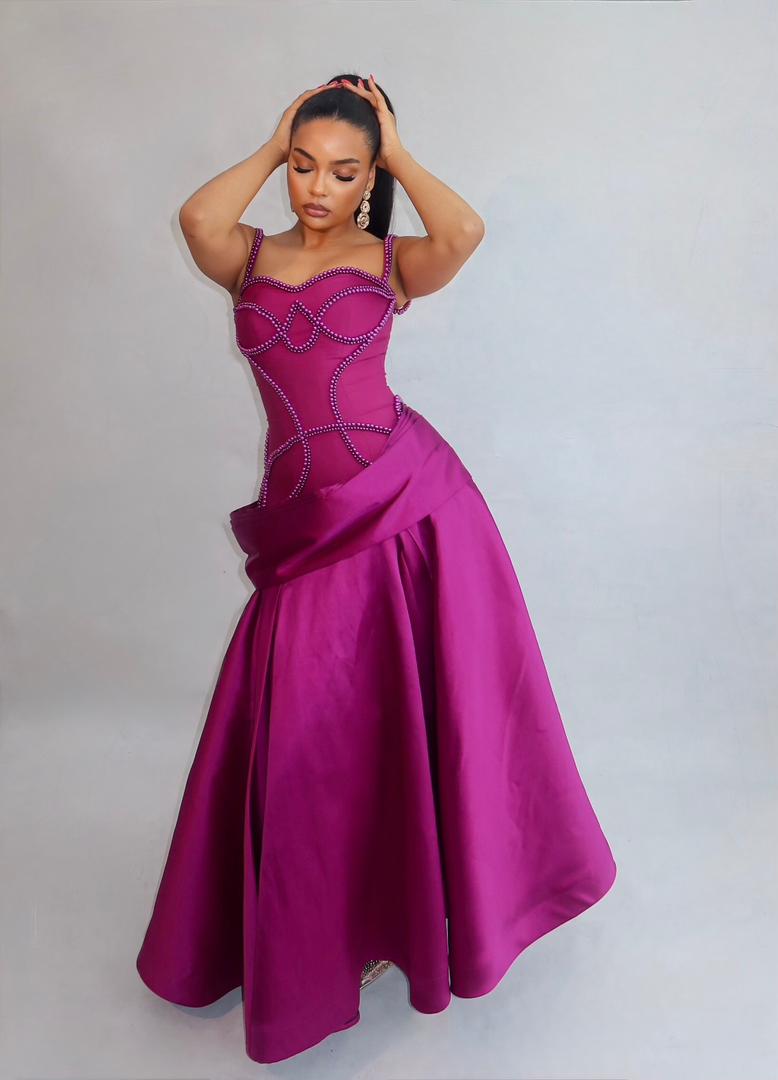
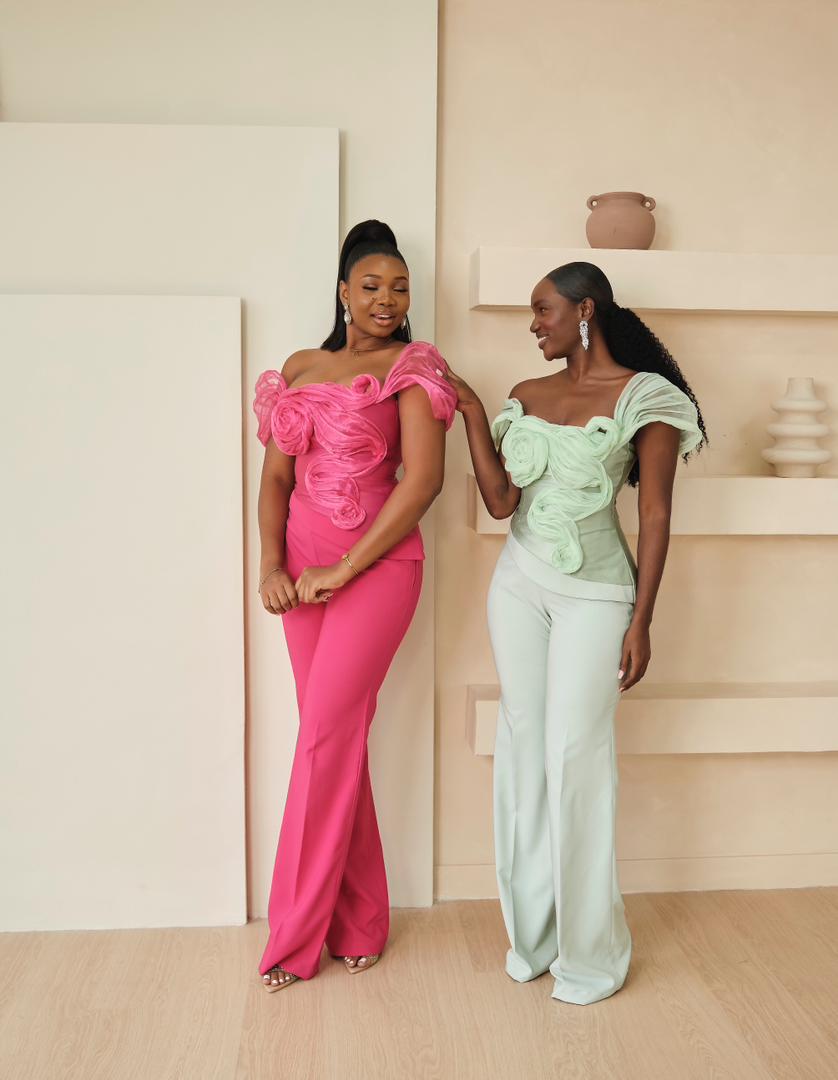
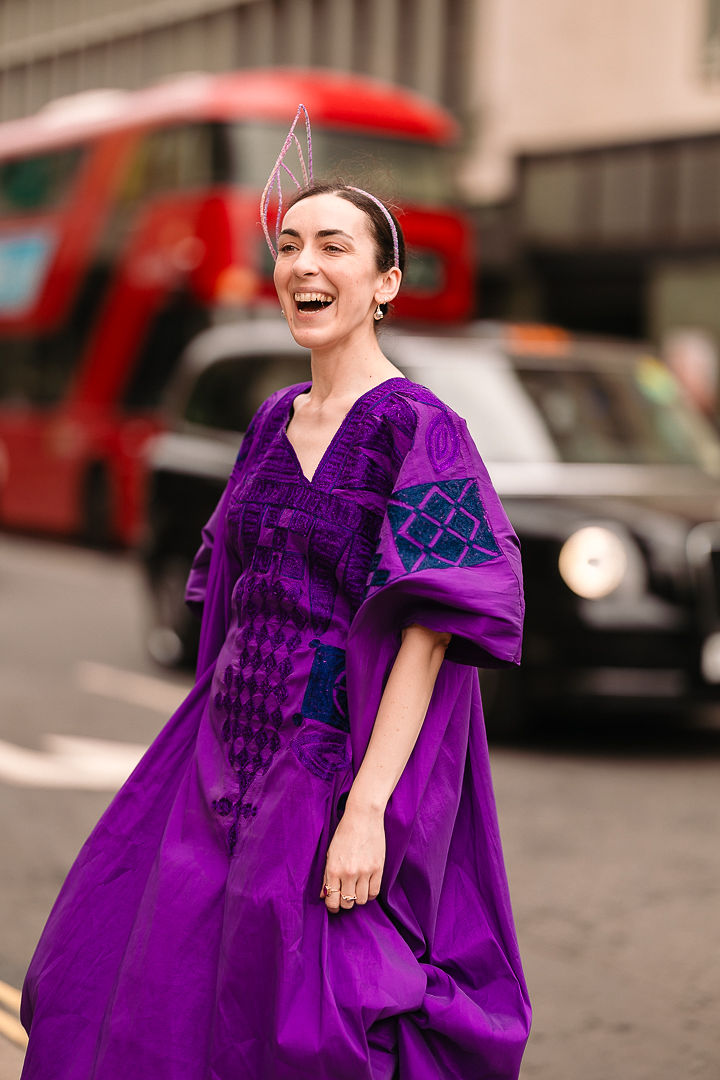
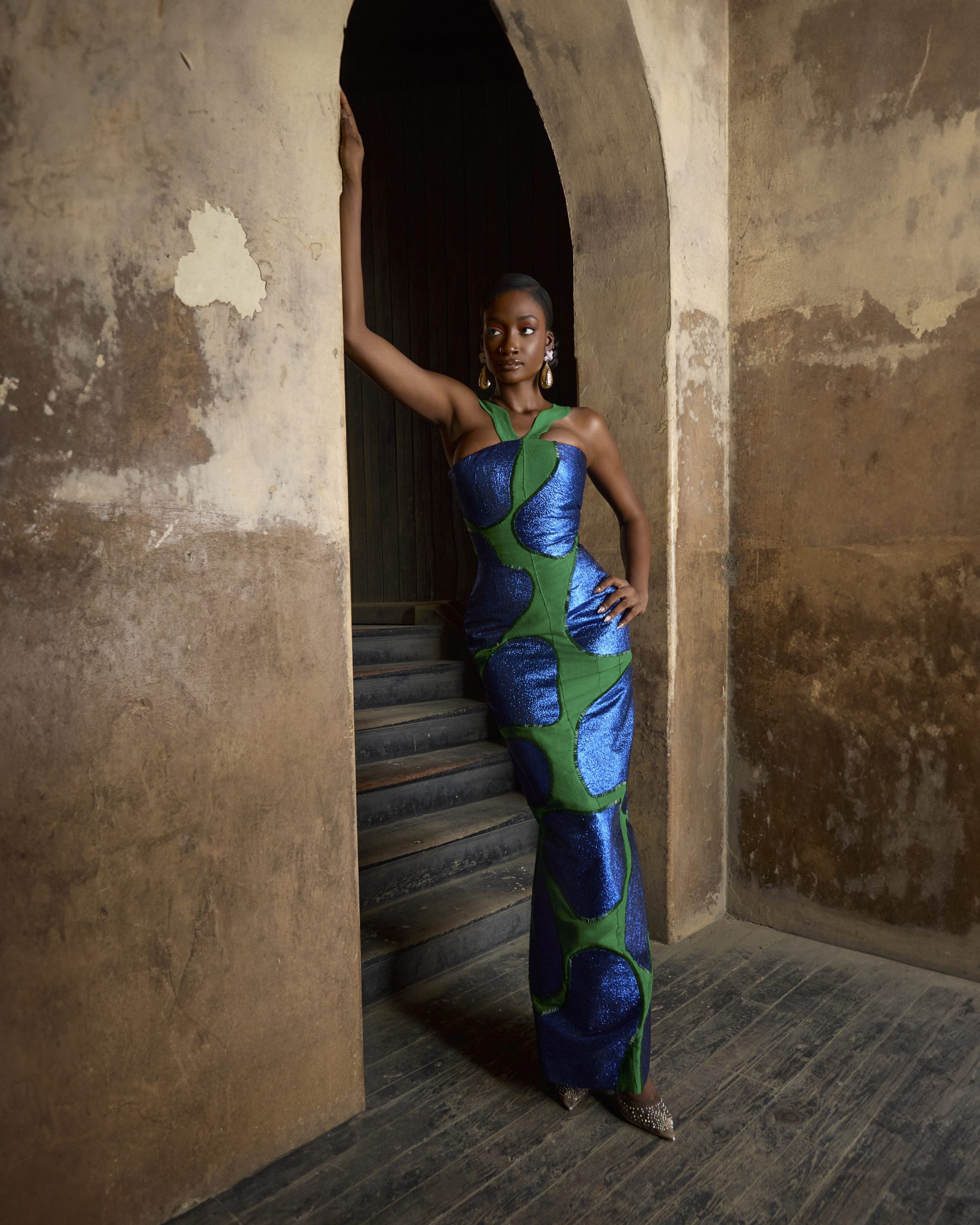
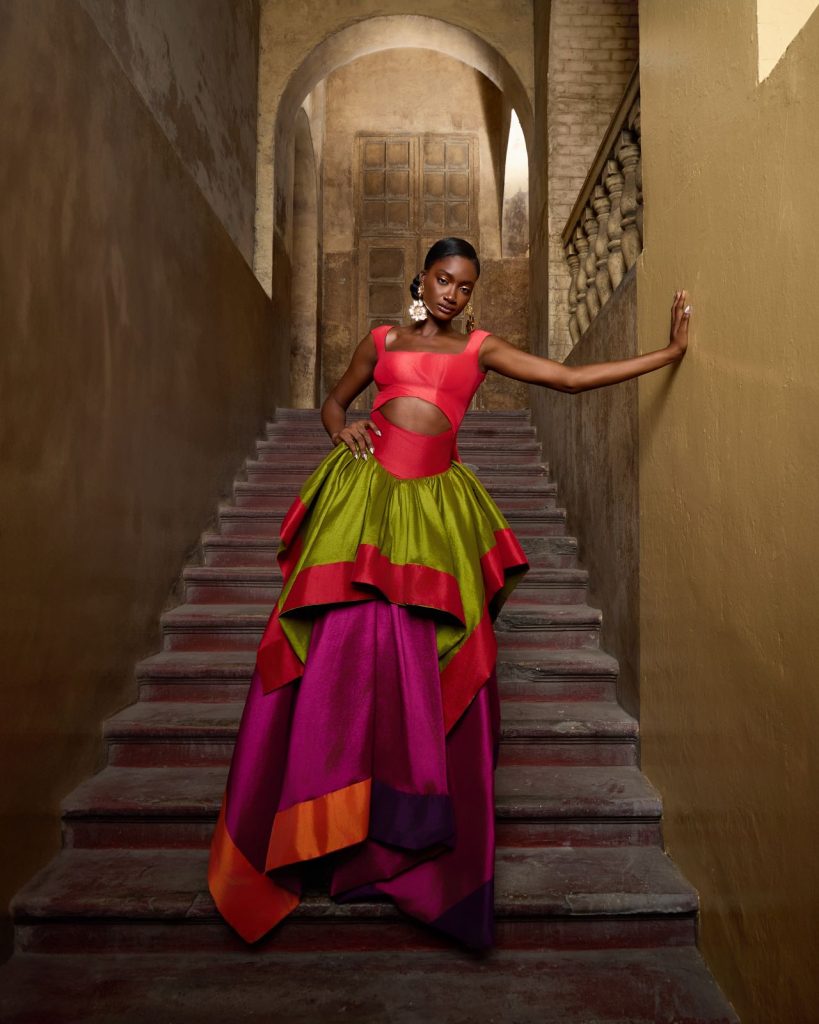
Walk into Moelle Essentials’ world, and you’ll find pieces that speak of balance, classic yet modern, bold yet feminine. From flowing dresses that move like poetry to structured fits that celebrate the body’s natural silhouette, every design is made to make women stand tall.
Whether you’re petite, curvy, or tall, Moelle offers both ready-to-wear (RTW) and made-to-measure pieces. The goal? To eliminate the struggle of finding occasionwear that truly fits.
As Doyinsola puts it,
“Elegance should never be a privilege. It should be accessible — and it should fit.”
The Moelle Woman
The Moelle woman knows her worth. She loves sophistication without shouting it. She values quality but also seeks versatility. And above all, she wears her confidence like her favourite dress effortlessly.
Every piece by Moelle Essentials is designed with that woman in mind. From the first sketch to the final stitch, Doyinsola ensures that comfort, style, and precision go hand-in-hand.
Redefining Occasionwear
Moelle Essentials has carved a niche in occasionwear, reimagining what it means to dress up. It’s not just about sequins or silhouettes; it’s about emotion. The feeling of slipping into a dress that fits perfectly. The quiet excitement of looking in the mirror and saying, Yes, this is me.
With elegant fabrics, timeless cuts, and detail-oriented craftsmanship, Moelle’s creations are meant to stay in your wardrobe, and your memory for years to come.
The Future of Moelle
As Moelle Essentials continues to grow, one thing remains clear: the brand isn’t chasing trends — it’s setting a standard.
It’s about creating clothes that tell stories of women who rise, reinvent, and walk into every room like it was designed for them.
And in that story, Moelle Essentials isn’t just making dresses. It’s making statements — one confident woman at a time.
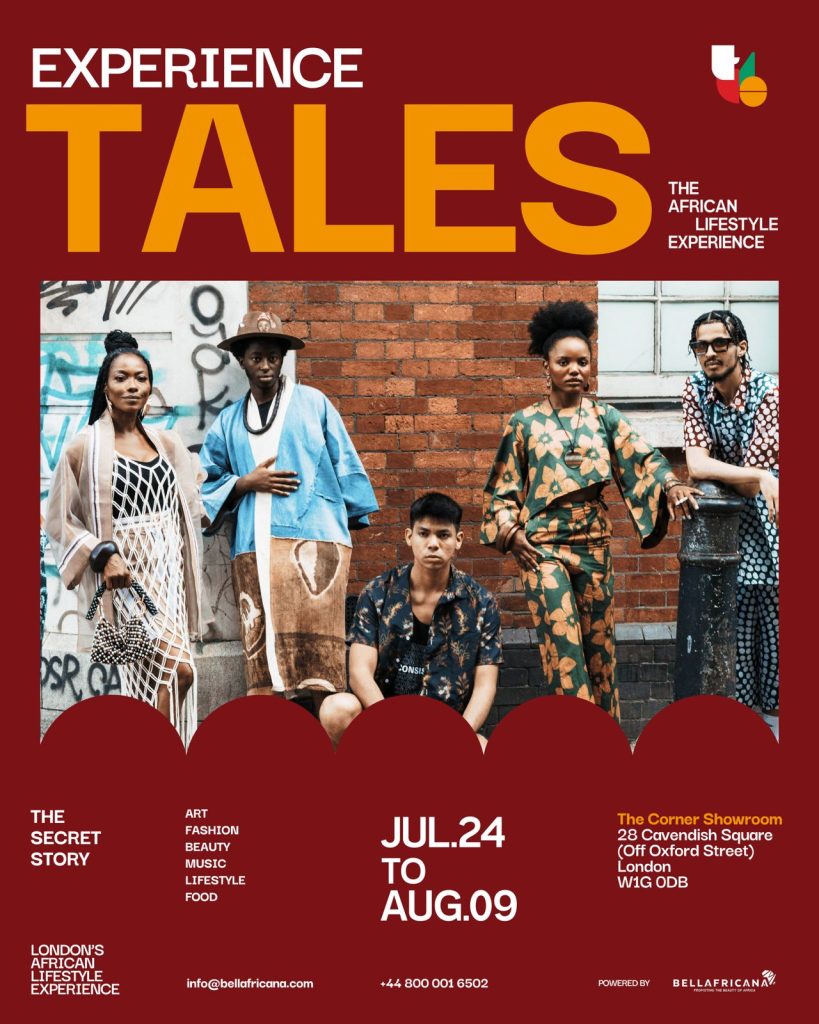
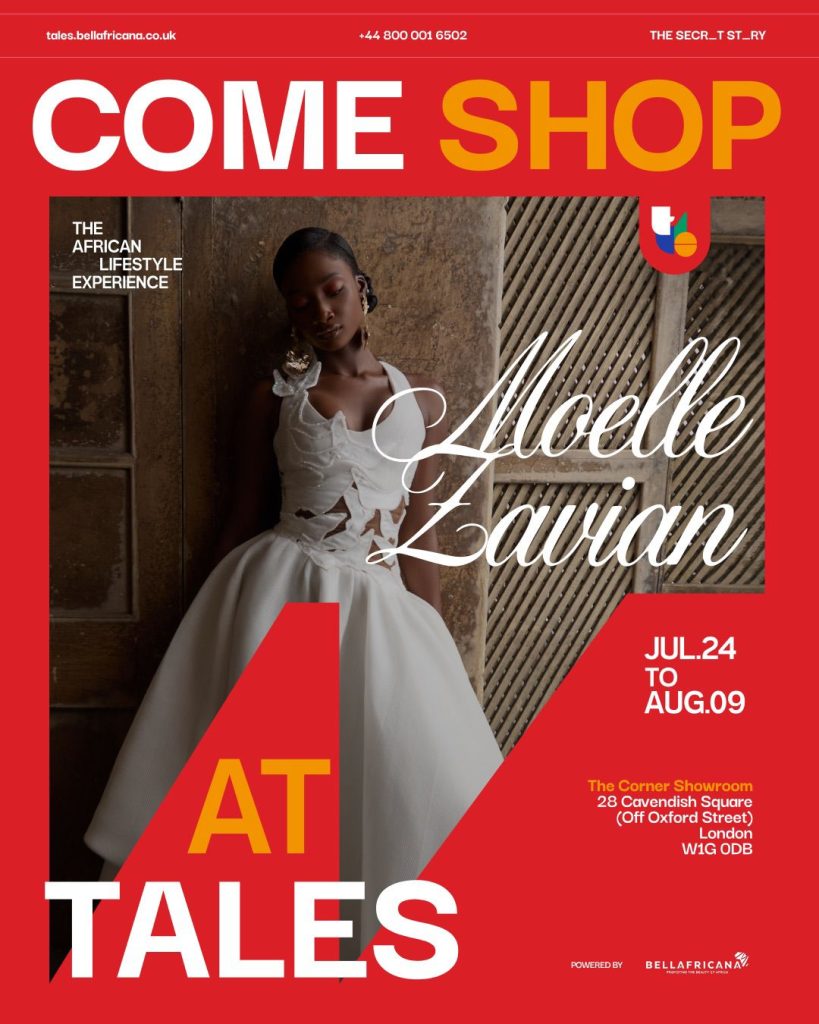
If you’re looking for things to do in London this summer, especially experiences that celebrate culture, creativity, and unique brands, then TALES 2026 (The African Lifestyle Experience) should be on your list.
Taking place over 17 days in London (July 24 – August 9), TALES brings together some of the most exciting African fashion, lifestyle, beauty, and home brands—all in one curated space.
But TALES isn’t just something you attend. It’s something you experience.
Here’s how to plan your visit and make the most of it.
What is TALES (The African Lifestyle Experience)?
TALES is a curated retail and cultural experience that showcases African creative brands in London.
It’s where you:
Discover unique African fashion and lifestyle products
Meet the founders behind the brands
Experience the stories behind each piece
Shop intentionally and meaningfully
If you’re searching for African pop-up experiences in London, cultural events, or unique shopping experiences, TALES is one to explore.
TALES 2026 Dates & Location
Dates: July 24 – August 9, 2026
Location: TALES House London, 28 Cavendish Square (Off Oxford Street), London W1G 0DB.
Located in the heart of London, TALES House is easily accessible and perfect for both locals and visitors.
How to Get to TALES House London
TALES House is centrally located on Oxford Street, making it easy to reach:
By Tube: Oxford Circus Station or Tottenham Court Road Station
By Bus: Multiple routes along Oxford Street
By Car: Limited parking available nearby (public transport recommended)
Opening Hours for TALES 2026
10am – 7pm daily
Tip: Visit earlier in the day for a more relaxed experience, or later for a livelier atmosphere.
Plan Your Visit Ahead for TALES 2026
With 17 days to explore, it’s worth planning ahead.
Ask yourself:
Do you want a quiet browsing experience or a lively one?
Are you coming solo, with friends, or with family?
Do you want a quick visit or a full experience?
Many visitors come more than once, and for good reason.
Set a Budget (and Stay Open)
Trust me, TALES is full of discovery.
You’ll come across:
Unique pieces
New brands
Items you didn’t plan to buy
Set a budget, but leave a little room for surprises.
Take Your Time
TALES is not a quick stop.
Give yourself time to:
Walk through the space
Revisit brands
Explore different sections
Some of the best finds happen when you slow down.
Don’t Just Shop, Engage
One of the most unique parts of TALES is the opportunity to connect directly with founders.
Ask questions like:
What inspired this piece?
How was this created?
What does this collection mean?
These conversations make your purchases more meaningful.
Capture and Share the Experience
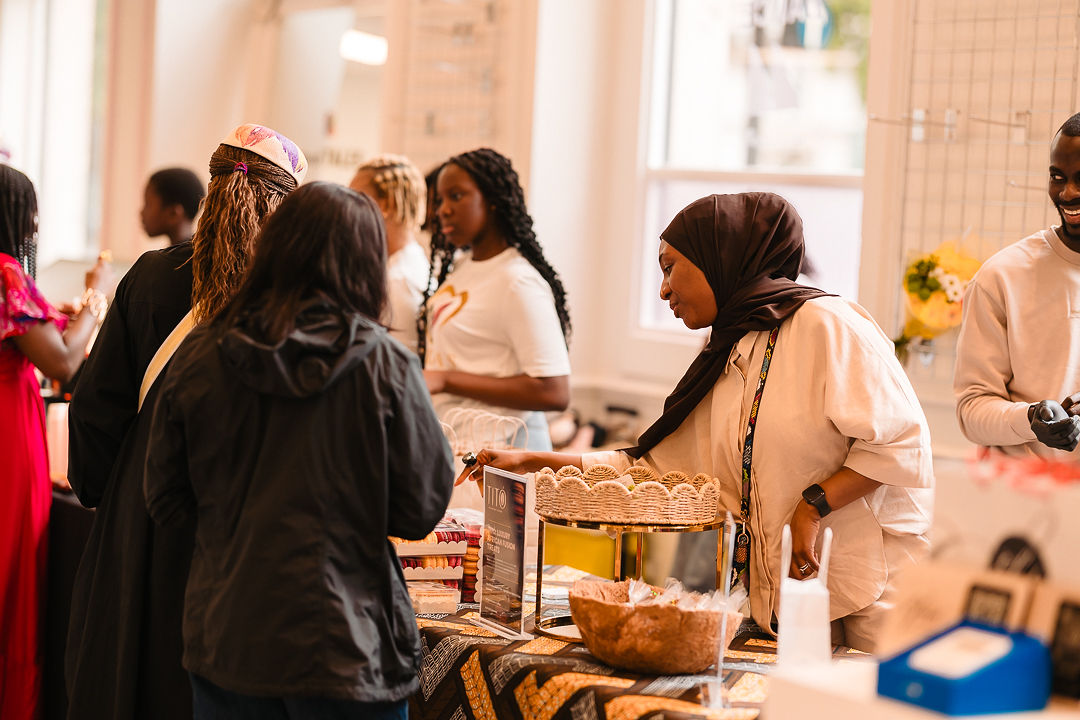
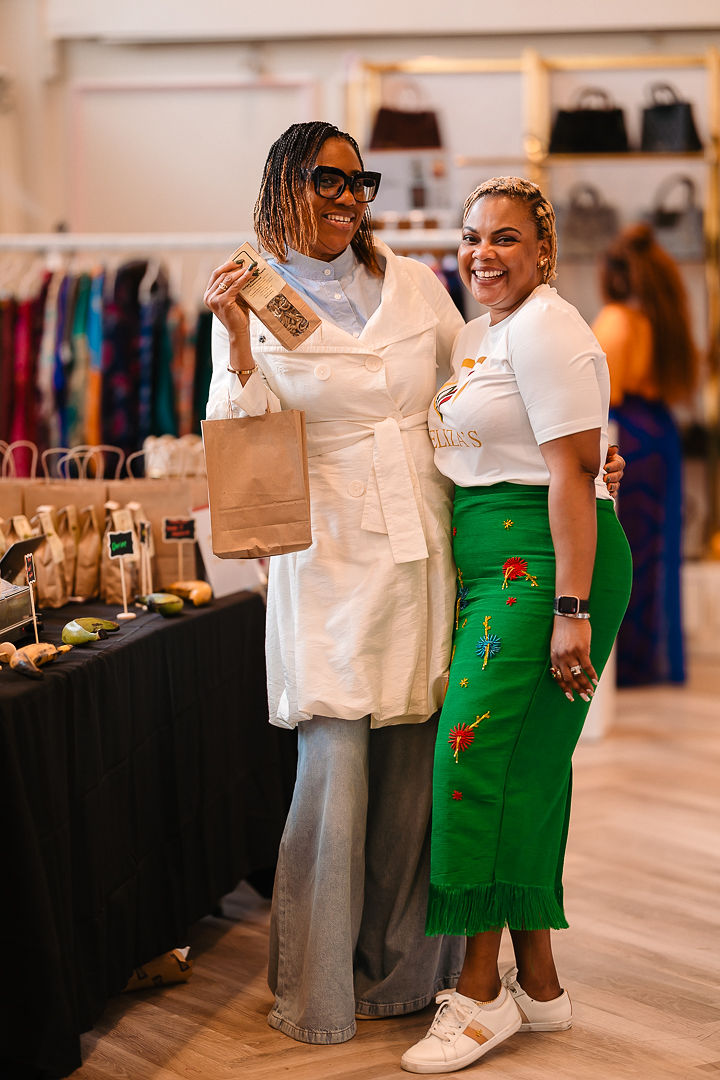
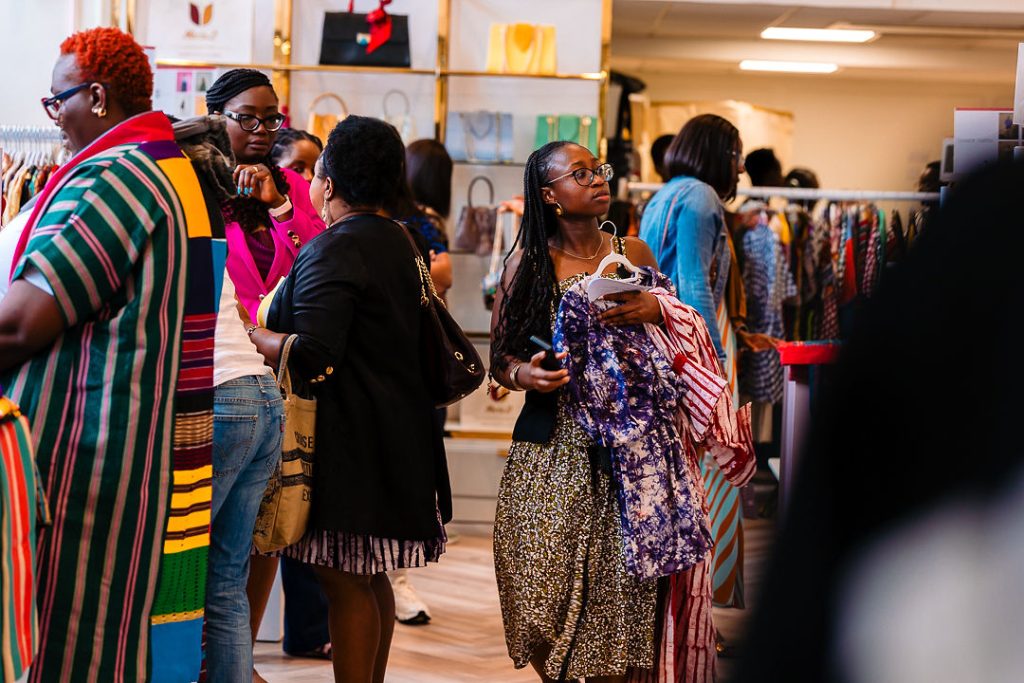
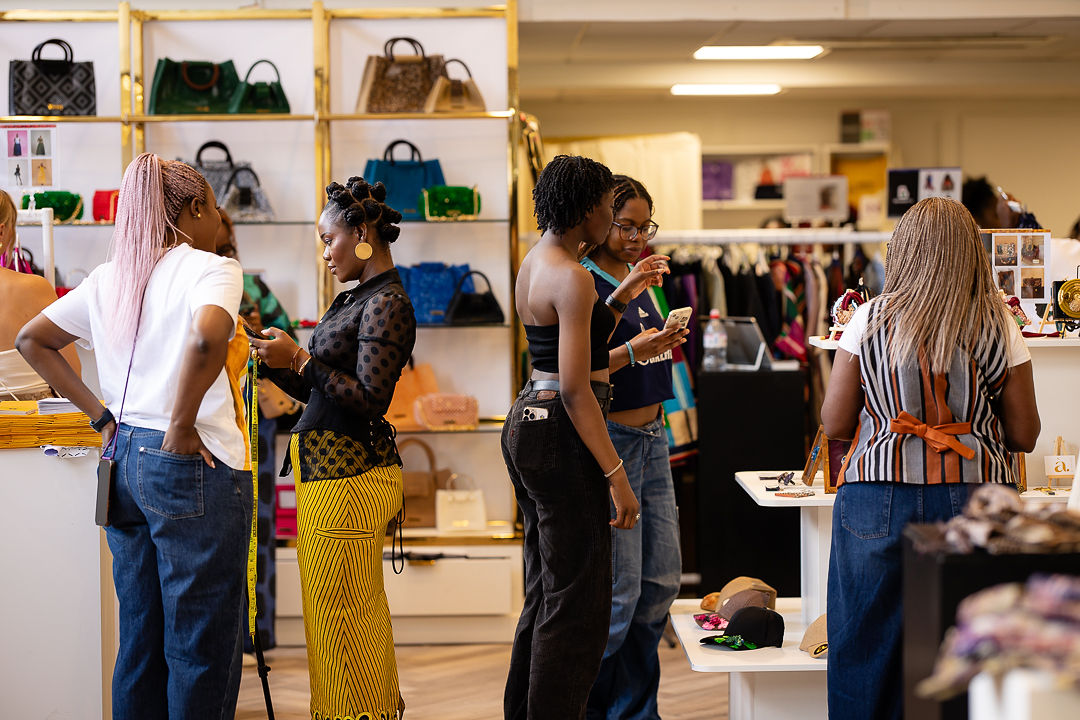
TALES is a beautiful, vibrant space, perfect for photos and content.
Feel free to:
Take pictures
Share your experience
Tag the brands and @bellafricanauk
Who Should Attend TALES 2026?
TALES is for:
Shoppers looking for unique and meaningful products
Creatives and entrepreneurs seeking inspiration
Buyers and collaborators exploring new brands
Anyone interested in African culture and creativity
If you enjoy discovering something different, you’ll feel right at home.
Payment Options
Most brands will accept:
Card and contactless payments
Some may accept cash
It’s always helpful to come prepared with multiple options.
Best Times to Visit TALES
Weekdays (Daytime): Quieter, more relaxed
Evenings & Weekends: Busier, more vibrant
Choose based on the kind of experience you want.
Final Thoughts
TALES is more than a market. More than a pop-up. More than a shopping trip.
It’s a space where you:
Discover
Connect
Experience
And the way you show up… will shape what you take away.
📍 Plan Your Visit
TALES 2026 July 24 – August 9 28 Cavendish Square (Off Oxford Street), London W1G 0DB. Follow along: @bellafricanauk
African fashion has always had the talent. Designers emerging from Lagos, Accra, Nairobi, and beyond have been producing world-class work for decades. Yet the African fashion platform that could carry that talent to the diaspora has been missing. The collections are compelling. The craftsmanship is real. The cultural depth is undeniable.
But what has been harder to solve is access.
Consider the gap between an extraordinary Nigerian designer in Lagos and the diaspora customer in London who would buy her work, wear it, and understand exactly what it means. That gap has resisted cultural momentum, social media advocacy, and years of goodwill. It does not close on its own. It closes when someone builds the infrastructure.
That is where Olubukola Adenugba comes in. She is the founder of The Ella Mo Brand, a curated African fashion platform based in the UK, and she is doing exactly that work.
Olubukola Adenugba, Founder of The Ella Mo Brand
Who Is Olubukola Adenugba?
Olubukola grew up at the intersection of two worlds: the rich visual culture of Nigeria, where fabric is ceremony and dress carries cultural memory, and the fashion-conscious creative environment of the UK, where she has built her professional career.
Her training was both rigorous and deliberate. She studied at Yetroselane Fashion Academy in Lagos, founded by award-winning CEO Yetunde Akande, a brand with runway presence at New York Fashion Week and Mercedes-Benz Fashion Week Ghana. That foundation gave her the creative and cultural grounding that now underpins everything she builds.
She went on to study Human Communication at Bowen University in Nigeria, then Digital Marketing at York St John University in London. Her years as a fashion stylist placed her at the centre of Nigerian fashion. Her work as a digital creator for global brands including Zara and H&M gave her an inside view of how international fashion organisations think: about market access, logistics, and moving product across borders.
She carried both educations into what she built. From the Nigerian side, she understood the quality of what African designers were producing. From the international side, she understood how far that quality was from the audiences who would value it most.
Eventually, that understanding became The Ella Mo Brand.
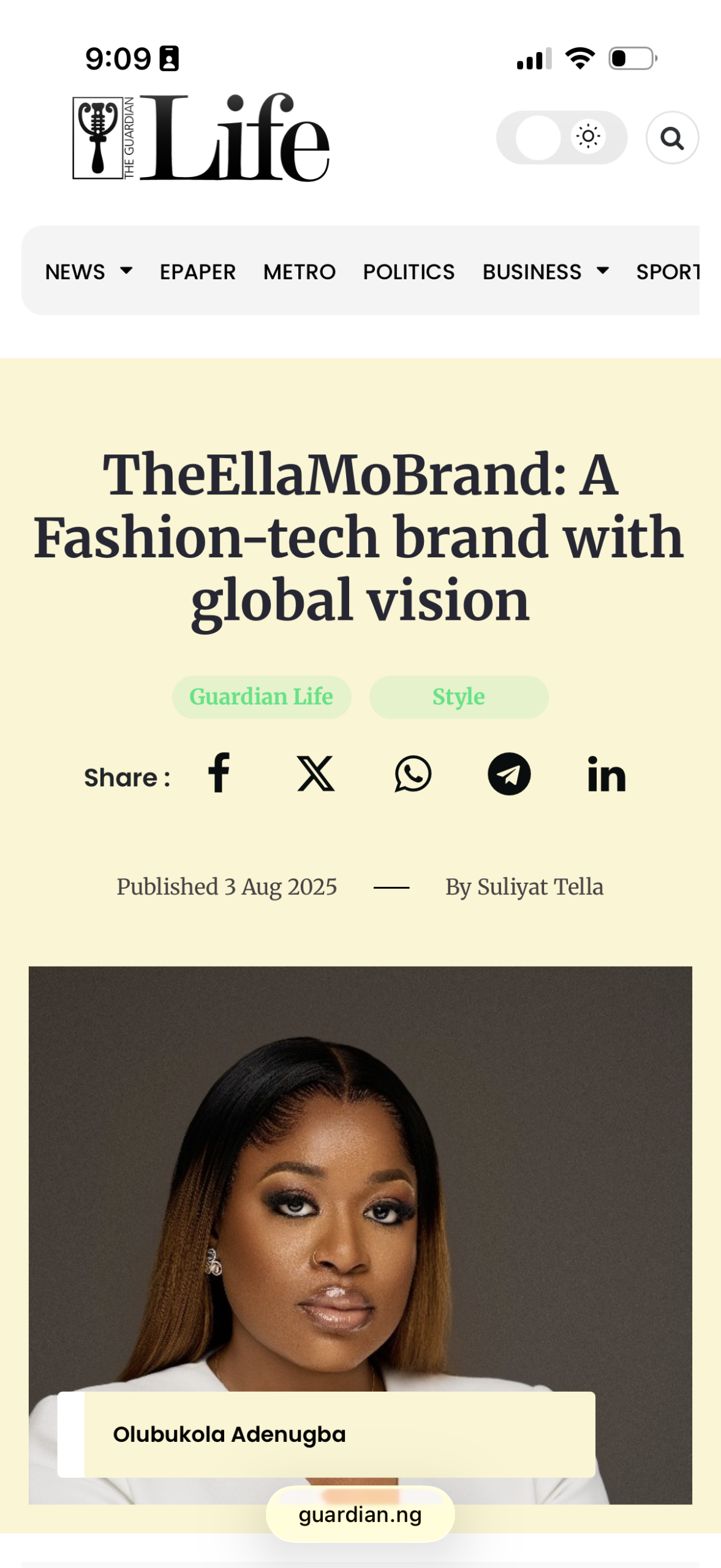
Guardian Nigeria Saturday Magazine feature on The Ella Mo Brand
An African Fashion Platform Built on Three Non-Negotiables
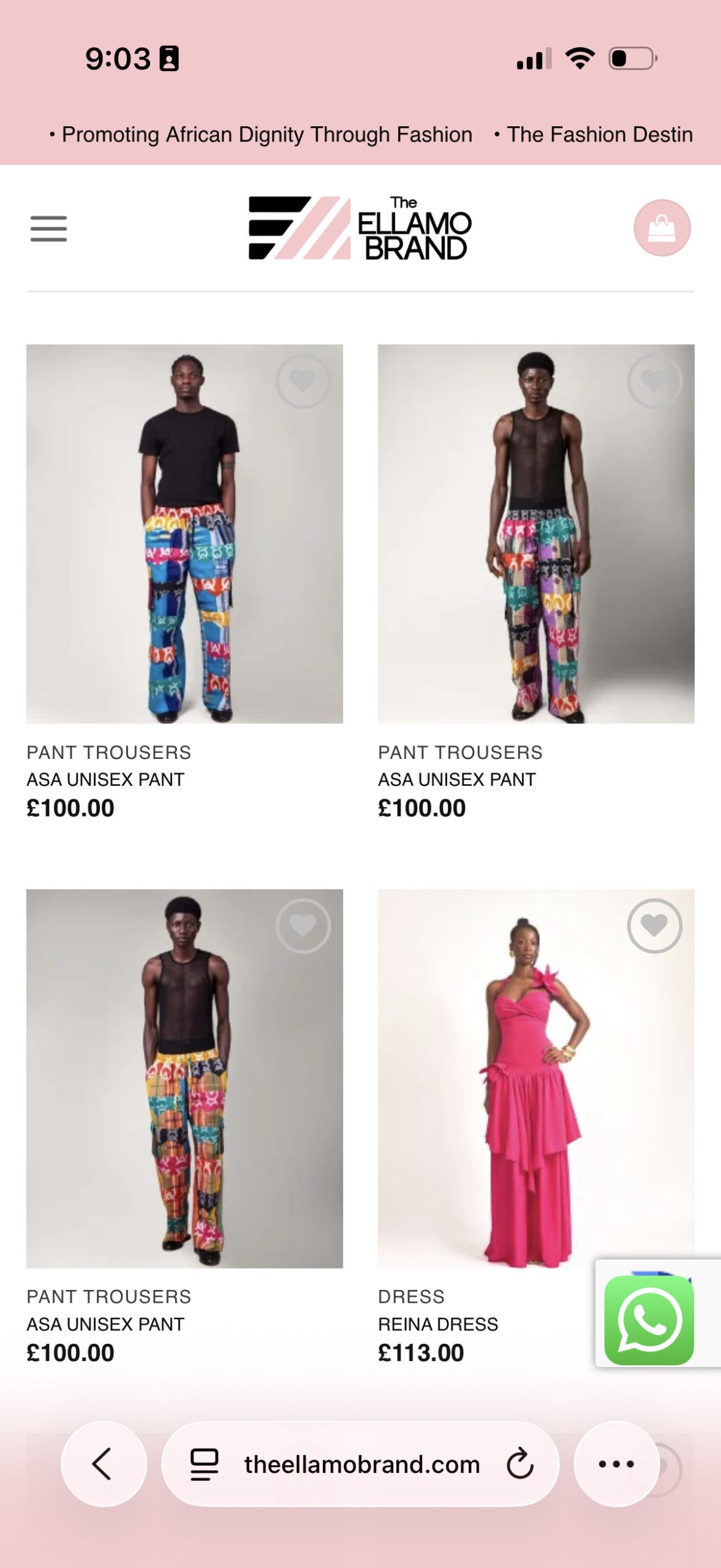
The Ella Mo Brand is a curated fashion-tech e-commerce platform. It sits at the intersection of African design talent and the global diaspora audience hungry for it. But calling it a platform understates what is actually happening inside it.
Olubukola evaluates every brand on the platform against three criteria she first developed during her fashion training and has held to ever since: authenticity of cultural expression, quality of craftsmanship, and integrity in how a brand represents its origins.
This is not a marketplace chasing volume. Instead, it is editorial curation, held to the standard of a luxury concept store buyer. The result is a platform where every piece carries cultural intention, and where the diaspora customer can trust what he or she finds.
Moreover, that standard does not shift. It applies with the same rigour to well-known brands and emerging ones alike. Commercial pressure does not move it.
The Ella Mo Brand platform – curated brand display
Working at the Design Stage, Not Just the Retail Stage
What sets The Ella Mo Brand apart from a curated shop is what happens before the customer ever arrives.
Olubukola works with African designers at the production stage, contributing to the conception of pieces that translate African aesthetic traditions for a diaspora wardrobe without diluting what makes them culturally significant. This is not a passive curatorial role. It is an active creative methodology.
Her collaborative work with Tania Omotayo’s Ziva Lagos is the clearest example of this in practice. Ziva Lagos brings four consecutive years at Arise Fashion Week, UNESCO-affiliated platform presentations in Paris, and a presence at Dubai Expo 2020. These are not transactional arrangements. Rather, they are design-stage partnerships built on a shared conviction that African fashion deserves to reach its audiences without compromise.
As a result, the garments that come from these collaborations carry a specificity in cultural reference, silhouette, and finish that speaks to a trained creative sensibility operating at the intersection of two fashion cultures at once.
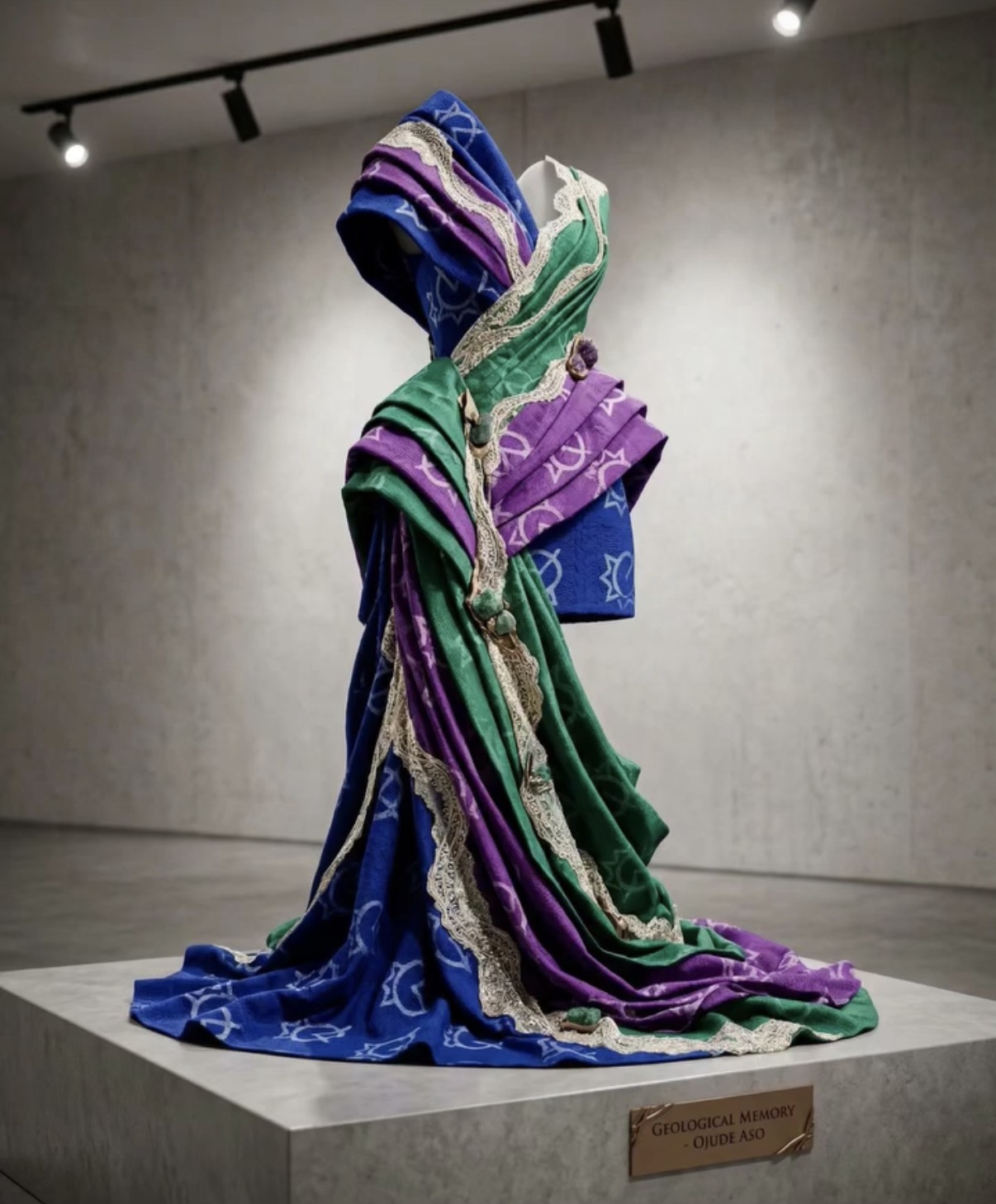
Recent Co-creation work of The Ella Mo brand with Ojude Aso (Image credit: ARTNOVATION)
What the Industry Is Saying
The measure of a platform’s significance is not what its founder says about it. It is what the industry says without being prompted.
Tania Omotayo of Ziva Lagos chose to have her brand commercially stocked on the platform. Similarly, Toyin Lawani, CEO of Tiannah’s Place Empire, with 25 years in the African fashion industry and over 2 million Instagram followers, has worn and publicly endorsed the curated designs, and has mentored Olubukola through the specific challenge of building an African fashion platform in the UK.
Then there is Yetunde Akande of Yetroselane Fashion Academy, who trained Olubukola and now has her brand commercially stocked on the platform. When the person who taught you the standards later chooses to be stocked by the platform you built on those standards, that is not coincidence. That is a closed loop of credibility.
The media recognition follows the same pattern. The Guardian Nigeria’s Saturday Magazine fashion section ran an independent editorial feature on the platform. In addition, La Mode UK, a UK-registered publication with presence in both Africa and the UK, featured Olubukola as their cover subject.
These are not arranged endorsements. They are independent assessments from people and institutions who know the African fashion industry from the inside.
Building the Community, Not Just the Business
The most telling indicator of a creative leader’s intention is what they do when the commercial case is already made.
For Olubukola, the answer is to go into schools.
Her community education programme takes her into UK schools, where she runs workshops introducing young people to African fashion heritage: the history of African textiles, the ceremonial significance of dress, and the craftsmanship traditions that underpin the designs on her platform. In a country where the African diaspora is one of the most culturally invested communities, this work builds the next generation of informed customers, creators, and advocates for African fashion.
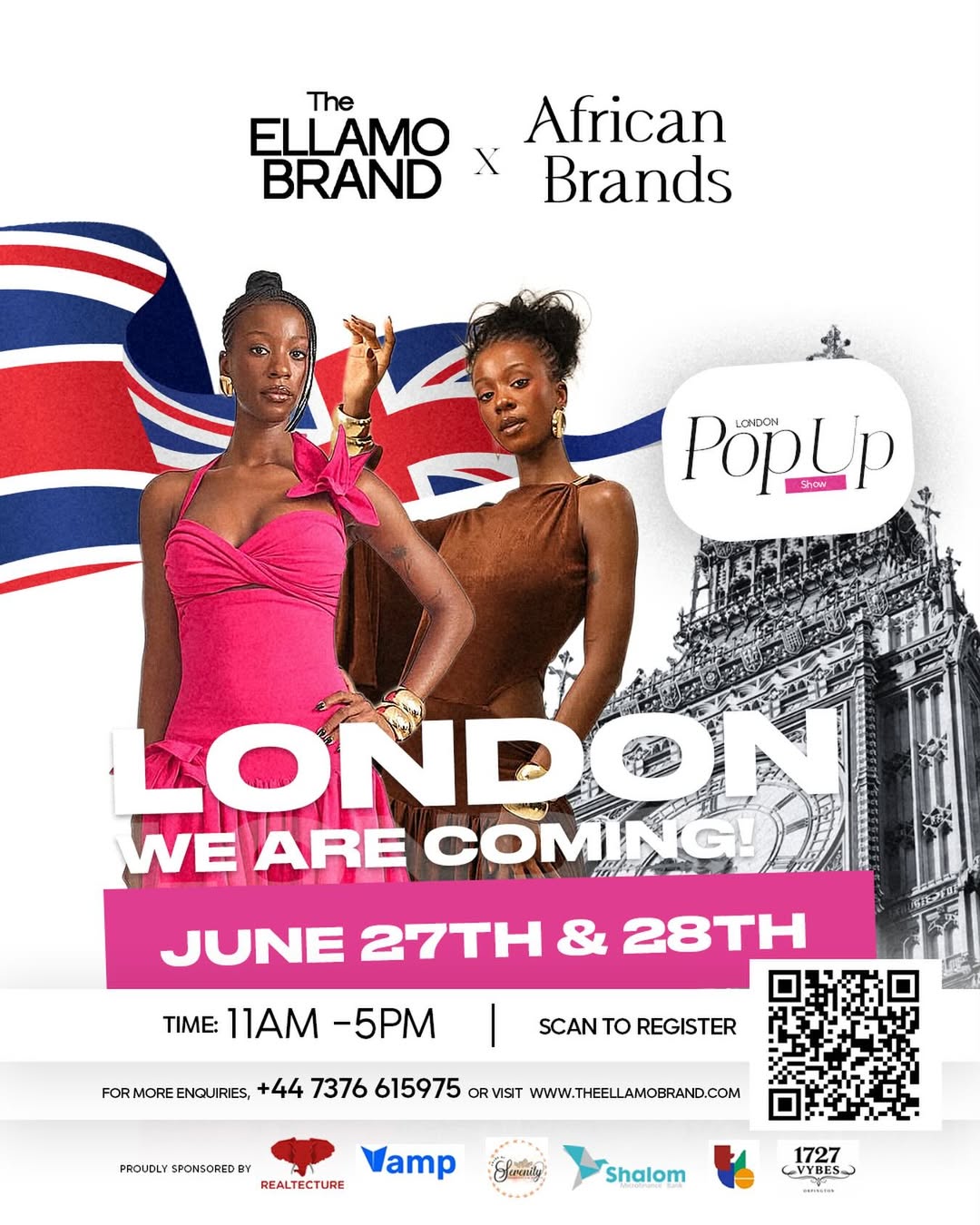
Beyond education, her London Pop-Up Exhibitions bring multiple African fashion brands into direct contact with UK buyers and diaspora communities. The first has already taken place. The second is scheduled for June 27 – 28. 2026. She is not only building a platform. She is building a market.
One of Our Own
Olubukola is a Bellafricana member. And what she is building is exactly the kind of work this community exists to celebrate.
Bellafricana was built for African creative entrepreneurs who are not just running businesses. They are building the systems and infrastructure that the wider African creative economy depends on. The Ella Mo Brand is precisely that kind of work.
It is rigorous where others are casual. It is culturally grounded where others are trend-driven. And it is building real commercial infrastructure, from the UK, for one of the most commercially significant yet underserved audiences in global fashion.
Why This Matters
This is what it looks like when an African creative entrepreneur builds for the long term.
The Ella Mo Brand is not chasing noise. Instead, it is building the infrastructure that makes the room possible: a reliable, culturally intelligent, editorially rigorous African fashion platform that the diaspora market has been waiting for.
African fashion’s global moment is here. Talent was never the question. The question was always who would build the systems to carry that talent to the audiences it deserves.
On that question, Olubukola Adenugba is doing the work.
At Bellafricana, that is exactly the kind of work we exist to recognise.
Every great event has stories behind it. Not just the displays and the designs you see on the day, but the people, the journeys, and the quiet convictions that brought them there.
That is exactly what this editorial series is about.
As TALES 2026 in London approaches, we are sitting down with the creatives who will be in the room. Not to tell you what to expect. But to let you hear it from them directly. Their stories, their brands, their reasons for showing up.
So consider this your introduction. The first of many.
The Conversation
B: Tell us about yourself, your name, where you’re from, and what you do.
D: My name is Doyinsola Ogbeifun, and I am from Nigeria. I am the founder and creative director of Moelle Zavian, a fashion brand dedicated to creating elevated, feminine occasionwear for women across the world.
B: What inspired you to start the brand?
D: Moelle Zavian was born from a desire to create pieces that truly honour the female form, especially for women who often feel overlooked by standard sizing. I wanted to design garments that feel intentional, flattering, and deeply personal.
On the Brand
B: What is the secret story behind Moelle Zavian that most people don’t know?
D: Beyond the aesthetics, the brand is rooted in transformation. Many of our designs reflect quiet becoming moments where a woman steps into a new version of herself, even before the world fully sees it.
B: What inspires the pieces you create?
D: I am inspired by women, their transitions, their confidence, their softness, and their strength. I also draw from structure and fluidity, blending sculpted silhouettes with movement and detail.
B: What do you want people to feel when they experience your brand?
D: I want them to feel seen, confident, and elevated. Like they are stepping into the most refined version of themselves, effortlessly.
B: What makes Moelle Zavian unique globally?
D: Our focus on fit and intention. We design for tall, curvy, and petite women, offering a more personalised approach to occasionwear. Every piece is crafted with precision, ensuring it doesn’t just look beautiful, it feels made for you.
B: What should visitors look forward to at TALES 2026?
D: Visitors can expect a curated presentation of our signature designs, including standout pieces from our latest collection. There will also be an opportunity to experience our craftsmanship up close and explore custom options.
B: What does showcasing at TALES mean to you?
D: It represents visibility, growth, and connection. It is an opportunity to share our story on a global stage and connect with a community that values intentional design.
B: Why should people come and experience Moelle Zavian at TALES 2026?
D: Because Moelle Zavian is more than clothing, it is an experience. It is about stepping into pieces that are thoughtfully made, emotionally resonant, and designed to leave a lasting impression.
Don’t Sleep on TALES 2026, London
Moelle Zavian will be at TALES 2026 London this July, and this is exactly the kind of brand you want to discover in person. The craftsmanship, the fit, the intention behind every piece. It hits differently when you are standing right in front of it.
Many creatives think the problem is visibility or sales. They post more, take better photos, or create more content. But when it comes to brand storytelling for creative businesses, the real problem is often the story itself. Not that you do not have a story. The problem is that you are telling the wrong one. Most creatives focus on what they did, how long it took, the materials they used, and the process.
While all of that matters, it is not what people connect to. People do not buy effort. They buy meaning. Research published by Google shows that emotional connection is a key driver of how people choose and stay loyal to brands.
Process matters, but meaning is what people connect to.
Many brand stories focus on process instead of meaning. After working with African creatives preparing for exhibitions and global opportunities, one thing is clear. Beautiful, well-made work can still be overlooked when the story behind it is not clear. The issue is not quality. It is clarity.
What Makes a Strong Brand Story
A strong brand story shows why your work exists, what it represents, and who it is for. The brands that stand out are not always the most skilled. They are the ones people understand quickly and clearly. Clarity builds connection. Connection builds value.
5 Steps to Tell Your Brand Story the Right Way
1.Start with the origin: Focus on why this work began, not just how you made it.
2.Define what your work represents: Is it culture, identity, memory, sustainability, or something else? Make that clear.
3.Be specific about your audience: Not everyone who likes your work. Identify who truly sees themselves in it.
4.Translate your work into feeling: What should someone feel when they see or own it? Emotional connection drives value.
5.Repeat your story consistently: Use your captions, website, conversations, and exhibitions. Repetition builds recognition.
A strong brand story connects your work to emotion and identity.
The Power of What You Don’t Reveal
Not every part of your story needs to be told at once. Part of what makes a brand interesting is anticipation. When people sense that there is more to discover, they pay closer attention. They lean in. They stay curious.
Strong brands understand timing. They know what to share now and what to hold back. Sometimes, the most powerful part of your story is the part you choose to reveal later.
Why Your Brand Story Matters for TALES 2026
This is where brand storytelling for creative businesses becomes even more important. This year’s TALES theme is The Secret Story. It invites creatives to move beyond simply showing their work and begin to reveal something deeper.
TALES 2026 is not just about displaying products. It is about unveiling something new. A piece, a collection, or a story your audience has not experienced before. What matters is not just what you create, but how you bring people into the discovery of it.
Some stories are meant to be discovered in person.
Final Thoughts
Before focusing on pricing, content, or visibility, ask yourself: Are you telling people what you did, or showing them what it means?One explains your work. The other makes people choose it. And beyond that, ask yourself: What part of your story are you still holding back?
If you want to present your work with clarity, meaning, and intention, TALES 2026 is the place to do it. Apply to exhibit here: http://Bellafricana.com/popup-london
You have 10,000 followers. Last month, you made 2 sales.
The math isn’t mathing. And you’re starting to wonder: Is my work not good enough? Am I pricing wrong? Should I post more? Should I run ads? Should I rebrand?
None of those are the problem.
The problem is simpler, and harder to fix than you think. Your creative business visibility isn’t the issue. Your targeting is. You’re not invisible. You’re just visible to the wrong people.
The Lie We’ve Been Sold
For years, social media taught us a lie: More visibility equals more sales.
Get more followers. Post more content. Show up on more platforms. Go viral. Get featured. Build your audience.
We believed it because it made sense. The more people who see your work, the more people will buy it. Right?
Wrong.
Because visibility without conversion isn’t a business. It’s a hobby with an audience.
You can have 50,000 followers and make zero sales. You can have 500 followers and be fully booked. The difference isn’t the size of your audience. It’s WHO is in your audience.
The Real Problem (Not What You Think)
Here’s what actually happened:
In reality, you built creative business visibility with people who will never buy from you.
Your followers are other creatives who are building their own brands. They’re scrollers who consume content but don’t purchase. They’re lurkers who watch but never engage. They love your work. They’ll double-tap your posts. They’ll save them for “inspiration.” But they won’t pull out their wallets.
And you didn’t do this on purpose. You did it because the algorithm rewarded you for it.
Creatives at TALES 2025 engaging with buyers, visibility that converts.
Why This Happens
In essence, you optimized for engagement instead of conversion.
You posted content that got likes, shares, and saves. The algorithm saw that engagement and said, “Great! Show this to more people who engage like this.” So it showed your work to more creatives, more scrollers, more people who love to consume but never buy.
Meanwhile, your actual buyers, the people who need what you make and are willing to pay for it, never saw your work. Because they’re not spending their days scrolling Instagram looking for inspiration. They’re somewhere else entirely.
That’s the visibility gap.
The Visibility Gap: Buyers vs. Followers
Here’s the truth most creatives don’t realize:
Buyers and followers aren’t the same people.
Your buyers might not even follow you. They saw your work once, at the right time, in the right place, and bought. Meanwhile, your followers see your work every day and never buy.
Think about your last 10 sales. How many of those buyers were already following you? Probably not many.
Some found you at a market. Others through a friend’s recommendation. Maybe a few in a Facebook group where your target customers hang out. Or through a Google search. Perhaps through a collaboration with another brand.
They didn’t find you because you posted on Instagram every day. They found you because you showed up where THEY were.
That’s creative business visibility that converts.
The Visibility Blueprint: Finding Your Buyers
Therefore, if you want to fix your creative business visibility problem, you need to stop guessing and start tracking.
Here’s how:
Step 1: Ask Your Last 10 Buyers Where They Found You
DM them. Email them. Call them if you have to. Ask two questions:
“Where did you first see my work?”
“What made you decide to buy instead of just scrolling past?”
Step 2: Look for the Pattern
When you get their answers, document them. You’ll start to see patterns.
Perhaps 7 out of 10 found you at a local market. Another 5 found you through a mutual friend’s recommendation. Maybe 3 found you because you showed up in a niche Facebook group where your target customers hang out. Or 2 found you through a collaboration with a complementary brand.
That pattern is your visibility blueprint. In other words, that’s where your buyers actually are.
Step 3: Double Down on What’s Working
Once you know where your buyers are finding you, stop spreading yourself thin across six platforms hoping something sticks.
Go ALL IN on what’s actually working.
Face-to-face connection at TALES turning visibility into sales.
If most of your buyers found you at markets, show up at more markets. Build relationships with organizers. Get better at in-person sales.
If most found you through referrals, build a referral system. Make it easy for happy customers to share your work with their friends.
If most found you in a specific online community, become a valuable member of that community. Show up consistently. Help people. Build trust.
If pop-ups and markets have been your visibility strategy, don’t miss The African Lifestyle Experience (TALES 2026). Last year, we brought together 70+ vendors and 15,000 shoppers in London. Proof that showing up where buyers gather works. More importantly, the human connection you build at TALES creates customer traction that continues long after the event ends. Register here to secure your spot.
You don’t need to be everywhere. You just need to be visible where your buyers actually are.
What To Do Now
As a result, the solution to your creative business visibility problem isn’t more followers. It’s finding the RIGHT people.
Stop optimizing for engagement. Instead, start optimizing for conversion.
Stop chasing 100,000 followers. Start finding 1,000 people who see your work and think, “I need this.”
Rather than posting everywhere hoping something works, start showing up intentionally where your buyers already are.
That’s when creative business visibility starts driving sales, not just likes.
Here’s your action step:
Specifically, this week, DM or email your last 10 buyers. Ask them where they found you and what made them buy.
Document their answers. Look for the pattern.
Then, do MORE of what’s working.
That’s how you fix your visibility problem. Not by being seen by more people. But by being seen by the right ones.
Want more strategies like this? Follow us on Instagram @bell_africana for insights that help creative businesses grow.
There is a moment many creatives know well. You are in a room. A gallery, a pitch, a conversation. Somewhere along the way, you find yourself shrinking. Softening your edges. Translating yourself into a language that feels safer for the people around you.
Zainab Sumu decided she is done with that room.
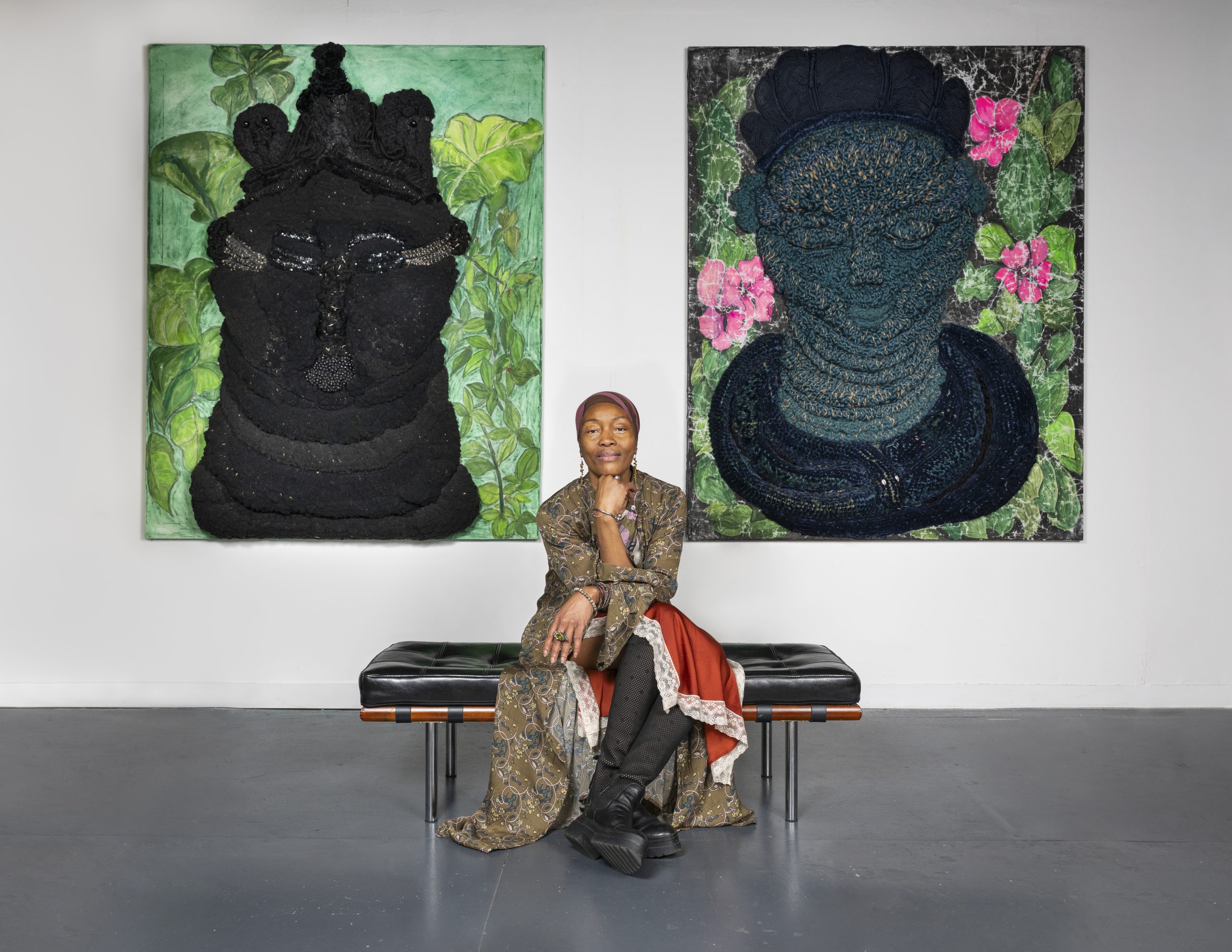
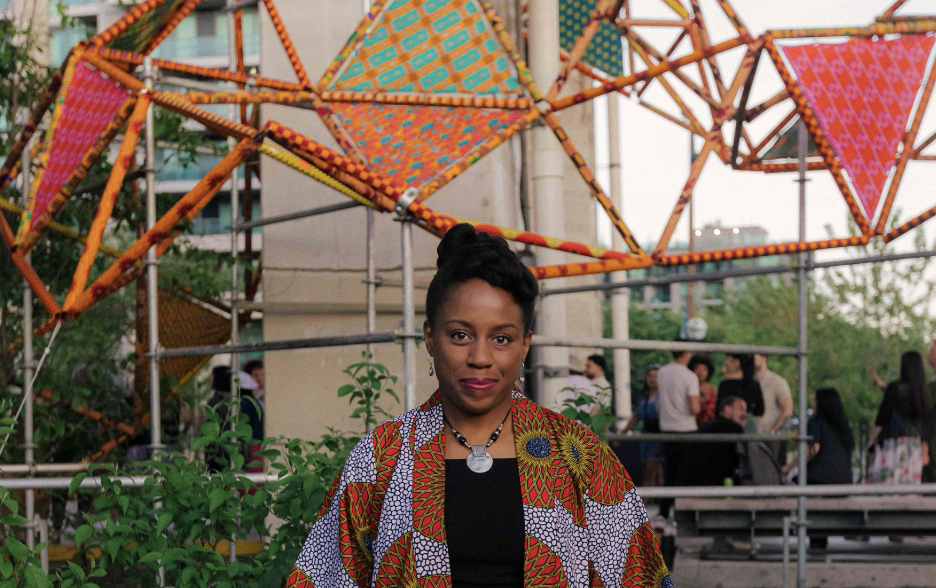
The Sierra Leonean-born, Cambridge-based artist has spent her career building a practice rooted in what she calls the living intelligence of African cultural inheritance. Through woven sculpture, painting, textiles, and print, she does not just reference African heritage. Instead, she treats it as a full creative methodology. One with its own depth, logic, and power.
This year, she is not dimming any of it.
In this edition of the African Creatives Spotlight, Zainab Sumu shares what it really means to build with intention and why the most powerful thing a creative can do is stop shrinking.
Zainab Sumu, contemporary artist and cultural storyteller. Photo credit: Anna Olivella
From Over-Explaining to Owning It
One of the most honest things the Zainab Sumu journey reveals is how much energy creatives spend justifying their work to audiences who were never their people to begin with.
Last year, something shifted for her. She stopped needing to over-explain. The more grounded she became in her own cultural language, the more her work resonated. Not less. That is the counterintuitive truth she is living right now.
Ultimately, it is a lesson that takes most artists years to learn. You do not make your work more universal by making it more generic. In fact, you make it more universal by making it more yours.
What Stewardship Looks Like in Practice
Zainab is the founder of Studio Znabu, her fine art studio launched in 2021. In addition to that, she runs her textile brand, Zainab Sumu Primitive Modern, which she started in 2015. Her woven fiber sculptures also sit in permanent collections, including the Peabody Essex Museum and The Quin House Boston.
However, when she describes her mindset for this year, she does not reach for a hustle word. She says stewardship and expansion.
This is a deliberate choice of language. Stewardship suggests responsibility and care. The work, in her view, is not just hers. Rather, it belongs to something larger and carries a duty beyond the individual. Consequently, her practice is built not for speed, but for legacy.
That kind of thinking changes how you build. In short, it means growth does not come at the cost of the thing that made the work worth building in the first place.
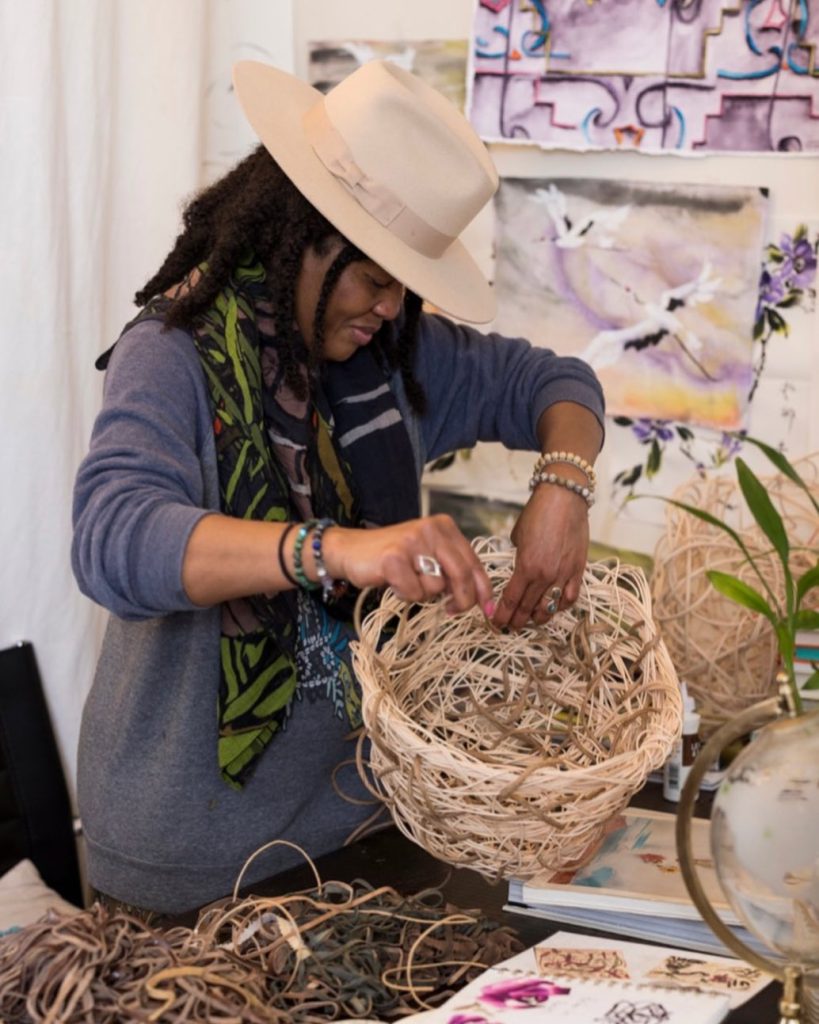
Photo credit: Somerby Jones
The African Creatives Spotlight Interview
We asked Zainab Sumu the same questions we ask every creative in this series. Her answers, as you will see, are anything but ordinary.
Introduce yourself.
My name is Zainab Sumu. I am a contemporary artist and cultural storyteller born in Sierra Leone and based in Cambridge, Massachusetts. Furthermore, I am the founder of Studio Znabu, a creative platform through which I expand my practice into community, design, and cultural dialogue. Through woven sculpture, painting, textiles, and print, I explore memory, material, and cultural inheritance as living systems of knowledge within African and diasporic cultures. At the heart of my practice is a deep love for beauty, lineage, and the ways culture connects us across time.
Describe this current season of your creative journey in one sentence.
This is a season of intentional expansion. Specifically, I am deepening my voice while building structures that allow my work to travel further and touch more lives.
What did the past year teach you about yourself or your brand?
The past year taught me to move with patience and conviction. When I honor my roots and trust my intuition, the right opportunities align. As a result, the work carries itself with quiet authority.
Was there a moment in the past year that changed how you approach your work?
Yes. I realized that I no longer need to over-explain my work for it to be understood. The more grounded I am in my cultural language, the more universally the work resonates.
Nothing About Zainab Sumu Is Accidental
Not the words, not the work, not the direction she is moving in. Moreover, the second half of this conversation makes that even clearer.
Zainab Sumu, Banya 2, 2022.
What are you being more intentional about right now, creatively or in business?
Above all, I am being more intentional about balance. Building sustainable systems around my creativity means that inspiration is supported by strategy. That way, growth does not come at the expense of joy.
What are you letting go of so you can aim higher and create better this year?
I am letting go of shrinking in rooms that require me to dim my light. I am stepping fully into the responsibility of the vision I carry.
What bold reminder or insight would you give creatives?
Your heritage is not something to dilute. On the contrary, it is a source of depth, intelligence, and power. When you create from that place, your work becomes both personal and timeless.
Describe your mindset for this year in one word or short phrase.
Stewardship and Expansion.
Why Heritage Is Your Greatest Creative Advantage
If there is one thing to take from this interview, it is this. The thing you have been told to water down is the very thing that makes your work matter.
African heritage is not a niche. Furthermore, it is not a limitation to work around. It has always been a source of intelligence, depth, and power. Zainab is not discovering that. Rather, she is reminding us.
Therefore, this season, she is stepping fully into the responsibility of the vision she carries. And that is exactly the kind of thoughtfulness the African Creatives Spotlight is built to celebrate.
Zainab Sumu, Sowo III.I, 2025. Watercolour on paper.
The Bellafricana African Creatives Spotlight celebrates African creatives who are building with intention. Follow us on Instagram @bell_africana and never miss a story.
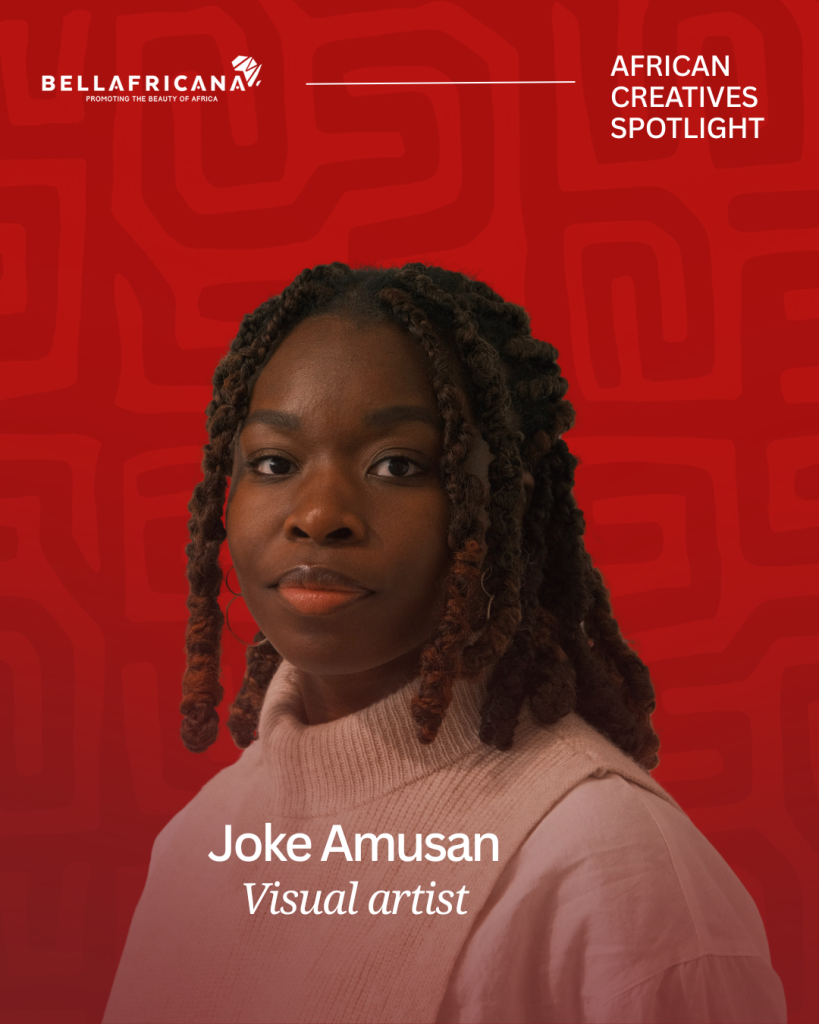
This edition of African Creatives Spotlight features Joke Amusan, a London-based visual artist, letting go of the belief that growth has to be loud. Her practice is built on quiet, steady work—the kind that lasts.
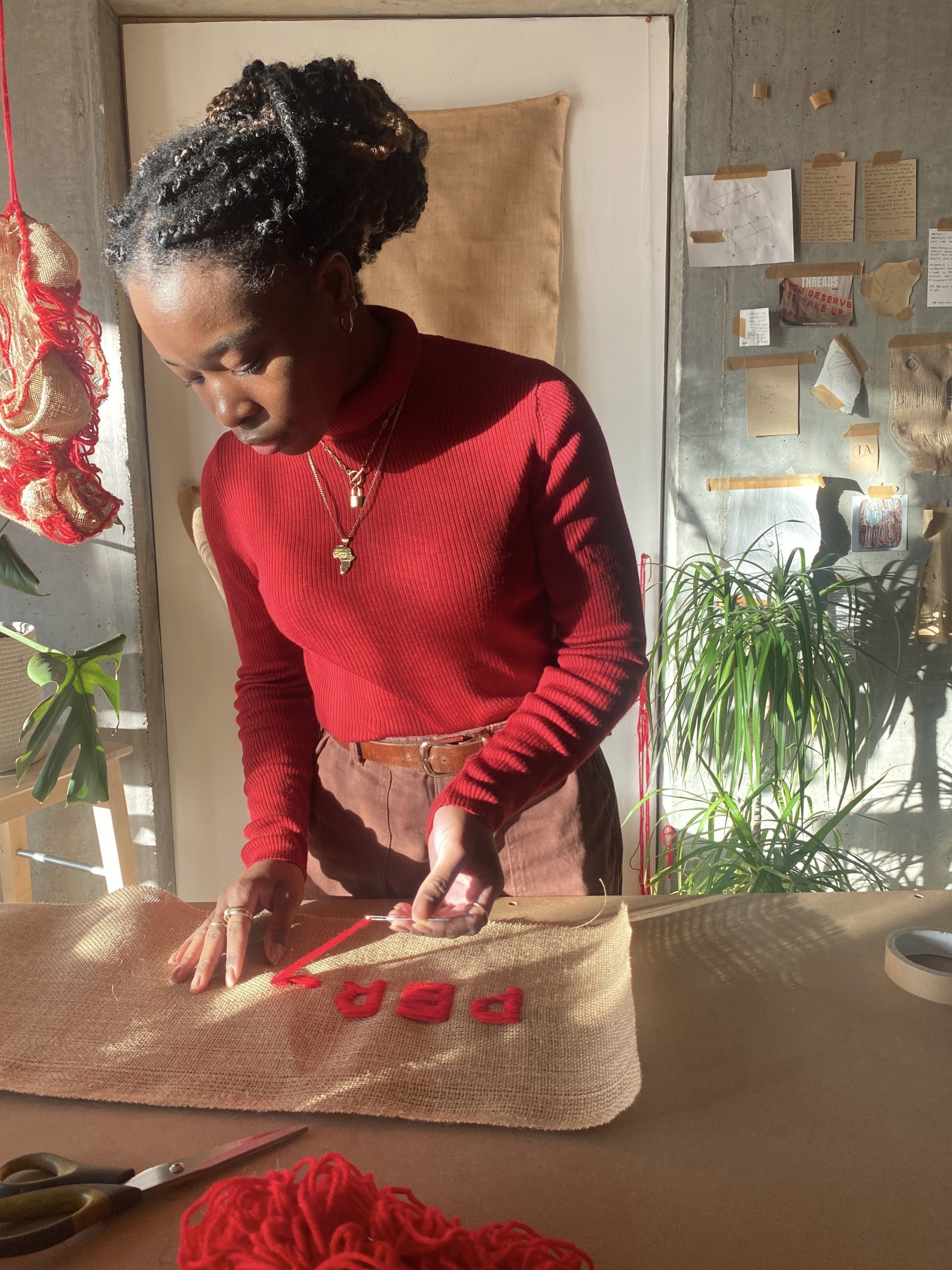
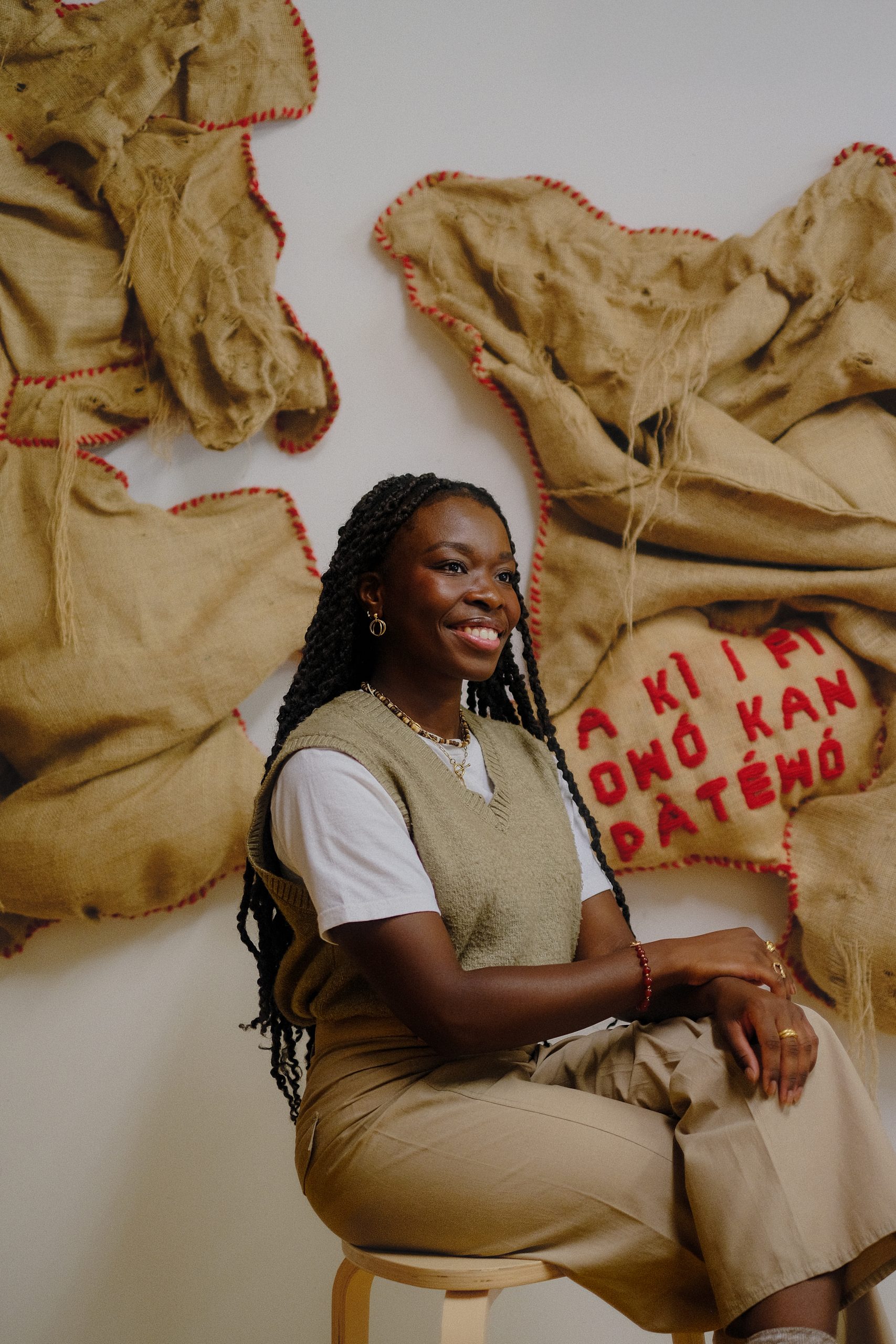
Born in Germany and now based in London, Joke is a visual artist whose work illuminates the experiences of Black womanhood. Through embroidery, installation, and sculpture, she explores identity, heritage, and migration, creating spaces where women share their stories and embrace their authentic selves.
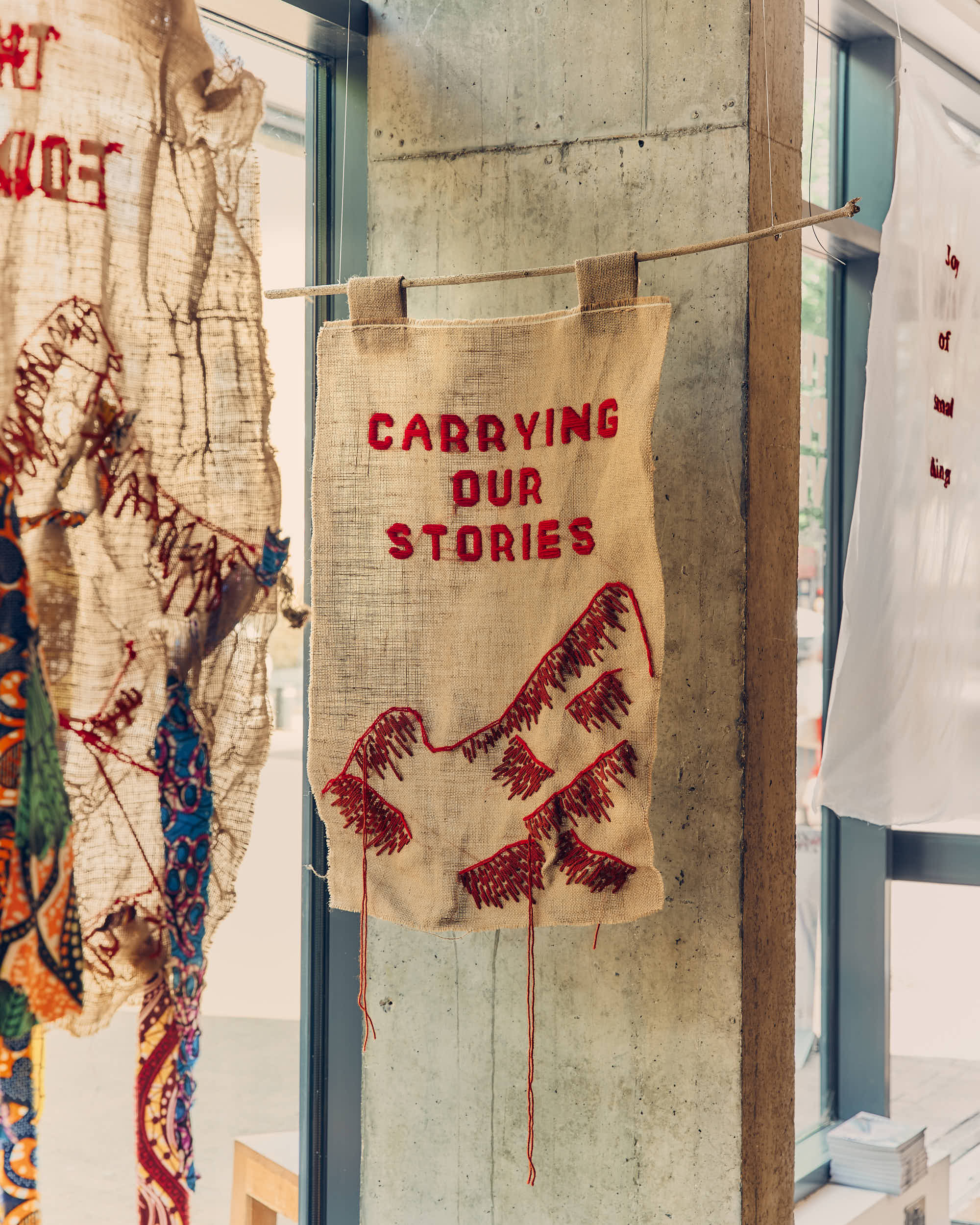
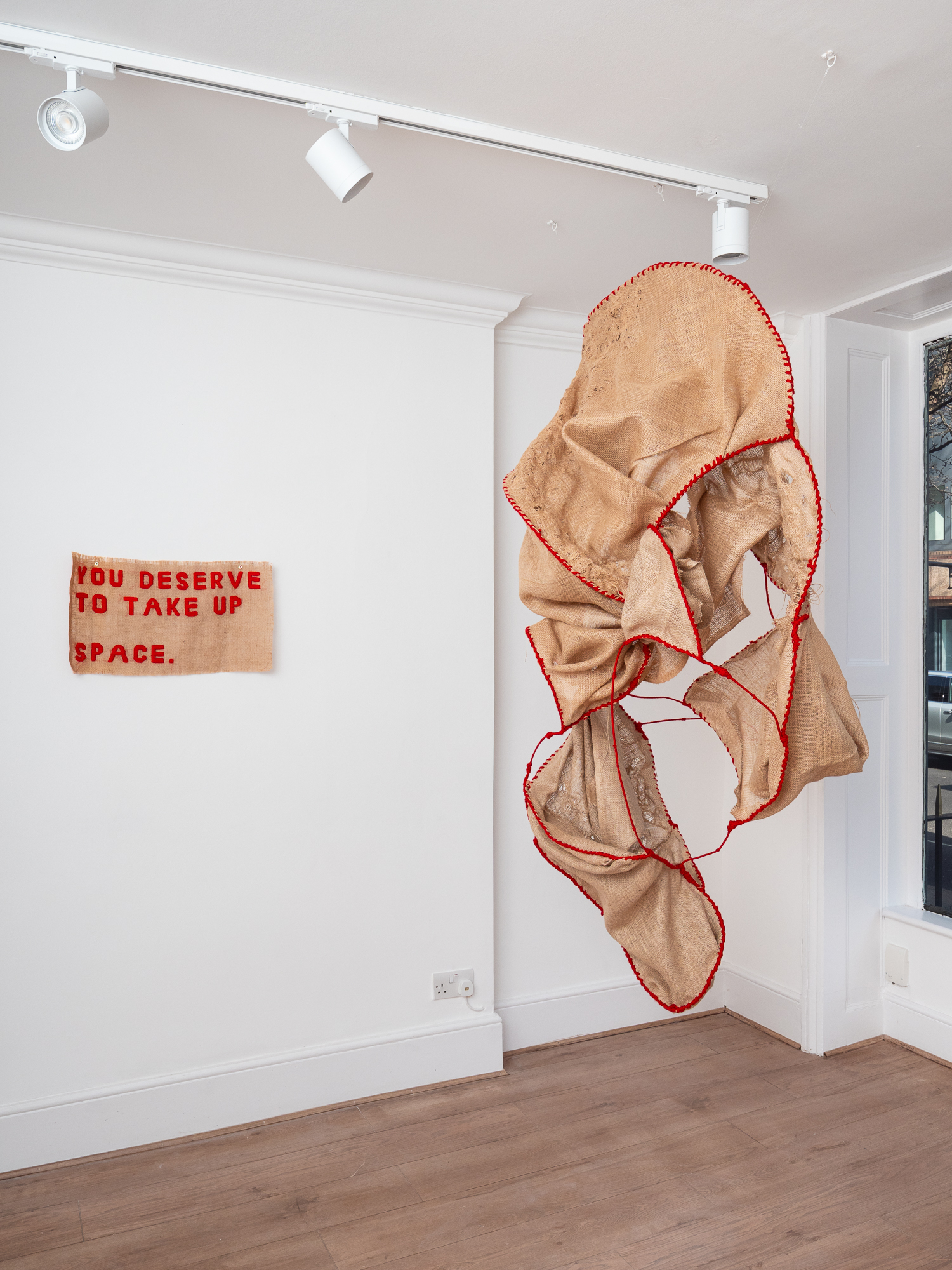
Her materials carry weight. Joke stitches powerful messages in bright red thread on hessian fabric. Phrases like “My very existence is defiance” and “You deserve to take up space.” The hessian rough cloth historically used for trade sacks, represents migration, endurance, and survival. Red thread symbolizes interconnectedness, blood, and gentle urgency. Each stitch becomes an act of repair, care, and healing.
Her work has been exhibited at Tate Modern, Tate Britain, The ICA, and the African Diaspora Art Museum of Atlanta. In 2025, she won the Thameslink Art Award and held solo exhibitions at TAFETA in London and MAIA in Birmingham. British Vogue and FAD Magazine have featured her work.
However, this year Joke isn’t chasing visibility. She’s planting seeds for longevity, building foundations, setting boundaries, and trusting the work that happens behind the scenes.
This conversation is part of our interview series, a series highlighting African creatives through interviews that tell their stories, share their perspectives, and amplify their voices. As the year begins, the focus is on reflection, where creatives are now, what the past year taught them, and what they’re building toward. Joke’s answers reveal a practice rooted in sustainability, community, and intentional growth.
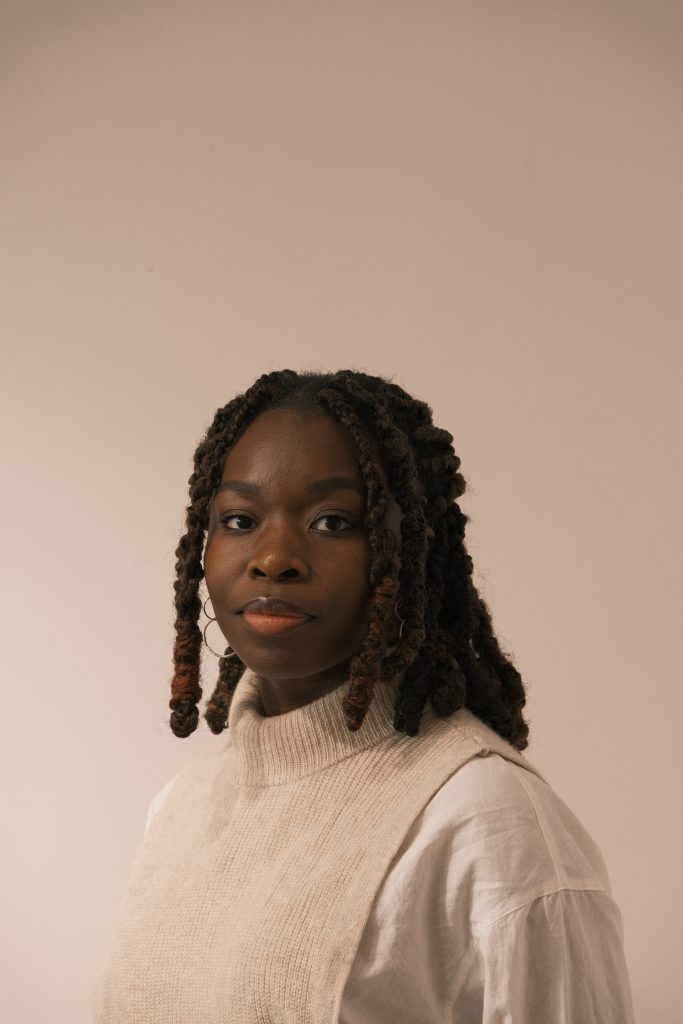
Joke Amusan, visual artist featured in African Creatives Spotlight. Photo by: [Lara Amusan]
African Creatives Spotlight: Introduce yourself. Your name, what you create, and where you’re based.
My name is Joke and I’m a visual artist based in London. My art practice illuminates the rich and multifaceted experiences of Black womanhood. Through my exploration of identity, heritage, and migration, I create installations and sculptures which challenge preconceived notions and perceptions. My art serves as a conversational bridge: inspiring women to come together, share their stories, and unapologetically embrace their authentic selves.
Describe this current season of your creative journey in one sentence.
I’ve been planting seeds for longevity by focusing on building strong foundations (creatively and in business), while nurturing the community around me.
Joke Amusan planting seeds for longevity in her London studio. Photo by: [Joke Amusan]
What did the past year teach you about yourself or your brand?
The past year taught me that I thrive when I prioritise sustainability and community, and that taking care of myself allows my creativity to flourish. The impact of my practice isn’t just in the final work, but in the in-between moments of building and collaborating.
Red thread on hessian – Joke Amusan’s signature materials. Photo by: [Milo Paris]
Was there a moment in the past year that changed how you approach your work?
Being close to burnout forced me to slow down, ask for help, and separate my self-worth from my output. It completely reshaped how I approach my practice. It reminded me that my creativity needs boundaries.
What are you being more intentional about right now, creatively or in business?
I’m being more intentional about the infrastructure behind my art, systems, support, and long-term vision. As I explore more materials and learn more about my heritage, I want to ensure that every choice I make honors both my creative curiosity and the integrity of my practice. This way, every step I take (both creatively and professionally) feels purposeful and connected to the bigger picture of my practice.
Joke Amusan’s work honors both creative curiosity and practice integrity. Photo: [TAFETA by Pedro Lima]
What are you letting go of so you can aim higher and create better this year?
I’m letting go of the belief that growth has to be loud or visible to be meaningful. I’m learning to trust the quiet, steady work behind the scenes, knowing it shapes my practice in ways that last.
What bold reminder or insight would you give creatives to push boundaries and dream bigger this year?
Build strong foundations, trust your vision, and use your “why” as a guide.
Remember that you don’t have to do it all on your own – be part of, or build, a community where you’re supportive of each other.
Describe your mindset for this year in one word or short phrase.
Expansive, but anchored.
Photo by: Lara Amusan
Joke Amusan isn’t chasing loud growth. She’s building a practice that lasts, one rooted in boundaries, community, and the quiet work that shapes everything. Her red thread stitches more than messages on fabric. It stitches together care, repair, and the belief that creative work doesn’t have to burn you out to matter.
If you’re a creative feeling the pressure to constantly produce, constantly be visible, constantly grow louder, Joke’s reminder is this: the quiet work counts. The infrastructure you build behind the scenes matters. And growth that’s sustainable will always outlast growth that’s simply loud.
Want to stay inspired as we spotlight African creatives? Follow us on Instagram @bell_africana and turn on notifications so you never miss a conversation.
Lagos rises. Constantly. Relentlessly. And Adesola Balogun, founder of Outspok’n Clothiers, captures that energy in fabric through the Outspok’n Skyline collection.
The Outspok’n Skyline collection isn’t just clothing. It’s a collaboration with Loving Lagos Ltd, a Lagos-based tourism company committed to showcasing the beauty, culture, and rich history of Lagos. Together, they’re reimagining what Lagos fashion can say, not just about style, but about identity, movement, and cultural confidence through aso-oke.
Adesola started Outspok’n in his third year at Federal University of Technology, Akure. What began with selling shirts to friends evolved into a bespoke tailoring brand known for merging aso-oke with contemporary fabrics. His previous collections—Ere-Ayo (celebrating joy) and Osei (celebrating fatherhood), established Outspok’n as a brand that tells stories through craft. Now, with the Skyline collection, he’s telling Lagos’ story.
Outspok’n Skyline collection collaboration with Loving Lagos Ltd
Who Is Loving Lagos?
Before diving into the collection, it’s important to understand the partner behind it. Loving Lagos Ltd isn’t your typical tourism company. Founded to celebrate Lagos’ untold stories and cultural heritage, Loving Lagos operates from the historic Onikan House, a restored cultural hub on Lagos Island that serves as an arts exhibition space.
In addition, Loving Lagos has restored landmarks like Kosoko Palace and runs the JK Randle Museum. Beyond that, the company curates exhibitions and immersive cultural experiences that preserve Lagos’ Afro-Brazilian influences, art, and architecture. As a result, their mission extends beyond tourism into long-term cultural preservation.
Partnering with Outspok’n for the Skyline collection extends their mission beyond tours. Fashion becomes another medium for storytelling. Clothing becomes cultural expression.
The Inspiration: A City Constantly Rising
Lagos moves. Its skyline shifts as buildings rise and people hustle beneath them. Meanwhile, stories layer on top of each other, shaping a city that never stands still. The Outspok’n Skyline collection reflects that energy.
Adesola draws inspiration from the city’s iconic skyline, not just the physical structures, but what they represent. Movement. Ambition. Resilience. A city that refuses to stay still.
“For us at Outspok’n, this project goes beyond fashion,” Adesola explains. “It is a tribute to identity. A statement about cultural confidence. A reminder that tradition and modernity are not opposites, they are collaborators.”
Outspok’n Skyline collection inspired by Lagos skyline
The Craft: Aso-Oke Meets Contemporary Design
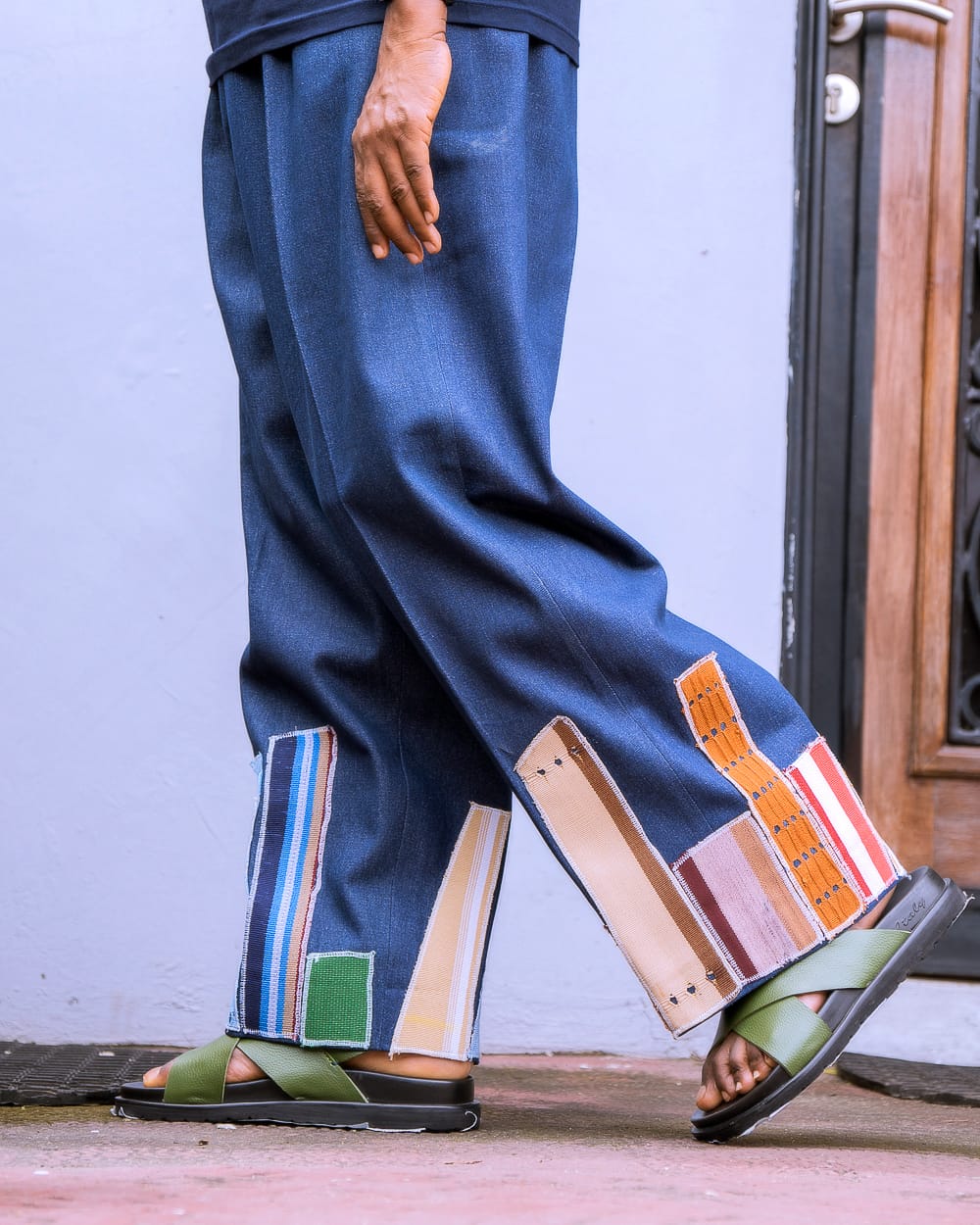
The Outspok’n Skyline collection uses aso-oke as its primary medium, a heritage textile woven by Yoruba artisans for centuries. Rather than treating aso-oke as a relic, Adesola reimagines it through contemporary silhouettes, including trousers, kaftans, and jackets. At the same time, the pieces remain practical and wearable for modern life. Consequently, heritage feels alive and in motion instead of archived.
The long tapering lines of aso-oke get cut and pieced together with cotton fabric, creating a visual rhythm that mirrors the Lagos skyline itself—structured, dynamic, layered.
This isn’t preservation for preservation’s sake. It’s heritage in motion.
Aso-oke detail in the Outspok’n Skyline collection
The Collaboration: Fashion Meets Tourism
Partnering with Loving Lagos Ltd adds cultural depth to the Outspok’n Skyline collection. Loving Lagos promotes the city’s beauty and culture through tours and exhibitions. By collaborating with a fashion brand, they demonstrate that Lagos culture lives not just in monuments or museums, but in what people wear, how they move, and how they represent themselves.
As a result, fashion becomes a form of storytelling, while tourism evolves into cultural expression. Ultimately, the lines blur, and that is precisely the point.
The Outspok’n Skyline collection merges fashion with cultural storytelling
What This Means for Nigerian Fashion
The Outspok’n Skyline collection expands what Nigerian fashion represents, proving that heritage, textiles, and contemporary design can coexist with clarity and confidence.
Adesola positions Outspok’n not just as a clothing brand, but as a cultural voice. A brand that understands Lagos, represents Lagos, and shows the world what Lagos creativity looks like when it rises. Moreover, by partnering with a tourism company, he shows that fashion can serve as cultural infrastructure, not just commerce, but identity.
As Lagos continues to evolve, the Outspok’n Skyline collection captures a defining moment in its story.
The African Creatives Spotlight features artists who refuse to plateau. Nnenna Okore is one of them. After decades of creating work exhibited internationally and collected by institutions like the World Bank and Newark Museum, she still sees room to grow. “The sky is never the limit,” she says. “There’s always more beyond the skies.”
Born in Australia and raised in Nigeria, Nnenna now teaches at North Park University in Chicago while creating across three continents. Her practice is defined by movement—both literal and creative. She doesn’t work in one studio or one country. Instead, her process is shaped by the materials she finds in each place and the communities she works with.
African Creatives Spotlight: Nnenna Okore, Artist and Educator
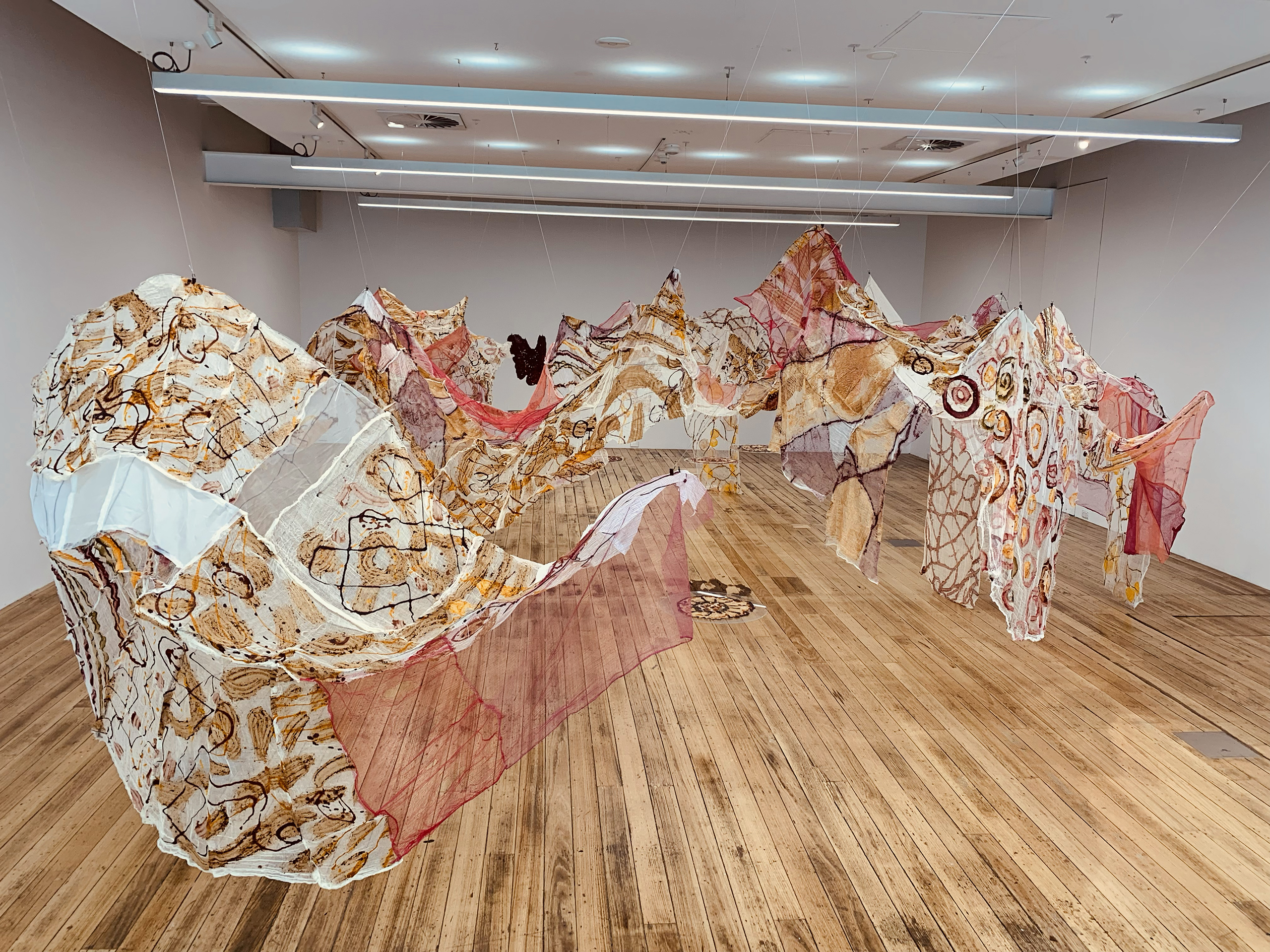
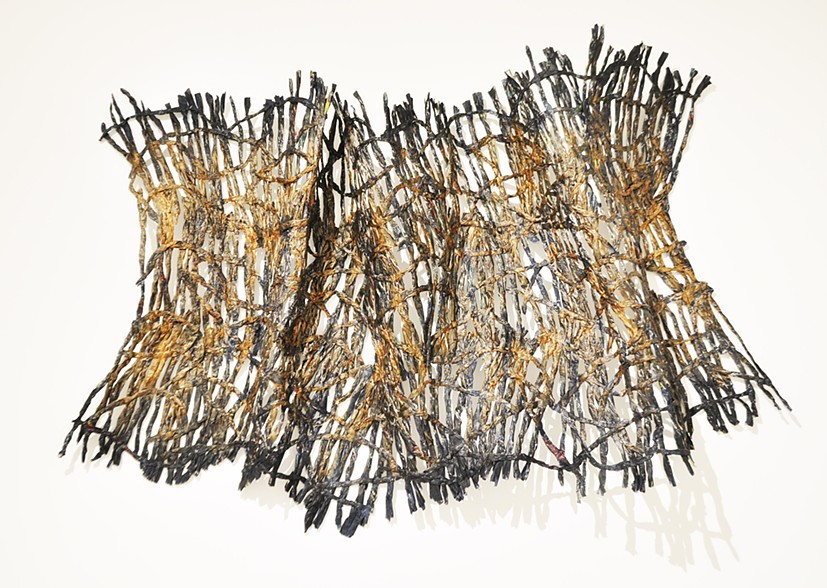
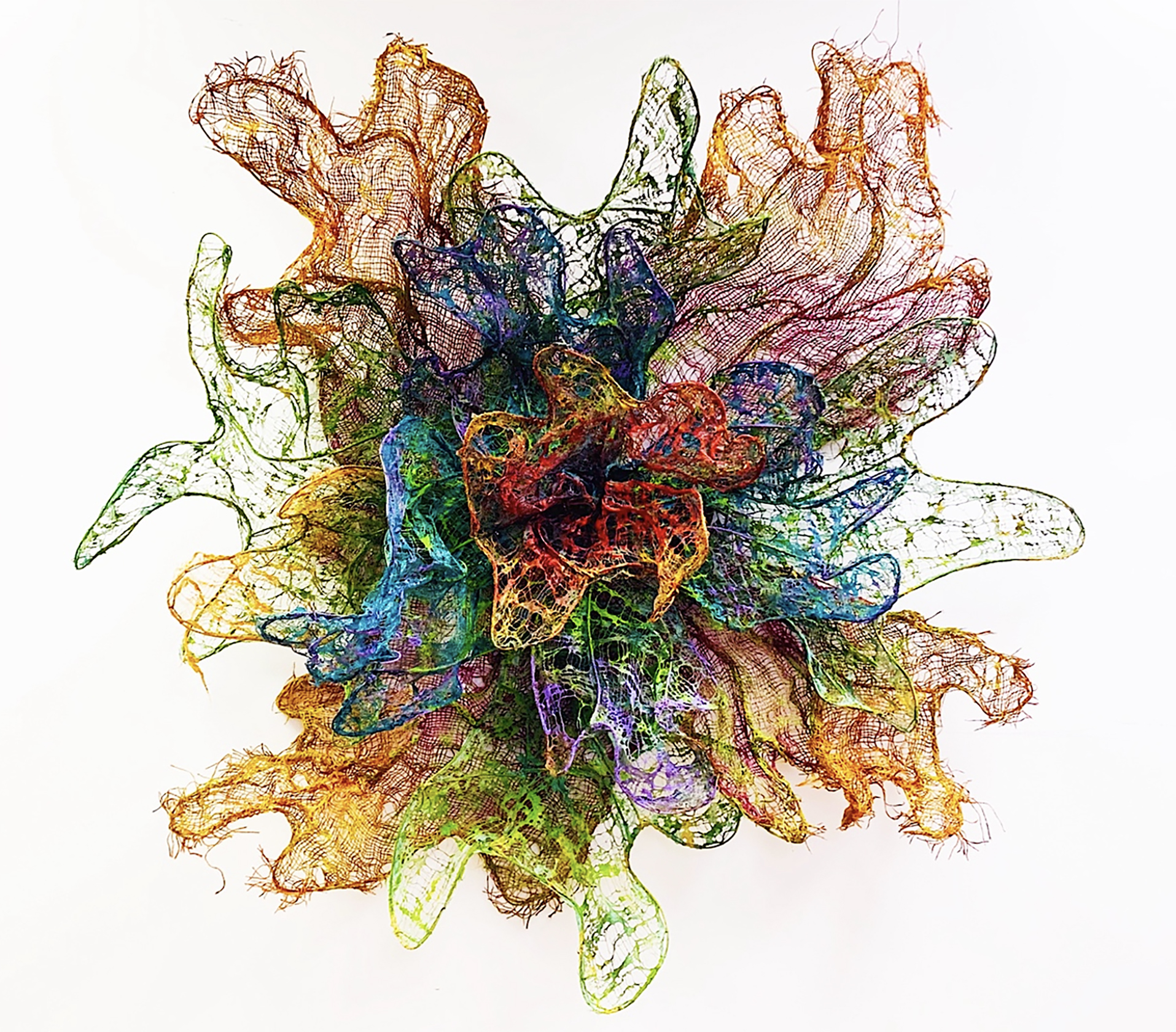
What makes her work distinctive is how it’s made. Nnenna transforms discarded materials—burlap, cheesecloth, rope, food scraps—into richly textured sculptures through repetitive, labor-intensive processes she learned by watching Nigerian women perform daily domestic tasks. As a result, her work produces visceral forms that resemble roots, veins, and organic structures in states of transformation and decay. Institutions like the Museum of Arts and Design in New York, Museu Afro Brasil in São Paulo, the Cleveland Museum of Art, and the Chengdu Biennale in China have exhibited her sculptures.
This conversation is part of the African Creatives Spotlight, a series highlighting African creatives through short interviews that tell their stories, share their perspectives, and amplify their voices. As the year begins, the focus is on where creatives are right now—how they’re reflecting on the past year, approaching the year ahead, and what insights they have for the creative community. Nnenna’s answers are grounded in a philosophy of relentless growth, intentional rest, and forward motion.
Nnenna Okore, in/flux, Bioplastic, wire and fabric, Varied dimensions, 2022
African Creatives Spotlight: Introduce yourself. Your name, what you create, and where you’re based.
My name is Nnenna Okore. I am an educator and artist who creates large-scale fiber works, sculptures, and installations derived from found and plant-based materials. I am based in the United States, though I work across different locations in Nigeria, Australia, and the United States.
Describe this current season of your creative journey in one sentence.
This season is shaping up to be a promising one for many upcoming projects.
What did the past year teach you about yourself or your brand?
I’ve learned that there’s always room for improvement and further development of craft. The sky is never the limit; there’s always more beyond the skies, so keep pushing.
Nnenna Okore, The obstacle, Newspapers and acrylic, 2013
What are you being more intentional about right now, creatively or in business?
I am being more intentional about making time for myself, so I don’t burn out. Ensuring I find time to relax, reflect, and spend time with loved ones.
What are you letting go of so you can aim higher and create better this year?
Sometimes life gets so busy, and for someone like me who finds it difficult to say no to opportunities or invitations, I think I am letting go of some smaller undertakings to focus my energy on finishing one or two projects strongly.
What bold reminder or insight would you give creatives to push boundaries and dream bigger this year?
I would encourage young and upcoming creatives not to shy away from breaking out of the mold. Try new things to set yourself apart from others. Make space for failures, and see them as teachable moments, not as sources of discouragement.
After all, Nnenna’s practice is built on this. She learned her methods by watching local Nigerians perform daily tasks. She turned food scraps into bioplastic art forms. Meanwhile, she transformed burlap and rope into monumental sculptures. None of that happens without risk.
Nnenna Okore, all things must grow in Time, Hessian, cheesecloth, dye and wire, 2024
Describe your mindset for this year in one word or short phrase.
Always forward and onward, never backward.
___
This is what the African Creatives Spotlight is about—real conversations with creatives who are building momentum. Nnenna Okore isn’t just creating work; she’s redefining how she approaches her practice. She’s protecting her time, focusing her energy on what matters, and refusing to let perceived limits stop her.
However, if you’re a creative feeling stretched thin or wondering if you’ve reached your ceiling, Nnenna’s reminder is this: there’s always more beyond the skies. Don’t be afraid to let go of what’s keeping you from finishing strong.
Want to stay inspired as we spotlight African creatives? Follow us on Instagram @bell_africana and turn on notifications so you never miss a conversation.
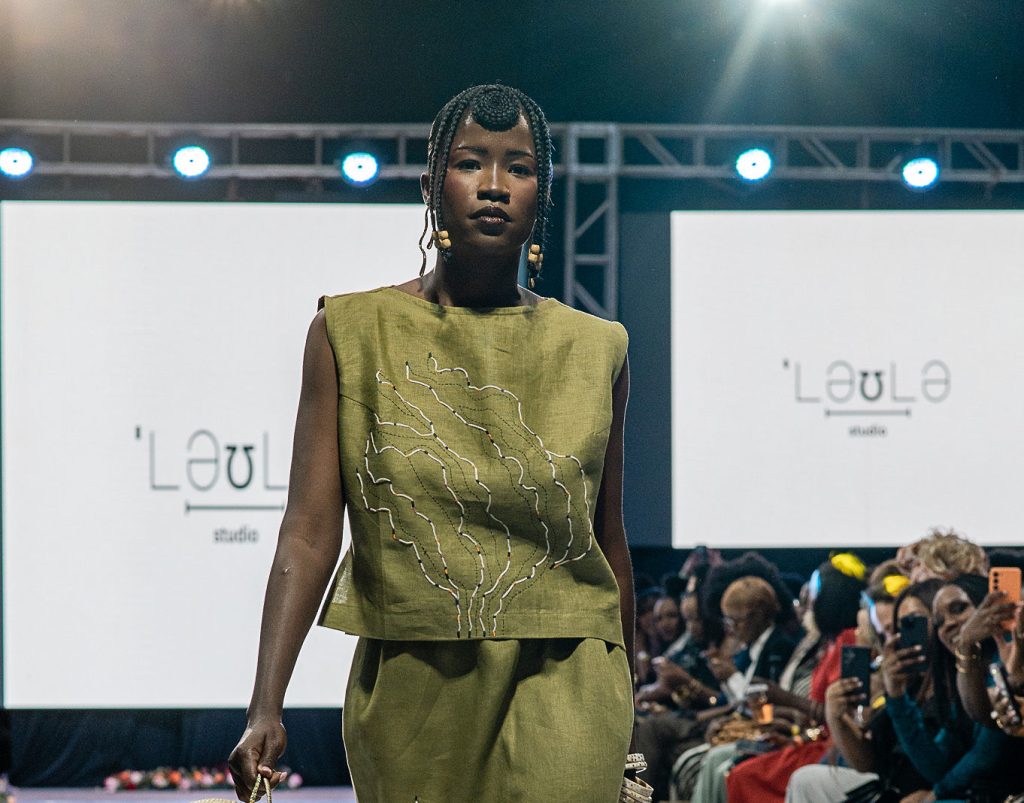
From January 28 to 31, 2026, Nairobi positioned itself as a fashion capital. Under the Decarbonize theme, Nairobi Fashion Week 2026 brought sustainability, heritage, and commerce into sharp focus, ultimately proving that African designers are not merely participating in global conversations—they are leading them.
Meanwhile, the eighth edition of Nairobi Fashion Week featured Kenyan and international designers whose work challenged assumptions about what African fashion can be. Importantly, this was not a showcase seeking validation. Rather, it was a platform asserting authority.
Building Infrastructure, Not Just Spectacle
The week opened with an intimate launch at Matteo’s Restaurant in Karen, gathering designers and industry leaders in a space that felt more strategic than celebratory. Subsequently, the Fashion Pop-Up Market the following day extended that vision into commerce, connecting designers directly with retailers and proving that fashion operates as infrastructure, not just runway moments.
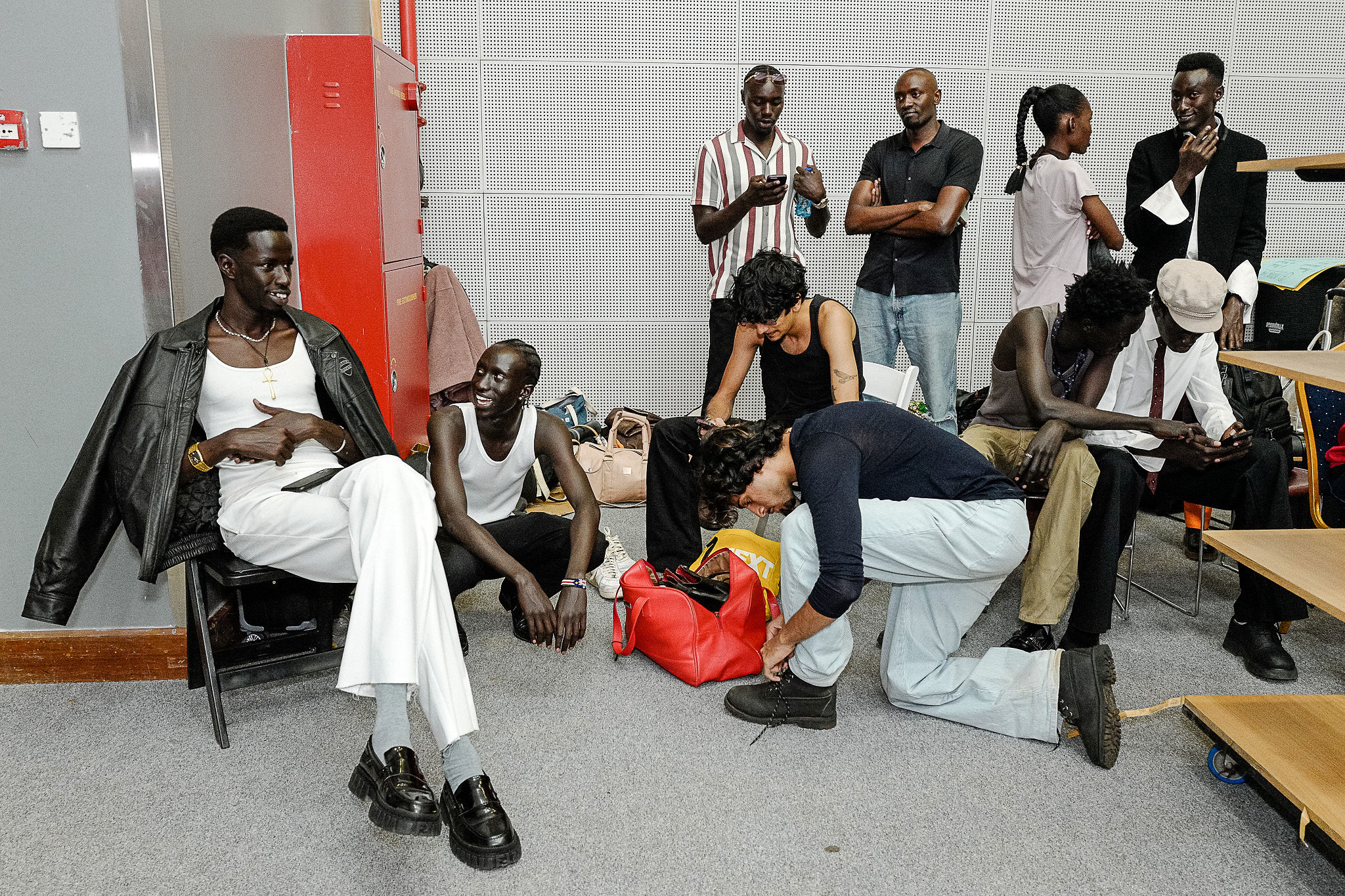
Behind the scenes at Nairobi Fashion Week 2026, Sarit Expo Centre. Photo by Daniel Kempf-Seifried
Meanwhile, Thread Talks at The Social House Nairobi became the intellectual core of the week. Representatives from UNEP, Gatsby, and the Kenya Fashion Council examined how Africa can decarbonize fashion supply chains without repeating extractive global models. Additionally, a designer masterclass by Anansi translated these ideas into practical tools for building responsible, competitive brands.
Consequently, by the time the runway opened on January 31st at Sarit Expo Centre, the Decarbonize theme had moved from theory to tangible strategy.
John Kaveke: Heritage Meets Precision
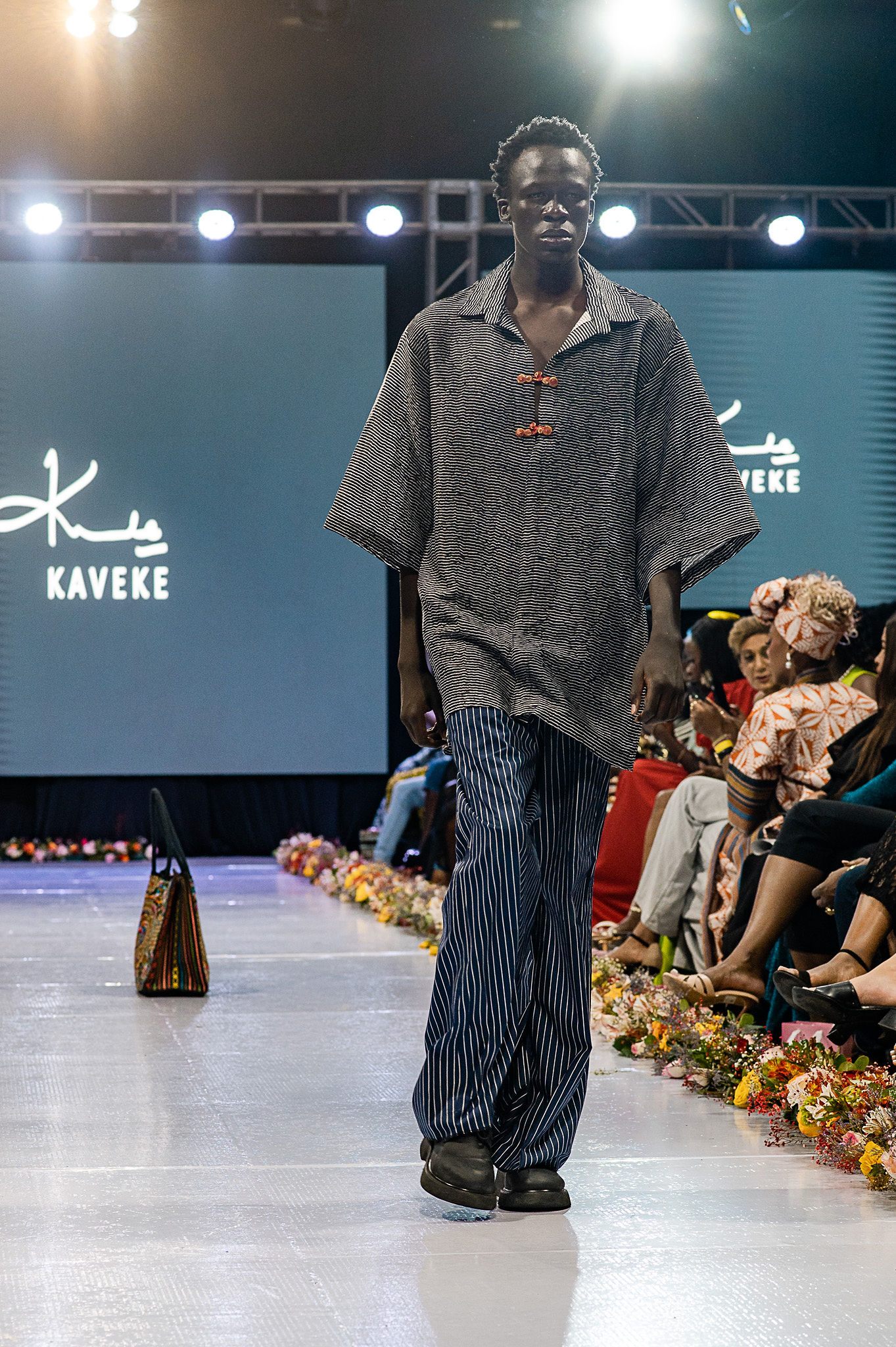
John Kaveke has been a statesman in Kenyan menswear since launching his label in 1999. Notably, his work has appeared at New York Fashion Week, London Fashion Week, and across international platforms, consistently exploring where African heritage meets contemporary design.
At Nairobi Fashion Week 2026, his collection created a conversation between Maasai cultural elements and Japanese tailoring discipline. Structured garments softened through ceremonial references. Ultimately, the result felt architectural and deeply human—an exchange between continents rendered in fabric.
John Kaveke’s collection at Nairobi Fashion Week 2026. Photo by Daniel Kempf-Seifried
Wanni Fuga: Quiet Authority from Lagos
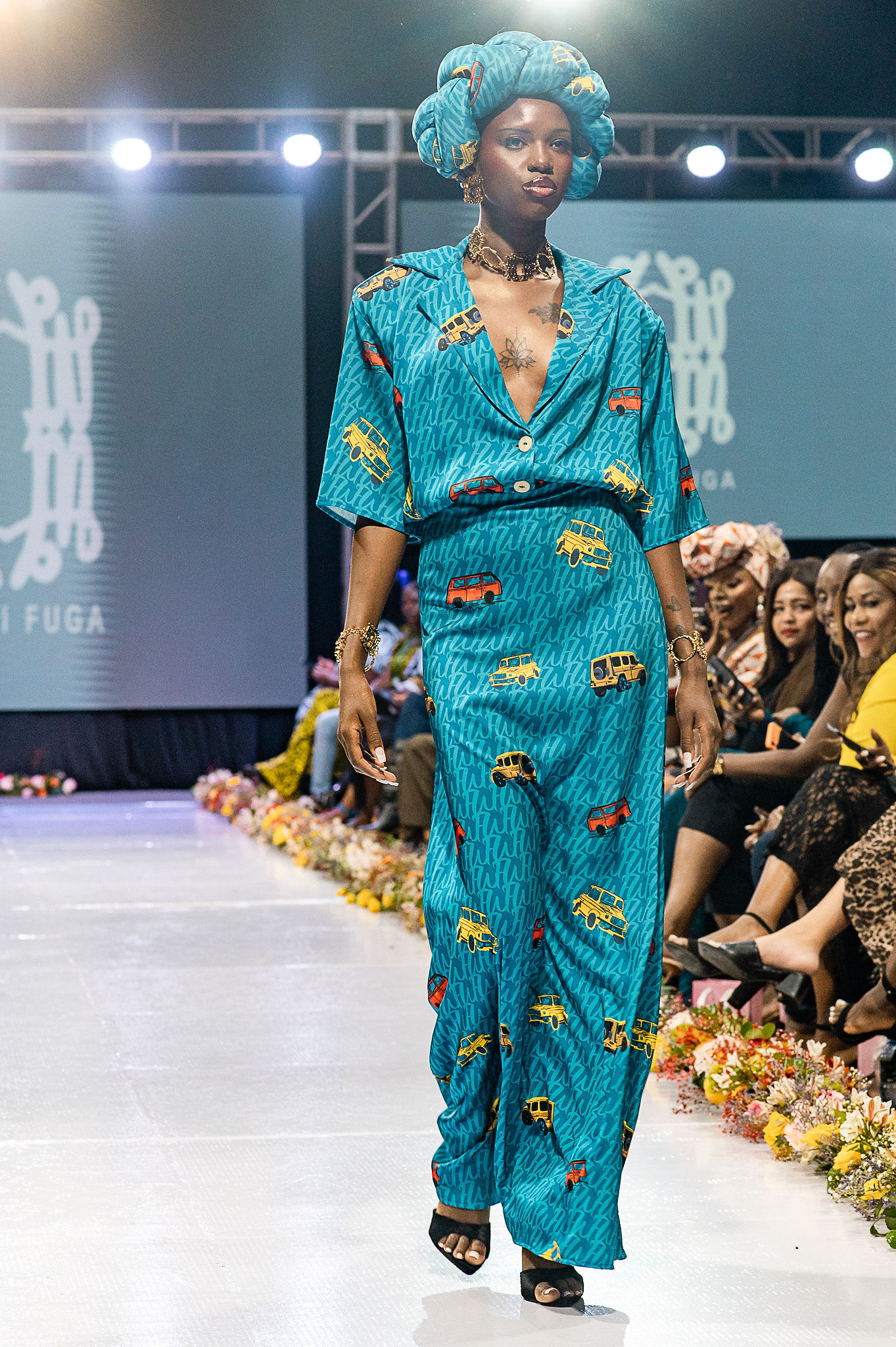
Nigerian luxury house Wanni Fuga, founded by Toluwani Wabara in 2014, has built its reputation on clean lines, meticulous craft, and a modern interpretation of West African heritage.
At Nairobi Fashion Week 2026, the brand presented restrained power through sculptural silhouettes and sharp tailoring. Moreover, the palette refused to shout but commanded every inch of space it occupied.
Wanni Fuga’s sculptural tailoring at Nairobi Fashion Week 2026. Photo by Daniel Kempf-Seifried
Yevaàna: Making Sustainability Tangible
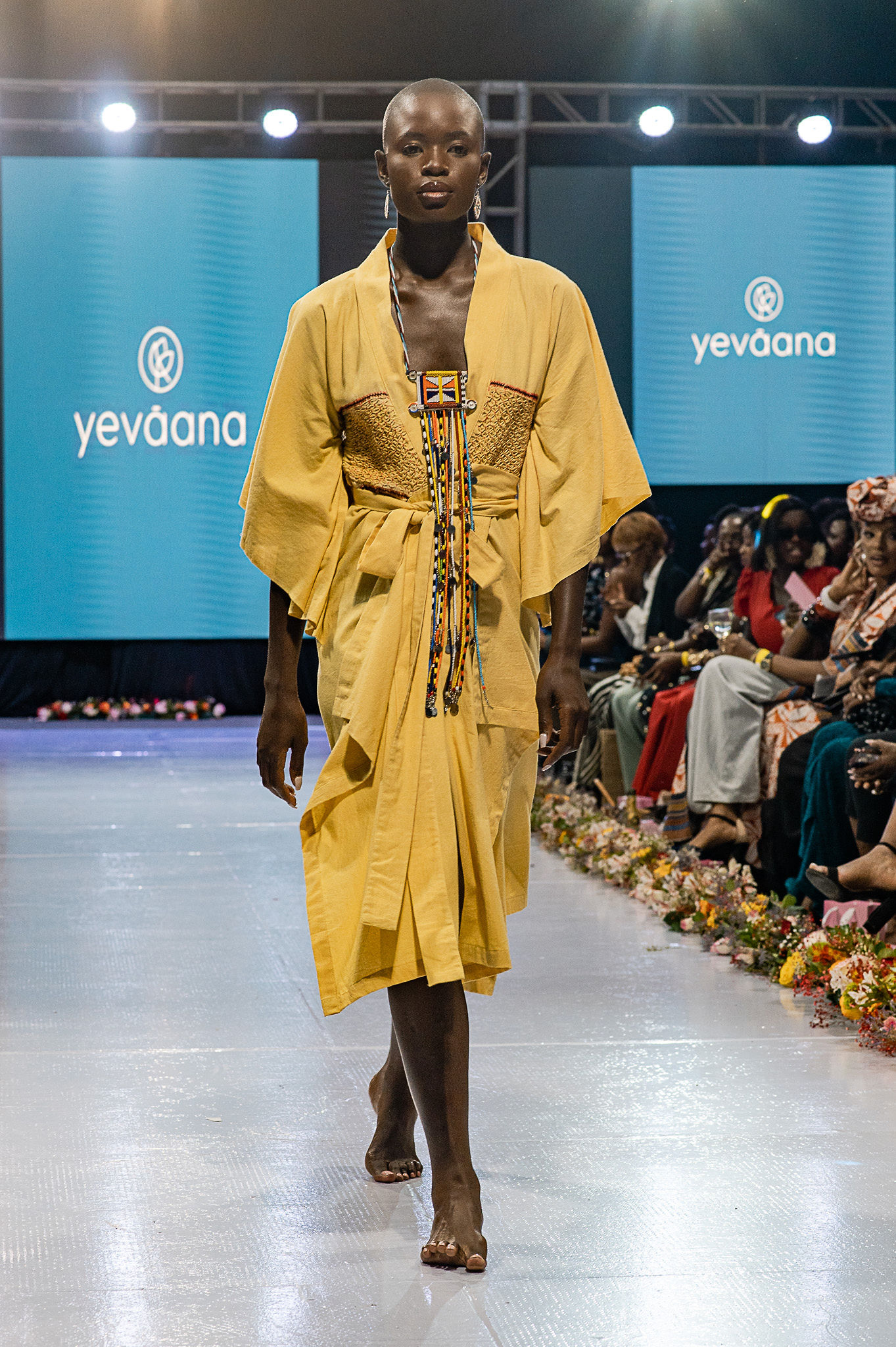
Yevaàna transformed the Decarbonize theme into something sensory. Her collection, constructed from cotton, linen, and hemp through deliberate handcraft, celebrated slowness and texture.
Furthermore, the work bridged Sri Lankan and Kenyan craft traditions, proving sustainable fashion can honor both people and planet without sacrificing design integrity.
Yevaàna’s hand-crafted sustainable collection at Nairobi Fashion Week 2026. Photo by Daniel Kempf-Seifried
Lucy Rao: Upcycling as Couture
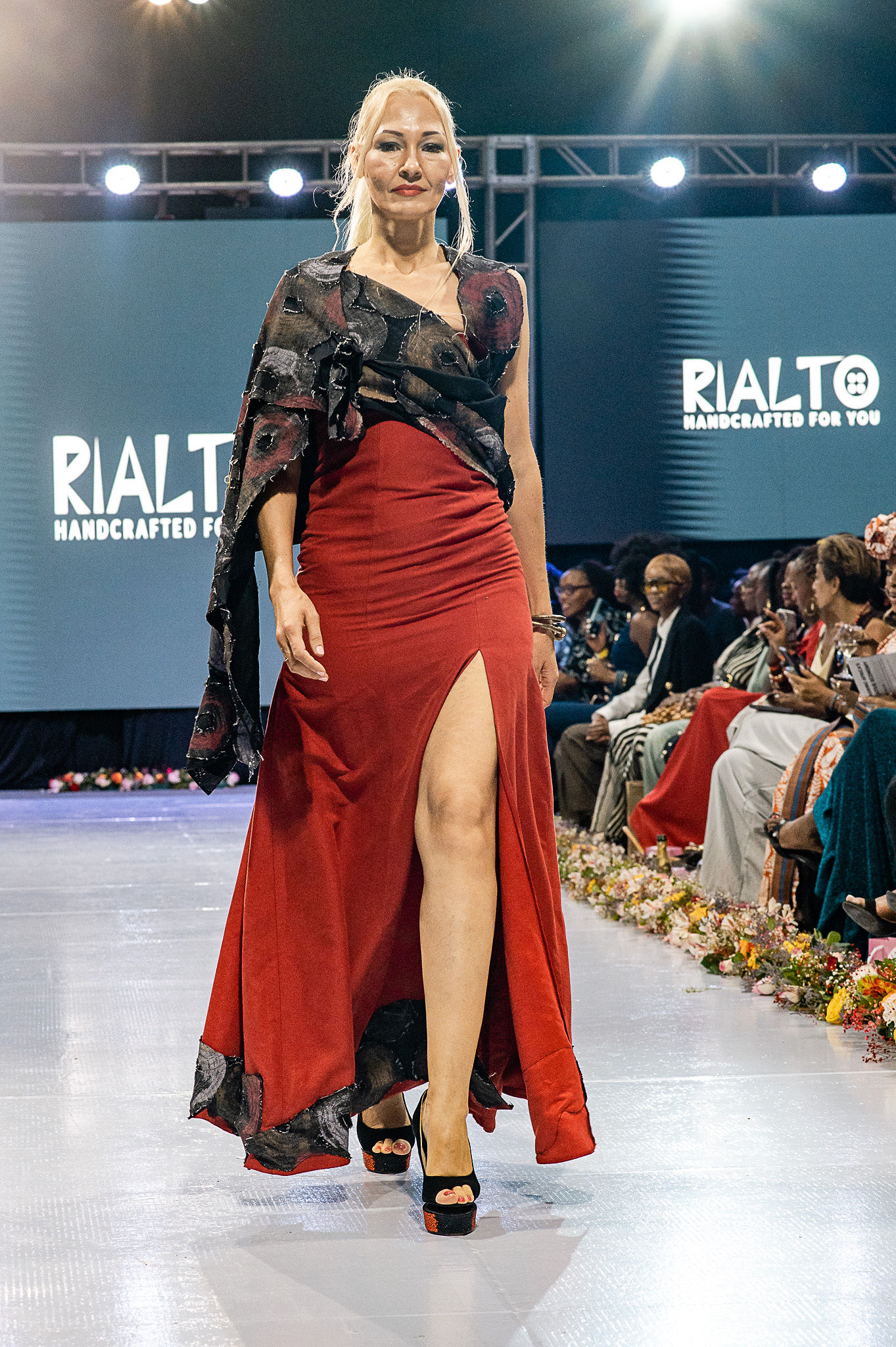
Lucy Rao founded Rialto Fashions in 1988 and has since become a central figure in Kenya’s fashion industry. Additionally, she co-directs the Kenya Fashion Council and founded the Pamba Mali Organic Cotton Collective.
Her upcycled denim collection at Nairobi Fashion Week 2026 proved circular fashion can reach couture-level discipline through sharp cuts and architectural shapes. Notably, familiar material was reimagined without compromise.
Lucy Rao’s upcycled denim collection at Nairobi Fashion Week 2026. Photo by Daniel Kempf-Seifried
Maisha by Nisria: Fashion as Community Impact
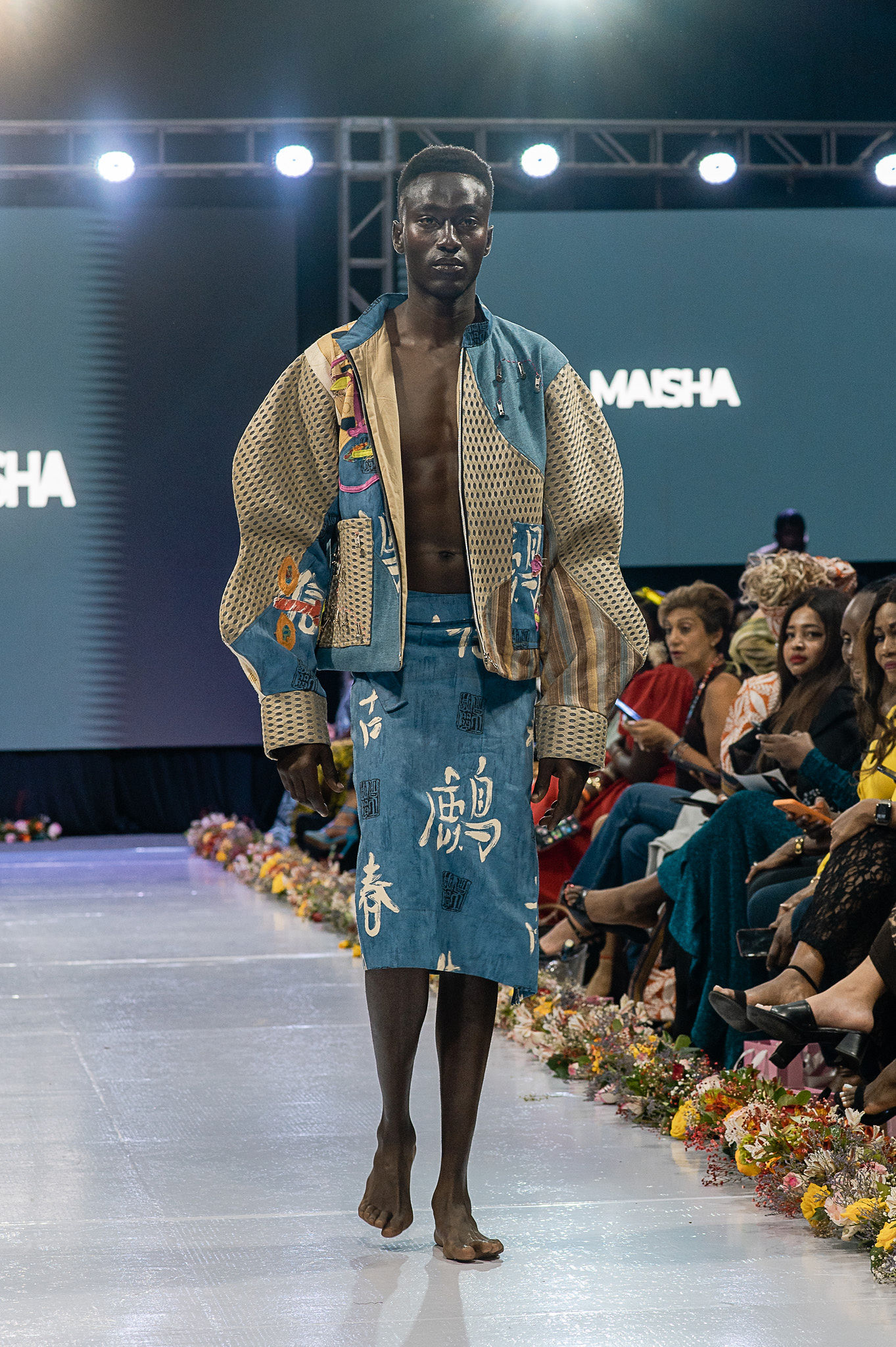
Founded by Nur M’Nasria, Maisha by Nisria operates as both a fashion studio and a social enterprise based in Gilgil, Kenya. The studio creates one-of-a-kind clothing from upcycled materials while training and employing youth and women from vulnerable communities.
At Nairobi Fashion Week 2026, Maisha showcased its approach to sustainable fashion, sourcing discarded textiles from flea markets, wholesalers, and recycling factories, then transforming them into contemporary designs. In particular, the collection explored texture and materiality, weaving together denim and unexpected fabrics into cohesive storytelling.
Recognized by The Guardian, Vogue Business, and Al Jazeera, Maisha demonstrates that circular fashion can function as economic infrastructure, creating jobs, building skills, and supporting communities while producing beautiful clothing.
Maisha by Nisria’s upcycled collection at Nairobi Fashion Week 2026. Photo by Daniel Kempf-Seifried
Expanding the Conversation
Beyond the featured designers, Nairobi Fashion Week 2026 also showcased others who brought different perspectives to the Decarbonize theme.
For instance, Kitukizo, inspired by Swahili coastal heritage, presented fluid silhouettes in soft linens and gentle hues—whites, yellows, and browns that evoked coastal calm and slow living. The collection demonstrated that sustainability can be serene, not strident.
Similarly, Naaniya, a French-based designer of Malian descent, layered Bogolan textiles into contemporary European tailoring, positioning African craft traditions as living materials rather than historical references.
Diverse design perspectives at Nairobi Fashion Week 2026. Photos by Daniel Kempf-Seifried
Why This Matters
Nairobi Fashion Week 2026 shifted perception. By centering sustainability without sacrificing design excellence, the event positioned Nairobi as a city setting agendas rather than following them.
Indeed, the designers who showcased proved that responsible fashion does not require compromise. From John Kaveke’s intercultural tailoring to Lucy Rao’s couture-level upcycling, from Wanni Fuga’s minimalist authority to Yevaàna’s tactile craft, and Maisha by Nisria’s community-centered approach—each collection showed that sustainability and ambition coexist naturally.
At Bellafricana, this is the work we celebrate; fashion rooted in reality that carries depth and proves African creativity has always been about vision, systems, and the future.
Ultimately, Nairobi Fashion Week 2026 did not ask for a seat at the global table. It built its own.
We use cookies on our website to give you the most relevant experience by remembering your preferences and repeat visits. By clicking “Accept”, you consent to the use of ALL the cookies.
This website uses cookies to improve your experience while you navigate through the website. Out of these, the cookies that are categorized as necessary are stored on your browser as they are essential for the working of basic functionalities of the website. We also use third-party cookies that help us analyze and understand how you use this website. These cookies will be stored in your browser only with your consent. You also have the option to opt-out of these cookies. But opting out of some of these cookies may affect your browsing experience.
Necessary cookies are absolutely essential for the website to function properly. These cookies ensure basic functionalities and security features of the website, anonymously.
Cookie
Duration
Description
cookielawinfo-checbox-analytics
11 months
This cookie is set by GDPR Cookie Consent plugin. The cookie is used to store the user consent for the cookies in the category "Analytics".
cookielawinfo-checbox-functional
11 months
The cookie is set by GDPR cookie consent to record the user consent for the cookies in the category "Functional".
cookielawinfo-checbox-others
11 months
This cookie is set by GDPR Cookie Consent plugin. The cookie is used to store the user consent for the cookies in the category "Other.
cookielawinfo-checkbox-necessary
11 months
This cookie is set by GDPR Cookie Consent plugin. The cookies is used to store the user consent for the cookies in the category "Necessary".
cookielawinfo-checkbox-performance
11 months
This cookie is set by GDPR Cookie Consent plugin. The cookie is used to store the user consent for the cookies in the category "Performance".
viewed_cookie_policy
11 months
The cookie is set by the GDPR Cookie Consent plugin and is used to store whether or not user has consented to the use of cookies. It does not store any personal data.
Functional cookies help to perform certain functionalities like sharing the content of the website on social media platforms, collect feedbacks, and other third-party features.
Performance cookies are used to understand and analyze the key performance indexes of the website which helps in delivering a better user experience for the visitors.
Analytical cookies are used to understand how visitors interact with the website. These cookies help provide information on metrics the number of visitors, bounce rate, traffic source, etc.
Advertisement cookies are used to provide visitors with relevant ads and marketing campaigns. These cookies track visitors across websites and collect information to provide customized ads.