
African artists have long been present in global art spaces. Their work has travelled widely, been exhibited internationally, and discussed across institutions. But presence alone is not the same as authorship.
What feels different today is how some African artists are no longer simply responding to global platforms, but actively shaping the conversations within them. Their work does not ask for permission to belong. It arrives with context, intention, and its own language.
Ibrahim Mahama is one of those artists. The Ghanaian artist, born in Tamale in northern Ghana, continues to live and work between Tamale and Accra, creating installations that challenge how we see labor, material, and memory.
Who Is Ibrahim Mahama?
Growing up in Tamale meant growing up close to markets, trade routes, and the everyday realities of labor. As a result, goods were constantly moving. Objects passed through many hands. Work was visible and physical.
These early environments shaped how Ibrahim Mahama understands material. For him, materials are not neutral or decorative. Instead, they carry memory. Each one holds evidence of use, movement, and time.
This perspective sits at the core of his practice today.

Materials as Records, Not Objects
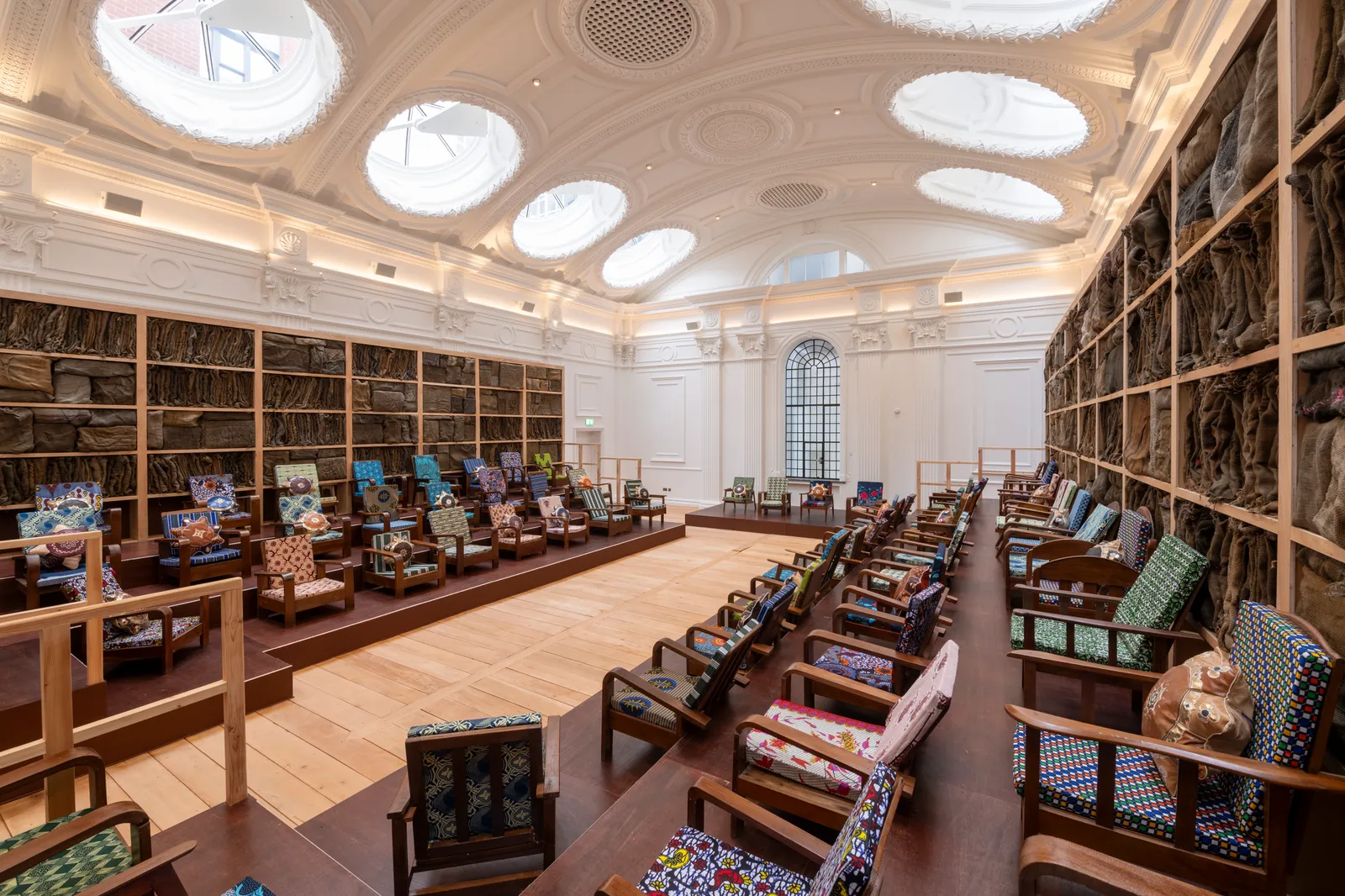
Ibrahim Mahama is best known for working with found and repurposed materials such as jute sacks, wooden crates, ropes, and aluminum objects. Many of these materials are sourced from markets and transport systems and still carry stains, tears, stamps, and dents from previous use.
Rather than hiding these marks, Mahama keeps them visible. Moreover, he centers them.
In his work, materials function as records of labor, trade, and migration. They point to global economic systems while remaining grounded in specific places and bodies. His installations often take over entire buildings or public spaces, interrupting familiar environments and forcing viewers to confront what is usually overlooked.
The Headpans: Making Labor Impossible to Ignore
One of Mahama’s most memorable bodies of work involves aluminum headpans, everyday objects commonly used by market traders and porters across Ghana and other parts of West Africa. These headpans are tools of survival. In practice, they carry goods, weight, and repetition. They are deeply familiar, yet rarely noticed.
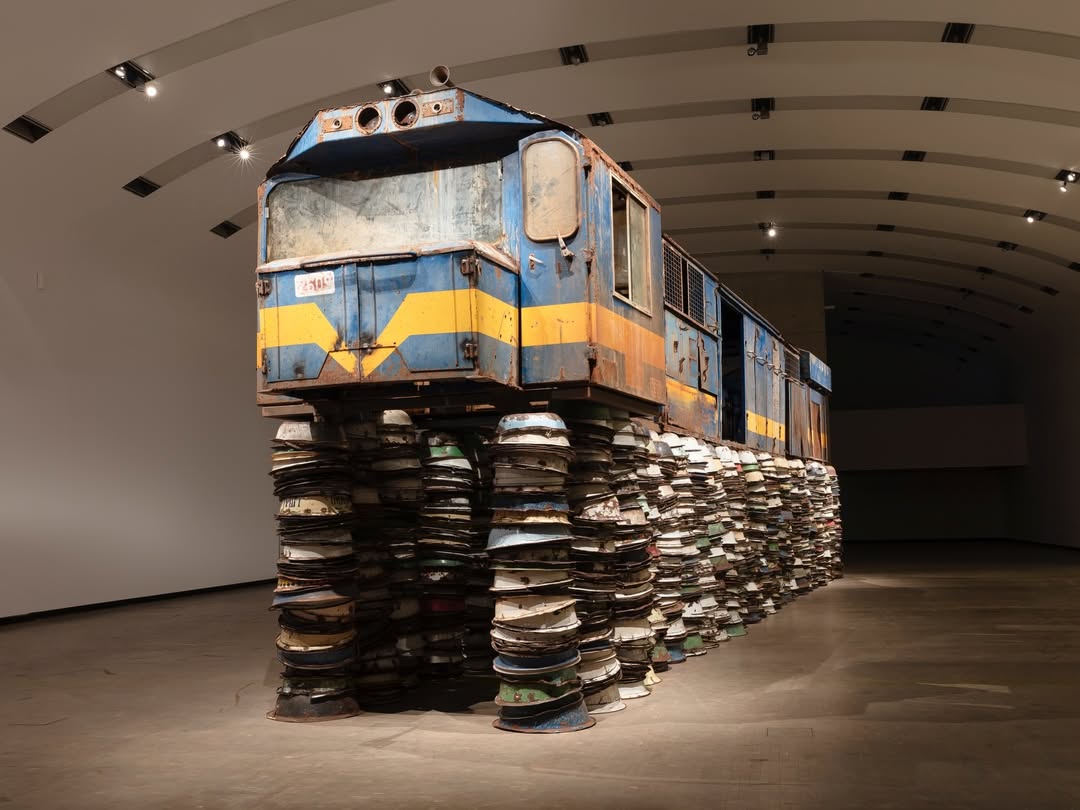
This material appears powerfully in Zilijifa, Mahama’s solo exhibition at Kunsthalle Wien in Vienna. At the center of the show was a striking installation titled The Physical Impossibility of Debt in the Mind of Something Living (2025).
The work brought together a decommissioned diesel locomotive, once used on Ghana’s colonial-era railway lines. Beneath it, thousands of enameled iron headpans formed a dense field. Mahama collected these headpans by exchanging new ones for used ones, ensuring that each carried a visible history of labor.
The pans were battered, dented, and chipped. They were not decorative.
In the context of the installation, they functioned as physical traces of labor itself. They pointed to the human effort that sustains systems of trade, transport, and movement. Consequently, what is usually ordinary became unavoidable.
By relocating these objects into an art space, Mahama shifted how they are read. The work prompted conversations around visibility, value, and the labor that underpins economic systems, particularly within African contexts. Rather than romanticizing labor, the work insisted that it be seen.
From Local Histories to Global Systems
This insistence on context follows Mahama wherever his work travels.
His installations do not change meaning when they move internationally. Instead, they expand. Furthermore, the same materials that speak to local labor histories in Ghana begin to reveal global connections when placed in international spaces.
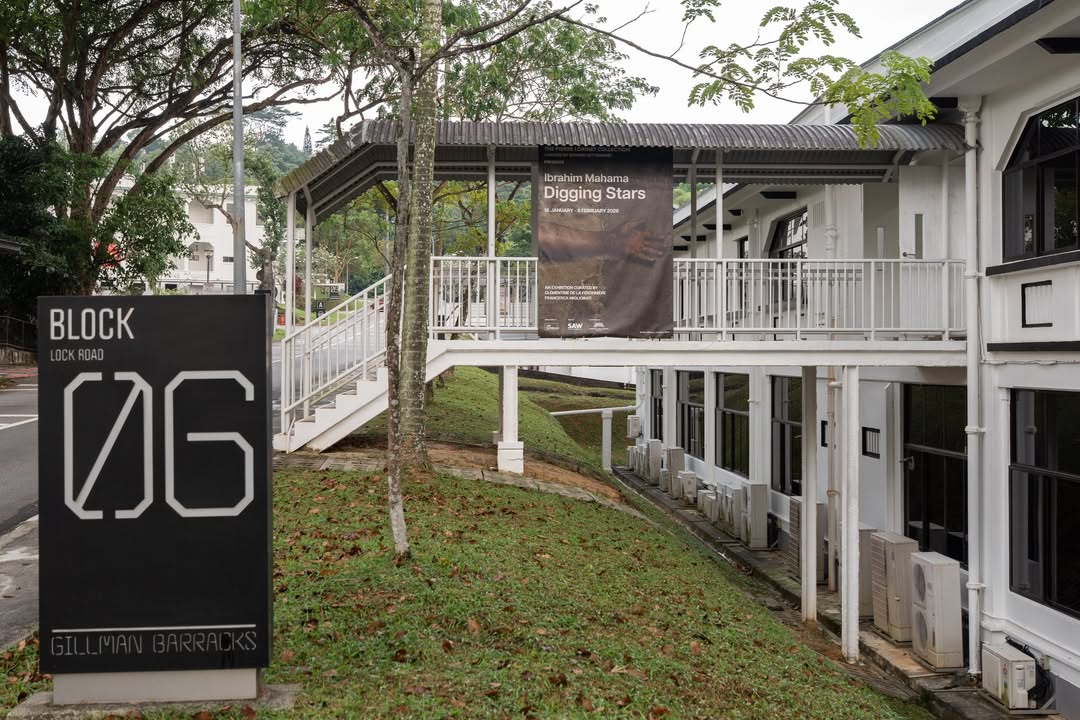
This was especially evident in Ibrahim Mahama’s solo exhibition Digging Stars, presented in Singapore during Singapore Art Week from 16 January to 8 February 2026. Singapore, as a global hub for trade, logistics, and commerce, is deeply tied to the systems Mahama’s materials come from.
The exhibition brought together fabric works, installations, photography, and video, continuing his long-term exploration of labor, material, and value. Rather than presenting African experience as distant or separate, the work highlighted how interconnected global systems truly are.
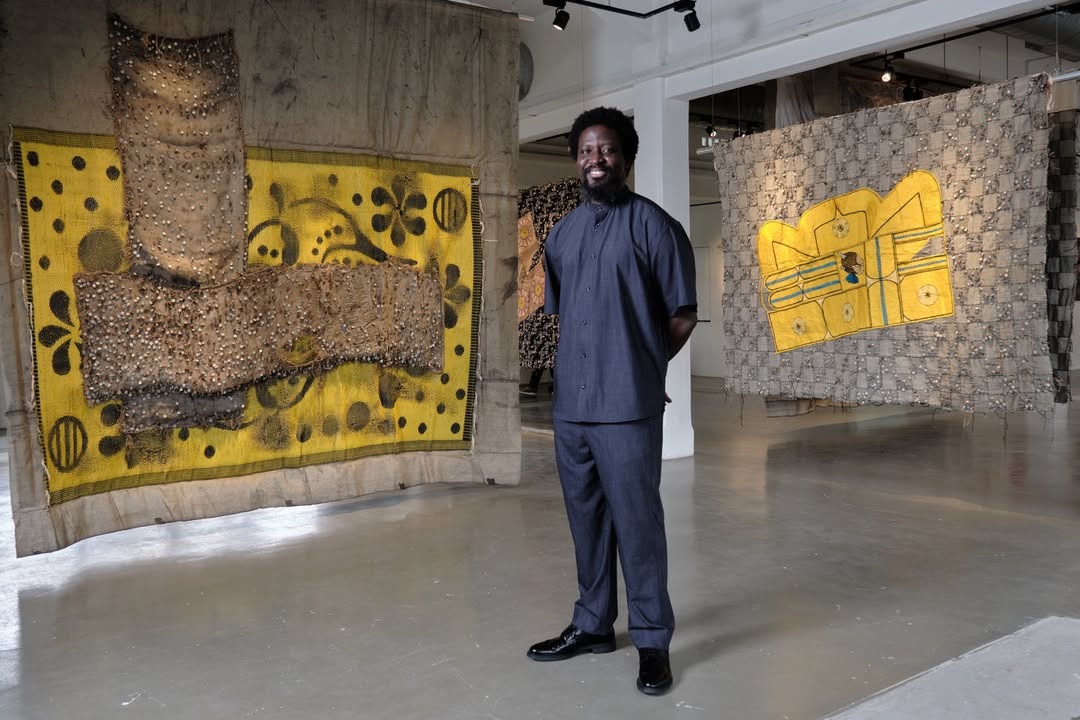
African labor histories were not framed as peripheral. They were central to the conversation.
Why This Matters
This is what it looks like when African artists shape global conversations.
Mahama’s work does not seek validation through scale or location alone. It asserts that African histories, material knowledge, and labor systems are essential to understanding the modern world. His practice moves beyond participation and into authorship.
At Bellafricana, this kind of work is prioritized. One that carries depth, rooted in lived realities, and that reminds us that African creativity has always been about more than aesthetics.
Exploring artists like Ibrahim Mahama reveals how contemporary African art continues to reshape global narratives not by asking for a seat at the table, but by redefining the conversation entirely.
Seeing African art take on deeper meaning on the global stage is not just encouraging. It is necessary. Not as a trend, but as a continuation of long-standing truths.